It’s a universal fact that climbing Mount Everest in Nepal is one of the most dangerous bucket-list goals in the world. But that danger got even more extreme last year, when the deadliest ice collapse in Everest history
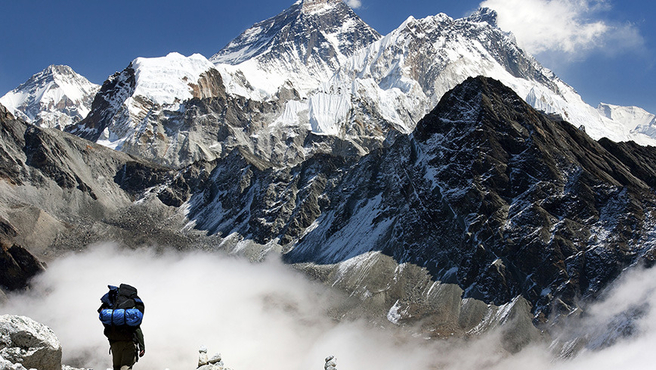
It’s a universal fact that climbing Mount Everest in Nepal is one of the most dangerous bucket-list goals in the world. But that danger got even more extreme last year, when the deadliest ice collapse in Everest history killed 16 Sherpa guides. And fortunately, Nepal is acting accordingly. In March, the country will change its current route up the mountain to a safer path — but interestingly, it’s actually not a new one. Rather, Nepal will simply revert back to the original route mountaineers began taking after Everest was first climbed in 1953. So, why did the route change in the first place? The route was tweaked in the 1990s so that mountaineers could climb the “west shoulder” rather than going straight up, because it was actually shorter and easier to climb. The problem was that the risk of avalanche was greater there, but at that point, the upside outweighed any drawbacks. Fast-forward to the accident in 2014, and that’s no longer the case. “We think the risk of avalanche in the left part of the Khumbu Icefall is growing, and we are moving the route to the center, where there is almost no such danger,” Ang Dorji Sherpa, chairman of the Sagarmatha Pollution Control Committee, told BBC News. “The route through the center part will be difficult and time-consuming, but it will be relatively free from the risk of avalanche, as the ice cliffs and hanging glaciers [along the west shoulder] are comparatively far away from it,” he continued. It’s a welcome change for Everest’s Sherpa guides. After the collapse last year, they instigated a boycott in which they asked for better wages and conditions. They also asked the government to put aside its environmental concerns and allow helicopters to drop equipment at Base One — the first camp where mountaineers stop after Base Camp — so that they wouldn’t have to schlep so much heavy gear through such difficult terrain. And for good reason: About 250 people have died trying to ascend Mount Everest since the first climb in 1953, 40 of whom died specifically in the Khumbu Icefall. In the end, all of the Everest expeditions were cancelled. But the government is not budging on the helicopter front. “Nepal’s law does not allow even rescue helicopters above Base Camp, mainly because of the environmental fragility of the mountains, and we agree with that provision,” Tika Gurung, an executive member of the Expedition Operators’ Association of Nepal, told BBC News. For now, it’s just one (very cold) step at a time. source: totaltravel
Tags:
#After tragedy
#Nepal switches to safer Mt. Everest route
#Mt Everest
Share this article
B
binu
Crafted for travellers who want grounded planning insight, mountain context, and a clearer feel for the journey before they go.