Lobuche Peak Climbing trekking in Nepal – AME Treks
Hard Nepal Himalayas 17 Days

Lobuche Peak Climbing

Kathmandu-Ramechhap-Lukla-Phakding-Namche-Deboche-Dingboche-Lobuche-Peak-Lobuche-Deboche-Monjo-Lukla-Kathmandu

4.9/5 (156 reviews)
5000 trekkers hosted
Duration
17 Days
Max Altitude
6119
Difficulty
Hard
Best Season
March-May & October to December
Group Size
2–12 People
Accommodation
Tea Houses

Product Description

A fuller introduction to the route, pace, terrain, and overall trip style.

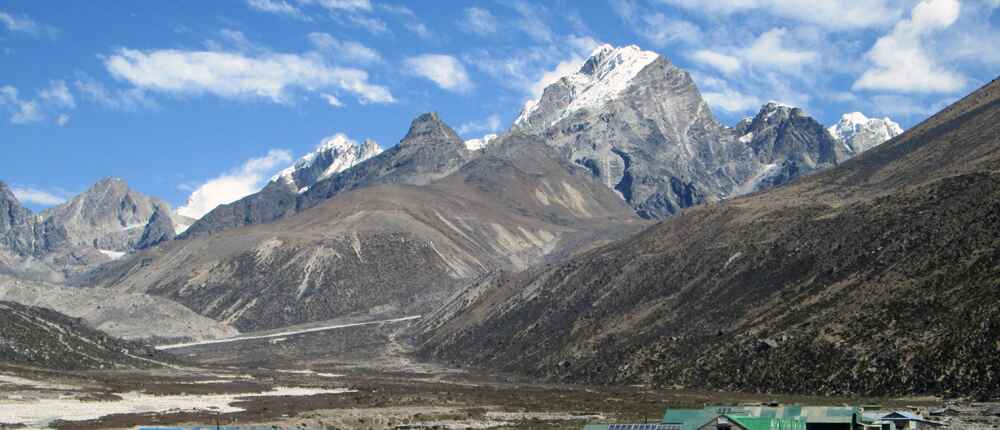
Lobuche Peak (6119m / 20,075ft) stands proudly in Nepal's Khumbu region, offering one of the most thrilling climbing experiences in the Everest region. Whether you're an experienced mountaineer or an ambitious trekker, Lobuche Peak climbing is an adventure that will take you through some of the most scenic and rugged terrains in the world. Lobuche Peak is divided into two distinct summits: Lobuche East (6119m) and Lobuche West (6145m). Both summits are connected by a continuous ridge, but there is a considerable gap and distance between them. The two peaks provide different challenges, with the East Peak generally being a more accessible option, while Lobuche West requires an expedition permit and is more challenging to climb.The peak's impressive rocky East face, which rises dramatically over the Khumbu Glacier, presents a stunning skyline. This rugged, dark triangle of rock creates the south ridge of the mountain, where climbers can reach the summit by descending through a marked notch and climbing steep, snowy slopes.

Climbing Routes & Challenges

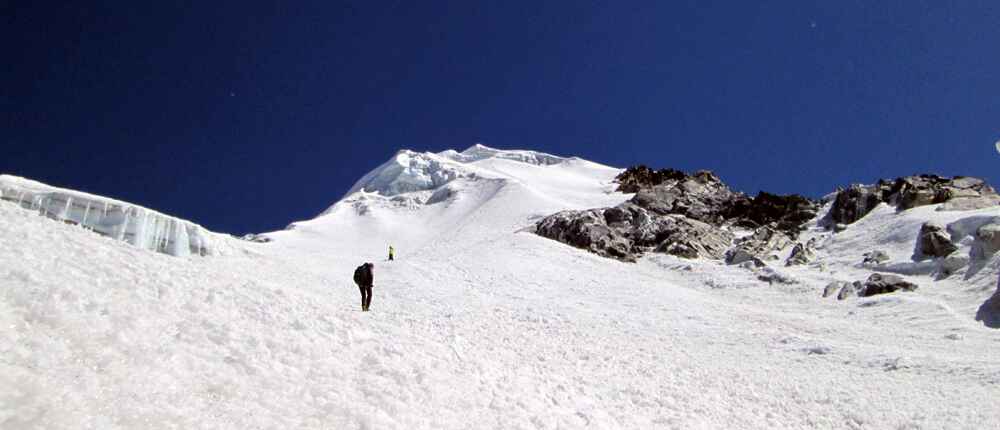
The standard route for climbing Lobuche East ascends via the South Ridge, which combines both rock and ice climbing. The ascent involves scaling steep snow and ice slopes from the summit ridge, which requires proper mountaineering skills. As a challenging trekking peak in the Everest region, Lobuche East offers various routes, some well-established, and others still potential for new ascents. This makes it an attractive choice for climbers looking for both a challenge and an opportunity for exploration.

Climbers typically begin their journey by trekking along the Everest Base Camp trekking route. After acclimatizing in Pheriche and Dughla, trekkers make their way to the Mount Everest Base Camp to allow for better acclimatization before proceeding to Lobuche Peak Base Camp. This gradual approach helps climbers adjust to the altitude, which is critical for a successful summit.

Lobuche Peak Climbing Cost

The cost of Lobuche Peak climbing can vary depending on several factors such as the duration of the trek, services provided, and the agency you book with. On average, the cost ranges from $2,550 to $4,000 USD, which typically includes permits, guides, and porters, but doesn't cover personal gear, insurance, or extra costs like accommodation. The cost is higher for Lobuche West as it requires an expedition permit, whereas the East Peak can be tackled with a standard trekking peak permit. It’s important to get a clear breakdown of all expenses when planning your Lobuche Peak climbing adventure.

Lobuche Village and the Surrounding Region

Lobuche Village is located near the base of Lobuche Peak, making it a central point for climbers attempting to summit the peak. The village is small but serves as an important resting point on the journey to the peak. It offers a stunning view of the surrounding mountains, including Nuptse and Pumori, and is a great place to soak in the breathtaking Himalayan landscape.The region surrounding Lobuche is also home to the Khumbu Glacier, one of the largest glaciers in Nepal. Trekkers will have the chance to witness this massive ice flow up close as they trek towards the base camp and beyond, making for a truly unforgettable experience.

How Hard Is Lobuche East?

Lobuche East is considered a challenging trekking peak, but it is achievable for those with solid trekking and mountaineering experience. The climb involves steep snow and ice slopes, requiring proficiency in using ice axes and crampons, and a good level of physical fitness. Climbers should be prepared for some technical sections, particularly near the summit, where the terrain can be challenging due to high-altitude conditions and the icy slopes. Although Lobuche East is not as technically demanding as some of the higher peaks in the region, it is still a serious climb and should not be underestimated. Preparation through acclimatization, physical training, and prior experience in trekking or mountaineering is highly recommended.

Lobuche to Everest Base Camp

The journey from Lobuche to Everest Base Camp is a highlight of any trek in the Everest region. This section of the trek offers extraordinary views of Mount Everest, Lhotse, and Makalu, while also giving trekkers the chance to visit the iconic Everest Base Camp. The trek to Base Camp from Lobuche typically takes a day or two and provides a final acclimatization push before the climb.Many climbers use the Everest Base Camp trek as part of their Lobuche Peak climb to ensure they are properly acclimatized for the altitude. The trekking route from Lobuche to Everest Base Camp passes through Gorak Shep, where trekkers can take in one of the most famous views in the world—the Khumbu Icefall.

In Conclusion, Climbing Lobuche Peak offers an unforgettable experience in the Everest region, combining stunning landscapes, challenging climbing, and incredible mountain views. Whether you're aiming for Lobuche East or seeking the added challenge of Lobuche West, the journey will be one to remember. Proper planning, physical preparation, and proper acclimatization are key to a successful and safe climb. With the right guide and the determination to reach the top, Lobuche Peak will reward you with one of the most exhilarating mountaineering experiences in Nepal.

Take the first step toward your Lobuche Peak today with Adventure Mountain Explore Treks & Expedition Pvt.Ltd.!


Please Note:

Due to obstructive weather conditions (even during the best trekking seasons), sometimes they may announce sudden changes regarding the previously provided domestic flight schedule to and from Lukla. The plane many be delayed for few hours or even few following days. This entirely depends upon the weather condition. In order to cope with this situation, AME Treks and Expedition, kindly requests all the trekkers to add a few extra days to your plan. Nevertheless, if everything goes well, we can also make arrangements for you to enjoy other attractions like bungee jumping, jungle safari, rafting, shopping and so on.

Furthermore, trekker’s safety is always the top priority in any trek. Therefore, the team leader on duty is given every authority to make changes in the itinerary provided, in case of unexpected weather change, unsuitable health condition of a group member or an unforeseen natural disaster. If needed, team leader might also cancel any part of the itinerary. Hence, in such a situation we request you to co-operate with our team leader and remain flexible.

Trip Includes

  • Airport transfer service upon arrival and departure (private car/jeep/minivan-depending on group number)
  • 2 Nights twin-sharing accommodation with breakfast in Kathmandu (4 Star Hotel). Solo climbers will be provided with a private room for their stay.
  • 1 Night twin-sharing accommodation with breakfast in Ramechhap (Resort). Solo climbers will be provided with a private room for their stay.
  • Private jeep/minivan transfer Kathmandu-Ramechhap-Kathmandu. (Shared jeep transfer for solo climbers)
  • Flight Ramechhap-Lukla-Ramechhap (March to May & October-November) and Kathmandu-Lukla-Kathmandu (remaining months of the year) with departure tax
  • Accommodation during the trek includes lodges on a twin-sharing basis, while tented camps will be used during the climbing portion. A single supplement applies for solo climbers requesting a private room/tents.
  • Attached toilets with hot showers in Phakding, Namche, Deboche, Monjo and Lukla. Attached toilets only in Dingboche. 
  • All required trekking and climbing permits
  • Meals (Breakfast, Lunch and Dinner), during the trek and climb
  • 3 cups tea/coffee (served in cups only) during the trek and climb
  • Seasonal fruits served every day after dinner during the trek and climb
  • Unlimited purified drinking water during the trek and climb
  • One Nepal Mountaineering Association-licensed, English-speaking, experienced, knowledgeable and First Aid trained climbing guide and his entire expenses
  • Porter (1 for each two members) and his entire expenses
  • Insurance of guide and porters
  • Cost of camping and required number of crew members for camping
  • All required group climbing gears
  • All required personal climbing gears, except climbing shoes (on rental basis)
  • All required government and local taxes
  • Down jacket and sleeping bag (if required)
  • Duffle bag and route map (souvenir)
  • Adventure completion certificate from Nepal Mountaineering Association (NMA)
  • Basic First Aid Kit with Oximeter
  • Farewell Dinner

Trip Excludes

  • Nepal arrival visa
  • Meals in city except breakfast and farewell dinner
  • Personal expenses such as mineral water, extra meal, alcoholic/non-alcoholic beverages, extra tea/coffee, other hot beverages except tea and coffee, snacks, hot water for drinking or any other purpose (except during the climb), laundry service etc.
  • WiFi, extra hot shower, battery charging or SIM card service etc.
  • Extra porter (if required)
  • Helicopter transfer service Kathmandu-Lukla-Kathmandu, Ramechhap-Lukla-Ramechhap and in the Everest region (Available upon request for an additional fee)
  • Cost of extra luggage levied by Lukla flights (luggage limitation 15 kilograms total)
  • Cost of accommodation, meals and guides and porters charges in case of delays or flight cancellations
  • Accommodation and meals in Kathmandu in case of early return from the trek/climb 
  • Travel insurance that covers helicopter evacuation over 6000 meters, climbs using climbing equipment over 6000 meters, trip cancellation and the cost of treatment caused by regular or unforeseen disease/illness
  • Tips (as an appreciation) to the service providers

Useful Information

Special train for beginners before fly to Lukla
Lobuche peak is not very difficult climbing but it is technical enough to climb and it is one of the most common trekking peak for adventure climbing experience so you could easily join us for this lifetime adventure. Basic technique and information of mountaineering (such as using crampons on boots, using climbing ropes, ice axe, harness, carabineers, Descender device etc ) is required to plan this trip. So you should have basic knowledge about this. Do not worry if you do not have basic knowledge we are here to train before you head for this adventure. We do train for beginners in Kathmandu before fly to Lukla to start this trip. You need to have an extra day for this as we do take you to the rocky cliff to train you the basic ideas about the climb as you will learn basic ideas to use climbing tools to ensure your successful climbing trip.

Important Trip Notes & Activities
Pleased acknowledge that you are joining us for the adventure climbing trip in the remote Himalayan region, where weather conditions, health and fitness of the member or unexpected natural disaster can compel us to change the itinerary and if so you have to understand it but we would try our best to keep the suggested itinerary as per the original schedule. Your safety and satisfaction of the trip is our prime concern while travelling with us and we ensure you our best team, logistics, professional services to make sure that you would have an amazing trip of a lifetime with us. Also note that our trip leader deserved the final decision if the trip has to amend, change the route or cancel due to the extreme conditions for the safety precaution. However, he will try his best to ensure that the trip runs as according to the stated plan but be prepared for flexibility if necessary.
Train Yourself
This trip requires walking on maximum altitude above 3500m – 6189m from sea level for the duration of 7 to 8 days. So it is very essential that you should be preparing for this trek before reaching to join us at our trek date at Kathmandu. The best preparation you can do is to hike, even if it is under gym conditions. Running will help your stamina but does not fully prepare your muscles for a strenuous hike. Go for walks. It is advisable to go for frequent walks which should include some uphill and downhill sections if possible in your surroundings. Take your daypack with you with at least a weight of three kilograms or more. This will simulate the conditions you will encounter while on your trekking with us. Join a gymnasium. Ask your gym instructor to work out a fitness program that consists of progressive resistance exercises. An experienced instructor will be able to tailor a safe exercise regime based on your age, condition and strength. Work with a schedule that progresses to higher resistance or weights as you develop your fitness.
Visit Your Medical Doctor:
Please do visit your medical doctor, consult him before heading to such altitude trekking destination. Those who have a problem of heart, lung, respiratory or blood should talk with their medical doctor and take his reference and report us before planning this trip with us.We deserve not to take those on our trip who are having such medical conditions.
Why to Trek with us!
We are passionate to deliver real adventure experience that allows you to visit places that unseen and cultures and traditions that untouched. Trip itineraries are optimized to the best of our knowledge to cover the most famous travel routes and interests of the discerning traveler. We have put our heart, soul and over 15 years of experience into an outstanding adventure trips.  We are committed to a high level of service so that all of our customers' expectations are met. Our local Sherpas and Leaders are very much dedicated to their services. It is our highest priority to provide you with the best services available through our company. We are here to fulfill your desire. We can tailor trips to your liking. We know how to cater to the needs of our valuable clients. Our specially trained staff understands the best destinations for people with varying interests, physical abilities, budgets, and ages. Customer care is our priority. We also pass your day to day trip update to your family if required. Our guide and Sherps will have cell phone which works most places on this route. Hence, you can tell us what to write to your family about your trip so that they should not worry about your adventure trip.
Our legal documents
We are a government authorized and certified company. We have special authorization from the government of Nepal to operate trekking tours, expeditions, Tibetan tours, Bhutan tours and many other tourism related services. Besides being registered with the government, we are proud to be members of different professional organizations such as the following:
Ministry of Finance, Department of Taxation PAN No. 304585539
Company Registration Office, Pvt. Ltd. No. 79438/067/068
Ministry of Tourism and Civil Aviation, Department of Tourism Industry License No. 1288/067
Central Bank of Nepal, Nepal Rasta Bank Foreign Exchange Department License No. 1159/1/068
Nepal Tourism Board
Trekking Agent Association of Nepal (TAAN)
Kathmandu Environment Education Project (KEEP)
Travel Insurance
You should have travel insurance to be adequately protected in terms of insurance. A travel insurance policy that should cover cancellation, injury, death, lost baggage, theft,liability, medical treatment and expenses is strongly recommended. Make sure the insurance covers all theactivities that you will be undertaking during your stay in Nepal. If a clientbecomes ill, all hospital expenses, doctors' fees and repatriation costs are the client's responsibility.If you are injured and unable to travel, you can ask for a rescue helicopter from a remote area only if you havedefinite proof you can pay for it. They pay a cash deposit to the helicopter operator and collect the money from youifyou have been rescued. Be sure your policy specifically covers those.
Health and Fitness for trekker
We strongly recommend you to consult the doctor before planning your holidays. You should obtain professional advice from a travel clinic or your local GP about which vaccinations to have before you arrive inNepal. Your doctor will advise current inoculation requirements. If a doctor has recommended against travel orindicated travel may be inconvenient then kindly inform us of the details. On all trekking and exploratory tripstechnical experience is not required, hiking/camping experience is an advantage, but by far the most importantthing is a positive attitude and a generous amount of determination. We run regular first aid courses for our all trekking guides and Sherpa helpers.
Meals and Accommodation
In Kathmandu we use tourist standard hotel to ensure a comfortable stay and relaxed environment before and after youradventure. All breakfasts are included at the hotel in Kathmandu. Rooms are generally twin share – dependingon group size and room availability, triple share may be offered up on your request. A single supplement room isavailable at an additional cost for accommodation and required expenses during the trek to provide good quality food and services. For breakfast you expect to haveporridge, toast or chapattis, omelet and local bread. We will provide all meals on full board(Breakfast, Lunch, Dinner and tea & coffee) from the teahouse menu during the trekking period. Whilst trekkingon the Everest, the accommodation is in guesthouses or Lodges which are basic with shared facilities.Some lodgesoffers shower and mostly offers bucket hot water up on request. During the trip you can expect for 2 times hot shower.
While you are on a trek
While you are on a trek, there are not much communication facilities so that we would pass your message to your family and friends if required. Our guide will have cell phone and we often speak with you so that easy for us to deliver message. Our every effort will be made to keep to the proposed itinerary, however as this is adventure travel in a remote Himalayan region. The health of member, weather conditions can all contribute to changes the itinerary. The leader will try to ensure that the trip runs according to plan, but please be prepared to be flexible if necessary. If you are delayed longer than the itinerary date we can help reschedule your international flights but prepare to pay some extra charge if required.
Climbing Gears
Personal Climbing Gears:
-Ice axe
-Crampons
-Harness
-Tape Slings (2)
-Screwgate Karabiners (2 lock, 2 unlock)
-Descender/Abseil Device
-Plastic Mountaineering Boots
-Ascender
-Helmet (optional)
Group Climbing Gears:
-Snow bar
-Ice Hamer
-Rope
-Ice Screw
Clothing
Head:
- Sun hat or scarf
- Light balaclava or warm fleece hat
- Sunglasses with UV protection
Lower Body:
- Under Garments
- Hiking shorts
- Lightweight cotton long pants
- Light and expedition weight thermal bottoms
- Fleece or wool pants (seasonal)
- Waterproof (preferably breathable fabric) shell pants
Feet:
- Thin, lightweight inner socks
- Thick, warm wool hiking socks
- Hiking boots with spare laces
- Camp shoes (sneakers and/or sandals) Gaiters for hiking in winter to the base camp
-Gaiters
Upper Body:
- T-shirts
- Light and expedition weight thermal tops
- Fleece jacket or pullover
- Fleece Wind-Stopper jacket (optional)
- Waterproof (preferably breathable fabric) shell jacket
- Down vest and/or jacket
Passport & Visa Information
Nepal visa is the easiest visa to obtain; you may buy your Nepal visa at your nearest Nepalese Embassy/ Consulate or Mission offices abroad or buy this upon on arrival to Kathmandu international airport as per your convenient. You have to have 2 passport size photographs, Visa fees in US cash & valid passport at least for 6 months valid at the starting of the trip. Nationals of SAARC countries and China do not need visa when visiting Nepal. As per this rule, Indian nationals do not require visa. Transit visa is provided for foreign nationality for 3 days. Visa must be obtained for staying over the initial period of three days. Currently, foreign national can obtain Nepalese visa from the following border.
Tribhuvan International Airport, Kathmandu
Kakarvitta, Jhapa (Eastern Nepal)
Birganj, Parsa (Central Nepal)
Kodari, Sindhupalchowk (Northern Border)
Belhiya, Bhairahawa (Rupandehi, Western Nepal)
Jamuna, Nepalgunj (Banke, Mid Western Nepal)
 Mohana, Dhangadhi (Kailali, Far Western Nepal)
Gaddachauki, Mahendranagar (Kanchanpur, Far Western Nepal)
Tourist Visa Fees
3 days transit visa - Free of cost
Multiple entry 15 days - US$ 30 or equivalent convertible currency
Multiple entry 30 days - US$ 50 or equivalent convertible currency
Multiple entry 90 days - US$ 125 or equivalent convertible currency
(For further information, please, contact Department of Immigration, Kalikasthan, Dillibazar Kathmandu
Tel: 00977-1 4433934 / 4429660 / 4438862, 4438868 Download visa form-: www.immi.gov.np
Trip Snapshot

Route
Himalayas, Nepal
Trip Style
Tea Houses
Best Months
March-May & October to December
Next Start
Private dates on request

Why Book With AME

Well-paced itinerary with acclimatization-friendly flow

Licensed local guides, porter support, and 24/7 operations team

Private customization available for pace, dates, and comfort level

Gallery

Trail gallery

A quick look at the landscapes, lodges, and trail atmosphere before you move into the itinerary.

Lobuche Peak Climbing – trekking scenery

Next up

Day-by-day itinerary and pacing

Scroll into the detailed itinerary to review daily movement, overnight stops, elevation, and practical route flow.

Explore itinerary

Lobuche Peak Climbing – Day-by-Day Itinerary

Click any day to expand full details, elevation notes, meals, and overnight stops.

  1. Welcome to Nepal!
    As soon as you land at Tribhuvan International Airport in Kathmandu, one of our friendly team members will be there to welcome you. They'll help you with your luggage and take you to your hotel, where they’ll also assist you with the check-in process to make things smooth and easy.

    Once you've had a chance to rest and freshen up, we’ll have a short briefing session at the hotel. During this meeting, we’ll go over the details of your upcoming adventure, check your trekking and climbing gear, and introduce you to your guide.

    After that, the rest of the day is yours to enjoy. You can explore the local markets, pick up any last-minute essentials, find a cozy spot to grab a bite, or simply relax at the hotel and recover from your journey.

    If your flight arrives later in the day—afternoon, evening, or night—we’ll hold the briefing the following morning before heading out to Ramechhap. You'll be spending the night at a hotel in Kathmandu.

  2. Getting Ready and Drive to Ramechhap
    Start your day with a good breakfast at the hotel. The morning is free for you to organize your gear, do any last-minute shopping, and get fully prepared for the trek ahead.

    Around 11:00 AM, you’ll leave Kathmandu in a private vehicle and begin your journey to Ramechhap. The drive takes about 5 hours and follows the scenic B.P. Highway, passing through Bhaktapur and Dhulikhel. Up to Khurkot—where the Sun Koshi and Tama Koshi rivers meet—you’ll be driving alongside the beautiful Sun Koshi River. From there, the road follows the Tama Koshi River all the way to Ramechhap.

    The highway is narrow and winding in places, but the views are stunning—rolling hills, river valleys, and glimpses of rural life along the way. You’ll stop for lunch at a local roadside restaurant and take a few breaks for restrooms or to stretch your legs.

    Once you arrive in Ramechhap, you’ll check into a comfortable resort where dinner will be served. The evening is yours to relax—get some rest, enjoy the quiet surroundings, or simply unwind before your trek begins. Breakfast will be provided the next morning.

    Meals: Breakfast and Dinner 


  3. Flights to Lukla are entirely weather-dependent, and mornings tend to offer the clearest skies. That’s why all Lukla-bound flights are scheduled early—some as early as 6:00 AM. You’ll need to report to Manthali Airport (in Ramechhap) about an hour before your flight, and your guide will be with you every step of the way, helping with your transfer from the resort and assisting with check-in.

    Depending on your flight time, breakfast will either be served at the resort in Ramechhap or after you land in Lukla.

    The flight from Ramechhap to Lukla is short—just 12 to 15 minutes—but it’s a memorable one. You’ll fly over deep valleys and high ridges, surrounded by Himalayan peaks. Landing at Lukla, often called one of the most thrilling airports in the world, is an adventure in itself!

    Once in Lukla, you’ll meet the rest of the team, including the porters who will be carrying your gear during the trek. After a quick regroup and gear check, you’ll begin your first day of trekking toward Phakding.

    This part of the trail is relatively easy, with mostly downhill stretches and just a few short climbs. Along the way, you’ll pass through small Sherpa villages like Thalsharoa, Chheplung, Thado Koshigaon, Nurning, and Chhuthuwa. The path is rich with cultural touches—mani stones carved with Buddhist prayers, fluttering prayer flags, spinning prayer wheels, and small chortens—giving you an authentic feel of the region's spiritual atmosphere.

    You’ll reach Phakding around lunchtime. Located at a lower elevation than Lukla, it’s a peaceful village by the Dudh Koshi River. After checking into your lodge and settling in, you’ll have time to rest and freshen up.

    Later in the afternoon, your guide will take you on a short acclimatization hike to a nearby monastery. After the visit, you’ll return to the lodge for dinner and a well-earned night’s rest.

    Meals: Breakfast, Lunch and Dinner 

  4. After an early breakfast in Phakding, you’ll set off on one of the most memorable days of your trek—heading to Namche Bazaar. This part of the journey is more challenging than the day before, covering around 10 kilometers and taking about 7 to 8 hours for the average hiker.

    The first stretch, from Phakding to Monjo, is a scenic walk along the Dudh Koshi River. The trail gently rolls up and down, passing through lush rhododendron forests and several charming villages like Zamfute, Toktok, Bengkar, and Chhamuwa. Along the way, you’ll cross your first few suspension bridges—an exciting part of the Everest Base Camp experience!

    After crossing the third suspension bridge, the trail begins to climb more noticeably as you approach Monjo—the official entrance to Sagarmatha National Park. Here, your guide will take care of the necessary permit checks and entry formalities.

    Continuing on, you’ll stop for lunch at Jorsalle before tackling the most challenging section of the day. After lunch, the trail continues gently until you reach the iconic Hillary Suspension Bridge—the highest and longest bridge in the Everest region. Crossing it is a thrilling experience!

    Right after the bridge, get ready for a steady and steep climb. Not far up the trail, you’ll reach a scenic viewpoint offering your very first glimpse of Mount Everest—an unforgettable moment for many trekkers. From there, it’s a tough but rewarding 2–3 hour ascent to Namche Bazaar.

    Namche is the largest town in the Khumbu region and a lively hub for trekkers, filled with cozy lodges, shops, and cafés. Once you arrive, you’ll check into your lodge and have the rest of the evening to relax, explore the town, or simply unwind after a long day on the trail. Overnight at a lodge in Namche Bazaar.

    Meals: Breakfast, Lunch and Dinner 

  5. Namche sits at an altitude of 3,440 meters, and once you're above 3,000 meters, it's important to give your body time to adjust before heading any higher. That’s what today is all about—helping you acclimatize while still making the most of your time in the Himalayas.

    After breakfast at the lodge, you’ll head out on an acclimatization hike. The idea is to hike up to a higher elevation and then return to Namche to sleep, which helps your body adapt more effectively to the altitude.

    Your guide will offer you a few great options for the day’s hike:

    • Thame – a peaceful and traditional Sherpa village at 3,820 meters.

    • Everest View Hotel in Syangboche – one of the highest-altitude hotels in the world at 3,720 meters, known for its panoramic views.

    • Khumjung and Khunde villages – two culturally rich Sherpa settlements at 3,780 and 3,840 meters respectively.
       

    Each route climbs 280 to 400 meters above Namche, making them ideal for acclimatization. Your guide will help you choose the option that best suits your pace and interest.

    Beyond helping your body adjust to the thinner air, these hikes offer a deeper look into Sherpa culture, traditional mountain life, and—on clear days—breathtaking views of the surrounding peaks, including your first proper views of Mount Everest.

    After the hike, you’ll return to Namche where the rest of the day is yours to enjoy. You can relax at one of the local cafés, browse the shops and bakeries, or take a leisurely walk through the vibrant local market. Overnight at a lodge in Namche Bazaar.

    Meals: Breakfast, Lunch and Dinner 

  6. After breakfast in Namche, you'll begin your trek toward Deboche—one of the more challenging days of the journey, covering around 12 kilometers and taking about 7 to 8 hours. Along with the Namche ascent, this is one of the tougher sections on the way to Everest Base Camp, but it's also incredibly rewarding.

    Leaving Namche, the trail gently winds its way along the mountainside with gradual ups and downs. This stretch, up to the village of Sanasa, is relatively easy and offers some of the best panoramic views so far. You’ll catch your first full views of Ama Dablam, Lhotse Shar, Taboche, Katenga, and Thamserku—stunning peaks that dominate the landscape. Along the way, you’ll also pass beautifully adorned stupas and prayer flags fluttering in the mountain breeze.

    At Sanasa, the trail splits—one path leads to Gokyo, and the other continues toward Everest Base Camp. You’ll stick to the main EBC trail, descending steeply through a forested section to reach Phunki Tenga, a small riverside settlement on the banks of the Dudh Koshi River.

    This is a good spot to rest and refuel with lunch, as the toughest part of today’s trek lies just ahead. From here, it’s a steep 2-hour climb through rhododendron and pine forest, gaining about 550 meters in elevation via a series of switchbacks.

    At the top of the hill, you’ll enter Tengboche through a traditional gateway lined with prayer wheels. Here, you’ll be welcomed by the famous Tengboche Monastery—the largest and most significant monastery in the region. If time allows, you can take a short visit inside and soak in the peaceful atmosphere with the dramatic Himalayan backdrop.

    After your visit, it’s a short 20-minute descent to Deboche, a quiet village tucked just below Tengboche. Deboche sits at a slightly lower altitude, making it a better spot for overnight acclimatization and offering more comfortable lodge options.

    Once at the lodge, you’ll check in, enjoy a warm dinner, and spend the evening at your own pace. Whether you’re relaxing by the fire, journaling about the day, or just soaking in the silence of the forested surroundings—this is your last night below the treeline, so take it all in. Overnight at a lodge in Deboche.

    Meals: Breakfast, Lunch and Dinner 

  7. After breakfast in Deboche, you’ll continue your journey toward Dingboche—a beautiful high-altitude village that will be your home for the next two nights. Today marks a significant milestone: you’ll be trekking above the treeline and crossing the 4,000-meter mark for the first time. Because of the increasing altitude, today’s trek is a bit shorter, taking around 5 to 6 hours to cover roughly 11 kilometers.

    The day starts with a gentle downhill walk through a peaceful forest, leading you to Pangboche—the highest year-round settlement in the region. After a short break here, you’ll cross your last suspension bridge of the day, officially leaving the treeline behind.

    From here, the landscape opens up dramatically. The trail climbs gradually along the Imja River, offering stunning views of Ama Dablam that accompany you for much of the day. As you reach Somare, you’ll notice the trees give way to alpine scrub and open terrain, with rugged cliffs and snowy peaks all around.

    Continuing on, you’ll cross a few more small rivers and follow a rolling trail with occasional ups and downs. As you near Dingboche, the path levels out onto a wide, open plateau scattered with yak trails and well-worn footpaths—evidence of the countless trekkers, porters, animals, and locals who have traveled this route over the years.

    Before reaching Dingboche, you’ll cross a small metal bridge where the trail splits. The left path leads toward Pheriche, but you’ll take the right trail, gently climbing toward the hillside village of Dingboche.

    Once you arrive, you’ll check into your lodge and have time to settle in and rest. If you're feeling energetic, you can take a short walk around the village or unwind at a cozy café with some hot coffee and treats from a local bakery. Overnight at a lodge in Dingboche.

    Meals: Breakfast, Lunch and Dinner 

  8. It is a second acclimatization day of the trip. Today you walk around the village and climb up to the ridge where you can enjoy the beautiful scenery. It is always good to

    Once you’re above 4,000 meters, it’s really important to give your body time to adjust to the thinner air before heading higher. So today, instead of gaining more elevation, you’ll take it a bit easier with an acclimatization hike. This means you’ll climb to a higher altitude during the day but come back down to sleep at the same elevation—helping your body adapt gradually.

    Dingboche offers some fantastic hiking options for this. Your guide will present two great choices:

    • Nangkar Tshang Gompa and the Viewpoint: About an hour-long hike to a ridge just north of Dingboche. From here, you’ll enjoy breathtaking views of Ama Dablam, Cholatse, Taboche, Chhukung, Makalu, and the serene lake nestled at the base of Ama Dablam. It’s a relatively short but incredibly rewarding trek.

    • Chhukung: This is a longer, full-day hike that offers stunning panoramic views of Ama Dablam, Baruntse, and Makalu. It’s perfect if you’re up for a bit more adventure and want to see even more of the surrounding peaks.
       

    Based on what sounds best for you, your guide will help you plan your hike for the day. After your acclimatization walk, you’ll return to Dingboche to rest and spend the night.

    Meals: Breakfast, Lunch and Dinner 

  9. After breakfast in Dingboche, you’ll set off toward Lobuche, your overnight stop on the way to Everest Base Camp—and the base for your upcoming climb of Lobuche Peak. The village is about 8.5 kilometers northwest of Dingboche, and most hikers take around 5 hours to cover this distance.

    Leaving Dingboche, you’ll start with a short climb out of town to reach a wide plateau that stretches ahead toward Thukla. On your left, you’ll look down into the valley where the village of Pheriche sits perfectly perched on the hillside. As you stroll along the plateau, you’ll be treated to stunning views of the towering peaks Taboche and Cholatse.

    When you reach the edge of the plateau, the trail descends to a rocky river crossing at Thukla, where you’ll stop for lunch.

    After lunch, prepare for the toughest part of the day—a steep climb up switchbacks and stairs over large boulders. It’s a challenging ascent, but at the top you’ll find memorials honoring climbers and Sherpas who’ve lost their lives on these mountains. Take a moment here to rest and reflect.

    From this point, the trail gradually climbs again as you make your way toward Lobuche. Along the way, the majestic Mt. Pumori will come into full view, a spectacular sight that signals you’re getting closer.

    You’ll arrive in Lobuche around early afternoon, giving you time to explore the village a bit or simply relax at your lodge. This will be your last lodge stay before you tackle Lobuche Peak itself, so take it easy and enjoy the calm mountain atmosphere. Overnight at a lodge in Lobuche.

    Meals: Breakfast, Lunch and Dinner

  10. Today, you’ll be hiking either to Lobuche Base Camp at 5,160 meters or all the way up to the High Camp at 5,600 meters. After breakfast in Lobuche village, you’ll set off on the trail. From this point forward—until you return to Lobuche—your porter will take care of carrying your tents, food, and gear, so you can focus on the climb and enjoy your meals and rest without worrying about the heavy stuff.

    Leaving Lobuche village behind, you’ll begin by hiking up the hill right next to the village. The path then dips down into the valley before climbing back up again. Along the way, you’ll be treated to stunning views of majestic peaks like Ama Dablam, Malanphulan, Kangtega, Thamserku, Taboche, Cholatse, and of course, Lobuche itself.

    Once you reach the valley floor, the trail gets steeper and rocky. The toughest part of the day comes next: you’ll scramble up a steep, exposed section of rock using a rope handrail for support, then follow a narrow, switchback trail over the rocks. Take your time here and enjoy breathtaking sights of Nuptse and Ama Dablam. After this climb, you’ll reach a high point where you’ll traverse across some rocks before heading down to the base camp, which sits beside a small lake. From here, you can relax and soak in the beautiful views of Ama Dablam, Malanphulan, and Kangtega.

    If you’re heading on to the high camp at 5,600 meters, your hike continues from the base camp. The trail gets rockier as you go. Start by enjoying more incredible views of Baruntse, Ama Dablam, and Taboche. The path begins with a mild upward slope over rocks, with Nuptse and Ama Dablam towering around you. As you climb higher, the rocks get steeper, and Makalu and Baruntse come into clearer view. You’ll need to tackle some steep, large rock sections, using hand ropes to help you scramble up boulders.

    As you near the ridge, you’ll start seeing Lobuche village below you. After a tough climb over rocks and boulders, the ridge itself is much easier to follow. Along the ridge, you’ll be rewarded with fantastic views of Nuptse, Makalu, and Baruntse. Soon enough, you’ll arrive at Lobuche High Camp, perched at 5,600 meters. This is where you’ll spend the night in a tented camp, resting up before your big climb ahead.

    Meals: Breakfast, Lunch and Dinner 

  11. After an early breakfast at the high camp, you’ll begin your climb to the Lobuche summit just before sunrise. The trail ahead is rocky and challenging, but with the help of hand ropes, you’ll steadily make your way upward. As you climb, you’ll be rewarded with an incredible sunrise view, with Ama Dablam and Cholatse glowing in the early light.

    Soon, you’ll need to put on your crampons because the path turns to snow-covered slopes. Glancing back, you might catch sight of a stunning turquoise-green lake nestled among the rocky terrain below. The climb gets steeper here, and with fixed ropes to assist you, you’ll tackle the longest and toughest section of the ascent.

    Finally, you’ll reach the summit. Surrounded by towering peaks, the view is simply breathtaking — truly a moment to savor. Take some time to celebrate, soak in the scenery, and snap plenty of photos to remember this incredible achievement.

    When you’re ready, you’ll head back down to the high camp to gather your belongings, then continue descending all the way back to Lobuche, where you’ll spend the night in a cozy lodge.

    Meals: Breakfast, Lunch and Dinner

  12. If the weather didn’t cooperate the day before, we’ll use today to make the summit attempt instead. While waiting for clear skies, you’ll spend the day practicing how to use your climbing equipment — a great chance to build your confidence and get comfortable before the big climb.

    Meals: Breakfast, Lunch and Dinner 

  13. After breakfast in Lobuche, you’ll start your trek to Deboche. It’s about 15 kilometers on foot and usually takes around 5 hours to complete. You’ll begin by retracing your steps back to Thukla, where you can take a moment to say goodbye to the memorials along the way.

    From there, you’ll continue downhill to the charming village of Pheriche, nestled beautifully in the valley beside the river. As you go further, you’ll reach a trail junction where paths from Tengboche, Deboche, and Pheriche come together. From here, you’ll follow the trail down all the way to Deboche.

    Depending on your preference, lunch will be at either Pheriche or Pangboche — both great spots to refuel. As you descend below the treeline, breathe in the fresh mountain air and enjoy the change in scenery. When you arrive in Deboche, you’ll settle into your lodge for dinner and a comfortable overnight stay.

    Meals: Breakfast, Lunch and Dinner 

  14. After breakfast in Deboche, you’ll start retracing your steps all the way down to Monjo. This stretch is about 14 kilometers and usually takes around 7 hours to complete. You’ll say goodbye to the beautiful Tengboche Monastery before making a steep descent through the forest to Phunki Tenga. Then, you’ll hike up to Sanasa and continue past Namche before heading down to Monjo.

    If you prefer, you can choose to spend the night in Namche instead. Lunch will be arranged there to give you a nice break. Once you reach Monjo, you’ll check into your lodge for dinner and a well-deserved overnight rest.

    Meals: Breakfast, Lunch and Dinner


  15. It’s the final day of your trek! You’ll hike from Monjo to Lukla, covering about 14 kilometers in roughly 6 hours. Before you start, your guide will handle the national park check-out formalities, so you can focus on the journey ahead.

    For lunch, you’ll have the option to stop at Phakding or push on straight to Lukla. Once you arrive in Lukla, you’ll settle into your lodge for dinner and a comfortable overnight stay. Take the evening to relax and enjoy some well-earned downtime.

    Meals: Breakfast, Lunch and Dinner 


  16. Enjoy your final breakfast in the Everest region while your guide takes care of the airport check-in. Afterward, you’ll board a short 12–15 minute flight back to Ramechhap. From there, a private vehicle will be waiting to drive you back to Kathmandu.

    Along the way, you’ll stop for lunch at a local highway restaurant—an opportunity to stretch your legs and enjoy a meal before continuing the journey. Once you arrive in Kathmandu, you’ll check back into your hotel and have some time to relax.

    In the evening, a company representative will meet you and take you out for a special farewell dinner—our way of celebrating your adventure and saying thank you for trekking with us.

    Meals: Breakfast, Lunch  and Farewell Dinner

  17. Enjoy breakfast at your hotel, and when it’s time, you’ll be transferred to the airport for your onward flight. We’ll make sure you get there comfortably and on time for your departure.

    Meals: Breakfast

Itinerary PDF

Take the full plan offline with day-by-day details, trip facts, inclusions, and planning notes.

Want this paced differently? We can shorten, extend, or make it private.

Lobuche Peak Climbing – Dates & Pricing

Compare scheduled departures or request a private version tailored to your group.

No group dates are listed right now, but private departures can usually be arranged for the dates that suit you.

Need a different date or a private departure?

Make it your own

Private departures can usually start on the dates that work for you, with the pace, route style, and group setup adjusted around your plans.

5+ People
Best value
Request Quote
tailored pricing

Selected option

You can adjust the traveller count again in the booking form if needed.

Trip Includes & Excludes

A clearer breakdown of what is covered and what you should plan separately.

Included

Included services will be confirmed once this product setup is completed in the admin panel.

Not Included

Personal extras and excluded services can be reviewed with our team before you confirm your booking.

Before you book

Travel insurance, personal mountain gear, and international flights are usually arranged separately. If you want help reviewing gear or insurance before you book, our team is happy to guide you.

Lobuche Peak Climbing – Frequently Asked Questions

Practical planning questions generated from this route, itinerary, and trip setup.

The Lobuche Peak Climbing is generally planned as a Moderate trek in Nepal, with route pacing, altitude gain, and overnight stops shaped around the published itinerary. If you want a lighter or more private pace, our team can usually customize the plan.

You should plan around 17 days for the full trek, including the published route flow, acclimatization needs, and arrival-to-departure logistics. If you need extra buffer days for weather or private extensions, we can map that out before booking.

This journey reaches around 6119 and is usually best enjoyed in March-May & October to December. Trail conditions in Nepal can change quickly with weather, so we recommend preparing for cool mornings, layered clothing, and flexible mountain timing.

The advertised rate starts from $2,540.00 and typically covers the main trip services such as guide support, accommodation, and the core logistics listed in the itinerary. Items commonly handled separately include international flights, insurance, and personal spending, unless your custom quote says otherwise.

The Lobuche Peak Climbing is a strong fit for travelers looking for small, flexible groups, local lodges and trek accommodation, and a guided Himalayan experience in Nepal. If you are unsure about fitness, private departures, or the right route style, send us your preferred dates and we will guide you to the best option.

Useful Information

Extra planning notes, route expectations, and pre-trip guidance for this journey.

Travel insurance, personal mountain gear, and international flights are usually arranged separately. If you want help reviewing gear or insurance before you book, our team is happy to guide you.

Recent guest reviews

Recent guest reviews from similar active journeys while this product gathers its first direct reviews.

Fresh route feedback

These are recent approved reviews from comparable journeys in the same destination or trip style.

Great people who arranged my trip with in my budget

"Several months ago, a friend of mine came back from world-round-trip and said, “A.B.C trekking is what you cannot see in any other places but Nepal”, and excitingly showed me a lot of incredibly beautiful pictures from t..."

"Several months ago, a friend of mine came back from world-round-trip and said, “A.B.C trekking is what you cannot see in any other places but Nepal”, and excitingly showed me a lot of incredibly beautiful pictures from the mountain and the country, Nepal. The story he shared caught my heart and strongly made me want to visit this country. And now, I also strongly recommend this adventure into wild nature. This is the reason why I am here, coming back from 10days Annapurna base camp(A.B.C) to write a review for one of the best agency (Adventure Mountain Explore Treks & Expedition P. Ltd) in Kathmandu and for you. What I have found during this trip is that this trip is therapeutic, educational, and exciting. First of all, in the mountain area, there are no such things as mobile, familiar TV show, disturbing noise, and annoying friends. You are literally surrounded by nature and all you can trust is your guide and your heart. You also have much free time in the mountain, which makes you think a lot about your future. Second, trekking is educational. You may see a various people from around the world as well as local people. This, I believe, is the best way of getting to know each other, as you will see them again and again during the trail. Exchanging their personal story and back ground helps you grow your personality as well. Third, it is exciting. There is no question about it. When I saw the panorama view from A.B.C, I got so excited that I could not take my camera away (I am sure I took more than 100 pictures and video there). That was defiantly worth it. Now, I am going to share a bit about my trekking partner, my guide, Lok Bhatta. He is friendly guy. He is not only experienced guide, but he knows how he can entertain us during the whole trip. His caring and his humor take up my good memory of trip. Since Lok and I spent 11days together, it is no wonder we became a best friends. Also he persistently looks after me. When I wanted him to take pictures, he always s..."

A Fantastic Experience!

"My mother and I arrived in Kathmandu with just 2 days to prepare for a trek around Annapurna Circuit. We feel very lucky to have met Mr. Tika Regmi and through Adventure Mountain Explore treks we were able to hire a port..."

"My mother and I arrived in Kathmandu with just 2 days to prepare for a trek around Annapurna Circuit. We feel very lucky to have met Mr. Tika Regmi and through Adventure Mountain Explore treks we were able to hire a porter-guide to facilitate exactly the kind of trek we wanted, a self-directed trek with Nepali assistance. Our porter-guide Sujan was a trusted and integral part of our little trekking party. He was very knowledgeable about the route, its hotels and side trips, and he even introduced us to local people and gave us interactions with local Nepalese that we could not have experienced on our own, like a tea in the home of a local family! We couldn’t be any more pleased with our trek. Shanna Simmons 1152 Crescent Avenue Klamath Falls, OR 97601 USA shannasimmons@hotmail.com"

Eine Erfahrung, die wir nie vergessen werden!

"Urspruenglich hatten meine Freundin und ich geplant, das Annapurna Base Camp in Angriff zu nehmen, doch Tika Regmi, Direktor von Adventure Mountain Explore hat uns den Langtang Trek empfohlen. Es war definitive eine gute..."

"Urspruenglich hatten meine Freundin und ich geplant, das Annapurna Base Camp in Angriff zu nehmen, doch Tika Regmi, Direktor von Adventure Mountain Explore hat uns den Langtang Trek empfohlen. Es war definitive eine gute Entscheidung, in eine der weniger frequentierten Gegenden Nepals zu gehen, wo sich die Anzahl der Touristen in Grenzen haelt. Das Langtang Tal bietet sowohl eine beeindruckende Bergwelt als auch urspruengliche Doerfer und somit einen Einblick in die Lebensweise der Tamang. Der Hoehepunkt unserer 8 taegigen Tour war der Aufstieg auf den 4984 Meter hohen Tsergo Ri, der eine atemberaubende Panoramasicht auf weisse Bergriesen bietet. Auf Empfehlung der Company haben wir einen Guide und einen Traeger gebucht. Beide waren ausserst zuvorkommend und freundlich, stets hilfsbereit und ortskundig. Durch sie bekamen wir nicht nur tatkraeftige Unterstuetzung beim Tragen und Pfadfinden sondern auch Kontakt zu den Einheimischen sowie Einsicht in Kultur und Braeuche. Rico Grass & Tiziana Margelist 8050 Zuerich, Switzerlanda rchico7@hotmail.com"

Lifetime experienced with Adventure Mountain Explore Treks.

"Thanks Tika We arrived in Kathmandu on November 4, 2011 with hopes to do the Annapurna Circuit Trek to Muktinah. We had no firm guide or porters arranged as yet but were lucky to stay at the Blue Horizon Hotel in Thamel..."

"Thanks Tika We arrived in Kathmandu on November 4, 2011 with hopes to do the Annapurna Circuit Trek to Muktinah. We had no firm guide or porters arranged as yet but were lucky to stay at the Blue Horizon Hotel in Thamel where we met Tika Regmi at the Hotel Blue Horizon. Tika is the director of Adventure Mountain Explore which wa located across the street. With Tika's expert help, our trek was arranged with an extraordinary guide, Sittal "Hom" Simkhada and two equally adept porters, Santosh Uperkoti and Sanjeep. Sittal knew the trail very well having done it more than 25 times. He provided information and insights about each peak and landmark along the way. He guided us up and down with care and confidence, setting a good pace that worked for each of us, our ages being 69, 67, and 30 years old. Sittal also got us to our teahouse rooms promptly and made sure we got our meals on time. We never had to ask for service; it was always provided with a smile. We enjoyed the camaraderie or our guide and porters and spent time playing cards together and exchanging stories. Clearly Sittal loved what he was doing and was experienced with every aspect of being a guide. When our daughter became ill along the way in Manang, Sittal conferred with Tika and we took an extra day to make sure all was well before continuing. There was no pressure to move on before we felt ready. When we reached the summit at Thorang la Pass we all celebrated together. It was a group achievement as well as a personal one for each of us. We are pleased to recommend Tika Regni as trek organizer and Sittal Simkhada as guide with our highest esteem and respect. Sincerely, Bob, Linda and Laura Bekes Robert Bekes Dept. of Mathematics and C.S. Santa Clara University Phone: (408) 554-4883 Fax: (408) 554-2370 rbekes@scu.edu"

Ready for the Lobuche Peak Climbing?

Join 5000 travellers who have trusted Adventure Mountain Explore for thoughtful planning, dependable support, and memorable Himalayan journeys.

Secure Booking Helpful Human Support Trusted Himalayan Travel Company 5000 Trekkers