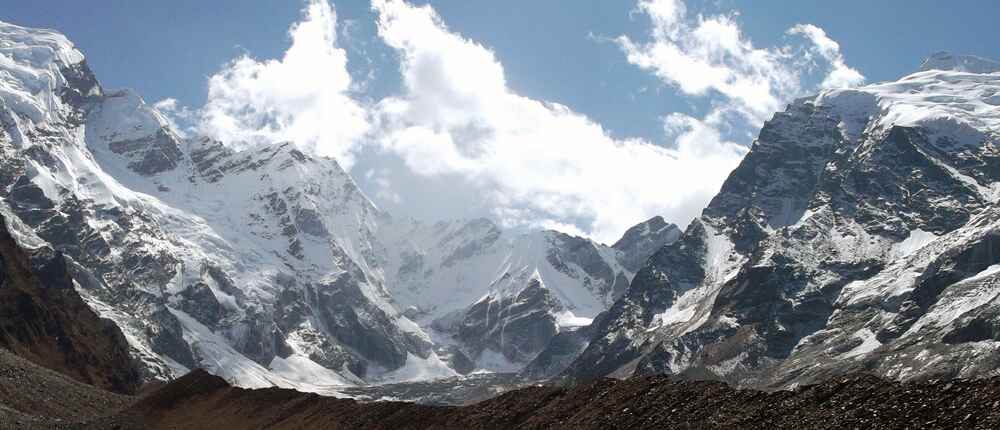
Most of the trekkers coming to Nepal might have already known about the renowned regions like Everest, Annapurna, Langtang, and Manaslu. Apart from these regions, most of the trekkers don't want to put the effort to hear about other regions. So by doing that, they might be missing out on what they were looking for. But, there is nothing to worry about. As long as we are here, we will always be presenting you with new trekking adventures in different regions of the country. Likewise, this time, we are presenting you the most unexplored trek in the far western region that is, the Api base camp Trek.
The Api Base Camp Trek is an adventurous journey that takes you to Mount Api's base camp, which is one of the tallest peaks in Nepal's far-western region. For trekkers, this moderate 15-day journey offers a special off-the-beaten-path experience that is different from the other region of trekking. Primarily, the trek starts at the village of Gokuleshwor in the Baitadi District. From here, the trek journey begins where you'll set out on a solitary, challenging trail that goes across uninhabited plains.
As you slowly go through the Api Nampa Conservation Area, you'll be treated to breathtaking vistas of the neighboring Himalayan ranges and the area's pristine nature beauty. Along with the mountain views, the region is also renowned for its rich biodiversity. It is home to rare animals that include snow leopards, Himalayan black bears, musk deer, and several bird species. We want to make sure that the rocky landscape, lush woods, and alpine meadows are gifts for you on this trekking journey.
Another delight of this journey to Api Base Camp is you get a chance to really immerse yourselves in the regional culture. You'll come across remote settlements along the path where you may talk to the welcoming residents and learn about their way of life in the past and present. Moreover, you can also make your trekking experience deeper and richer through the distinct cultural history of the far western region. Mostly you can be indulged in the regional customs, traditions, and food.
In general, the Api Base Camp Trek is a moderate and rewarding adventure that combines breathtaking mountain panoramas, far-flung landscapes, rich wildlife, and cultural immersion. Undoubtedly, it is the perfect option for thrill-seekers who want to go off the beaten route and discover the undiscovered wonders of Nepal's far-western region.
Useful Information
Travel Insurance:
If you are planning the Api Base Camp Trek in the Far-Western region of Nepal, then getting a travel insurance necessary. The insurance policy should cover all extra expenditure that might occur as a result of various health related issues, injuries or accidents, including ambulance, helicopter rescue; other medical treatment costs, like hospital charges, cost of the medicine and doctor’s fees as well as death and repatriation cost. Additionally, the policy should cover the cost of all extra activities that you are planning to undertake, during your stay in Nepal. Nevertheless, the policy should also cover the cost of misplaced luggage, theft and liability and cancellations.
Health, fitness and experience requirements:
Despite being a remote trek in Nepal, the Api Base Camp trek is easily attainable, if you are physically fit, have good stamina (some days require long hours of walking) and are in a good health.
Nevertheless, seeking advice, medication and permission from your doctor or General Practitioner is highly recommended. While seeking advice, it is also recommended to consult regarding the necessary guide walks and exercises, before the trip.
Although this trekking in Nepal does not require any prior experience, running, cycling,a few hours of uphill walking or prior hiking, trekking or camping experience can always boost the success rate.
Note:
We kindly request you to submit your medical fitness certificate (which must include your present health condition, medical situation, preceding illness, and the medications you are taking), before booking the packages. We also request you to be honest so that we can get prepared and take quick action in case of any emergencies. Nevertheless, we run regular first aid courses for all our trekking guides so that they can provide the first aid treatment in emergencies.
Accommodation and Food:
Tourist standard hotels, basic lodges, Homestays and camping are the accommodation options during the trip. Tourist standard hotels are the accommodation options in the cities like Kathmandu and Dhangadhi. However, during the trekking, basic lodges/Homestays and camping are the accommodation options. The rooms are usually booked on a twin-share basis,where you will have to share your room with another member of your group. Triple share can be arranged on request. However, if you are looking for a single supplement, extra charges will be applicable. Apart from the tourist standard hotels, the accommodation amenities and benefits will be very basic. It is recommended to bring your own sleeping bag.
Typical Nepali food will be served, during the trek. Western food will be served on request, subject to availability and in the cities. In remote areas and during the trekking, the food served will be very basic, made by local people using local ingredients as per the teahouse menu, but will be plentiful.
Transportation:
Domestic flights will be used as a transportation option from Kathmandu to Dhangadhi and vice versa. Local bus will be used from Dhangadhi to Latinath and vice versa. Private vehicles will be used as airport transfers, from airport to hotel and vice versa.
Communication:
Landline phones and internet facilities are available in the hotel in cities. However, at places where landline phones are not available, the customers can use the cell phone provided to the guide by the company. These cell phones are used by the guide maintain regular communication with the off-site team in Kathmandu. This phone can be used by the customer to send messages or call in the case of emergencies. The messages will be delivered to the concerned person from the office in Kathmandu.
Health and Medical Facility:
Cities like Kathmandu and Dhangadhi have good health facilities. Places further from Dhangadhi, till the base camp of Mt. Api, have very less health and medical facilities. Therefore, we request you either bring or buy your regular medicines in Kathmandu. Moreover, our team leaders will carry a first aid kit to help trekkers in case of any emergency.
Our attempt while you are on a trek:
Our guides will make every possible attempt to follow the itinerary provided to them to make your Api Base Camp Trek a great success. However, if case of any formidable situations, we request you to be flexible and follow the guide. While you are walking the trails of the Api Base Camp trekking, we can also reschedule your international flight (extra charges applicable), if you are looking to extend your stay in Nepal.
Why trek with us?
Adventure Mountain Explore Treks and Expedition offers a fully customized packages that are specifically designed to meet each individual trekker’s needs, requirements and budget. Partnering with AME directly allows you to deal with someone who has an in-depth practice of walking and knowledge regarding the track that are generally followed. This in turn will definitely benefit you as you can get information based on their personal experience. We also team up with the local residents, who can take you to the unexplored areas of the region to help you explore more of the area. It is simply a bonus trip for you.
We only hire professional, experienced and knowledgeable guides and team leaders that are dedicated to offering their trekking experience to make your trip successful. Moreover, the most important thing during the entire trek is trekkers’ safety. Therefore, we provide those trekking leaders that possess the highest level of qualification in Advanced Wilderness First Aid so that they can take every possible safety measures required to respond rapidly to changing situations during the trek. We also try our best to communicate with you, to help you with your additional requirements, during the trek.
To provide a top level of food and accommodation experience, we partner with some of the best tea houses and local people en route that can produce local culinary delights. We also make sure that the food provided to you is hygienic and balanced and the living space clean and cozy.
Moreover, all the formalities required during the trek will be taken care of by the team leader assigned to your group. Therefore, partnering with AME gives you the opportunity to enjoy a hassle-free trek.
Our legal documents:
AME Treks and Expedition is a certified company and is registered under the government of Nepal. We have special authority of the government of Nepal to operate treks, tours, expedition and other tourism related programs in Nepal, Tibet and Bhutan. Besides, we are also a very active member of other professional organizations like;
Ministry of Finance, Department of Taxation
Company Registration Office, Pvt. Ltd.
Ministry of Tourism and Civil Aviation, Department of Tourism Industry
Central Bank of Nepal, Nepal Rastra Bank Foreign Exchange Department
Nepal Tourism Board (NTB)
Trekking Agents Association of Nepal (TAAN)
Kathmandu Environment Education Project (KEEP)
What are the best seasons to plan this trek?
The Api Base Camp Trek can be planned any time of the year. However, spring and autumn are considered the best season in terms of trail, weather, climate, and visibility. Winters are very cold and the trails are affected by the rain during the monsoon season. Therefore, it’s always good to plan this trek, during the best season of the year –spring and autumn.
What should I bring?
Along with warm clothes you will also need other equipment for the sufficient protection of your body. Below is the list of necessary items that you need to pack before commencing your trek.
Head- Hat (with a wide brim), Sunglasses (with UV protection), Sunscreen lotion and Lip balm
Upper body- T-shirts (2), light and expedition weight thermal tops, Fleece jacket and pullover, Fleece wind-stopper jacket (Optional), waterproof (preferably breathable fabric) shell jacket, down vest/jacket (included)
Hands - Lightweight gloves, heavy-weight gloves/mittens with a waterproof outer shell
Lower body - Underwear (4), hiking shorts (2), lightweight cotton long pants, light and expedition weight thermal bottoms, Fleece or wool pants, waterproof (preferably breathable fabric) shell pants
Feet - Thin, light-wear inner socks (4), thick, warm wool hiking socks (4), hiking boots with spare laces, camp shoes (sneakers and/or sandals), gaiters (only for winter)
Accessories - Sleeping bag rated to zero degrees F (included), headlamp with spare bulb and batteries, small padlock or combination lock, basic first aid kit, large plastic bags (for keeping items dry inside trek bag), day pack, water bottles (2), hiking pole/walking sticks, small ear plugs
Toiletries – Soap, shampoo, toothbrush, small wash towel
Extras - Cameras with extra batteries and cards, binoculars, light balaclava or warm fleece hat, reading books, trip map/guide book, journal & pen, iPod & travel games (like cards, chess, and backgammon)
Passport and Visa Information:
It is very easy to obtain Nepal’s visa. You may either apply for a visa at your nearest Nepalese Embassy/Consulate or Mission offices in your own country or you can buy this upon your arrival at Tribhuvan International Airport in Kathmandu. To apply for a visa, you need 2 passport size photographs, Visa fees in US dollars and your passport that is valid for at least 6 months before the trip. However, nationals of SAARC countries (India, Bhutan, Sri Lanka, Pakistan, Bangladesh, Maldives and Afghanistan) and China do not require any visa to visit Nepal. Transit visa for foreign nationalities is only provided for 3 days. Therefore, visa is required for longer stays. However, for the convenience or foreign nationals, a visa is also provided from the borders listed below:
Tribhuvan International Airport (Kathmandu)
Kakarvitta, Jhapa (Eastern Nepal)
Birgunj, Parsa (Central Nepal)
Kodari, Sindhupalchowk (Northern Border of Nepal)
Belhiya, Bhairahawa (Western Nepal)
Jamuna, Nepalgunj (Mid Western Nepal)
Mohana, Dhangadhi (Far Western Nepal)
Gaddachauki, Mahendranagar (Far Western Nepal)
Tourist Visa Fees:
Transit visa (3 days) – Free of cost
Multiple entry (15 days) – 25 USD or equivalent convertible currency
Multiple entry (30 days) – 40 USD or equivalent convertible currency
Multiple entry (90 days) – 100 USD or equivalent convertible currency
(For more information, please contact the Department of Immigration, Maitighar, Kathmandu.
Tel: 00977-1 4221996/4223590/4222453. You can also download visa form from – www.immi.gov.np)