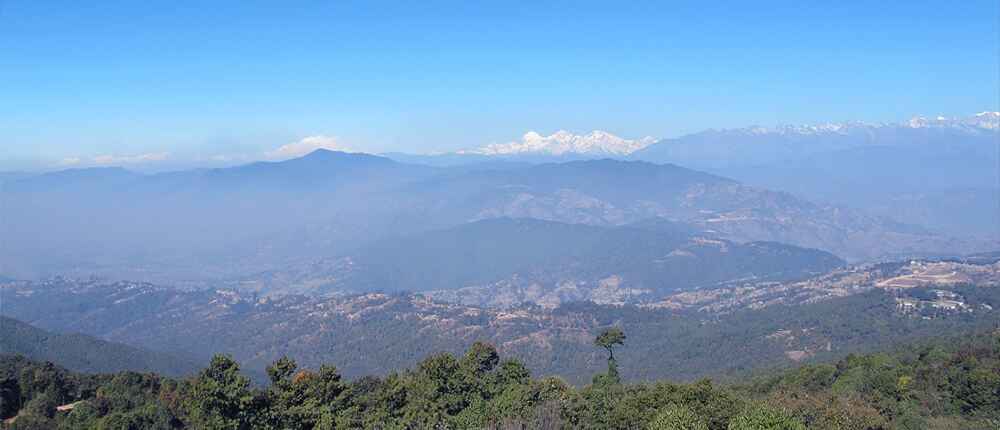
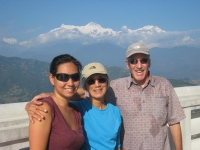
The Yoga Retreat Trek is designed for those who are interested in learning and exploring Yoga while Trekking in Nepal. In this package, Yoga session will be Conducted for you by our professional Yoga instructor every morning and evening throughout your stay. The Yoga Retreat Trek starts from Sundarijal which is located 15km North- East of Kathmandu. The trial contains steep and concrete stairs which leads to the Sundarijal dam, main water supply of Kathmandu Valley. It then passes through village containing Mud made houses. Mulkhara is the main village on the way where trekkers can rest for sometime before reaching Chisopani. Sherpa, Tamang and Newari people living with different ethnic value makes this village culturally rich. The trial then passes through Jhule village to reach Nagarkot. Nagarkot offers Panoramic view of Himalayas as well as Sunrise and Sunset. The Trek ends at Changu Narayan temple existed as early as 325 AD, the oldest Temple in Nepal which is listed as UNESCO World Heritage Sites.
Trip Includes
- Airport pick up and drop off service by private vehicle
- 3 night’s accommodation in Kathmandu in a (3* Boutique Hotel) with breakfast
- One day Guided city tour of Kathmandu valley with private car
- Welcome and Farewell dinner at one of the most popular and typical Nepalese restaurant with traditional dance & Music
- All meals during the trek (Breakfast/Lunch/Dinner)
- 3 cups of tea/coffer during the trek
- Fresh seasonal fruits after every dinner
- Lodges during the trek
- One qualified & professional Yoga Teacher and Yoga classes as per itinerary
- Porter and his entire expenses (one porter for each two members)
- All the Gov and local taxes
- Down jacket and sleeping bags (if required)
- Yoga Mat
- Company t-shirt and duffel bag (As a souvenir)
- Medicine kit box for a group
Trip Excludes
- Nepal arrival Visa
- Fly to in Nepal and fly out from Nepal
- Your meals at Kathmandu except Breakfast
- Monument entrance fees while on tour in Kathmandu ( USD 26 per person)
- Entire beverages, mineral water, beer etc during hiking
- Travel insurance (Which must includes trip cancellation, evacuation)
- Personal nature expenses
- Tips to hiking members
- Any extending trips
Useful Information
To travel to Nepal, the land of Mount Everest , is to enter a country where Buddha was born. Nepal is a country with lots of Temples, Sacred rivers and mountains that collectively makes it a place perfect for enlightenment. For people who are interested in visiting Nepal this package takes them beyond trekking and sightseeing. It will be a sacred trip exploring yoga as well as adventure. Yoga offers whatever you are looking for such as weight loss, flexible body, beautiful glowing skin, peaceful mind and strong health. Yoga makes you truly healthy by making you not only physically fit but also mentally and emotionally balanced. A few minutes yoga a day would lessen your stress. If you have been feeling completely drained out at the end of the day then Yoga helps you to increase your energy level as well. Regular yoga practice is perfect for toning your muscles while trekking.
Nepal: Nepal is a landlocked country situated between India and China. It is a bio - diversity rich country because of its unique geographical position and altitude variation. Its elevation starts from 60m above the sea level up to the highest point of world i.e. 8848m (height of Mt Everest). Nepal is second richest country in terms of water resource. It contains beautiful Himalayan range in the north and rivers beginning from those Himalayas glaciers. The three main Geographical range of Nepal are Himalayan region, Hilly region and Terai region.
Area: 147,181 sq. kilometers
Geography: Situated between China in the north and India in the south
Capital: Kathmandu
Population: 2,642,799
Language: Nepali is the native language. However, travel-trade people understand and speak English as well.
Currency: Nepali Rupee
Political System: Federal Democratic Republic of Nepal
Religion: The major number of people are Hindu. However, there is a harmonious blend of Hinduism and Buddhism.
Travel season: The best time to visit Nepal is Spring and Autumn.
Spring: - (March, April, May) - Warm weather when Rhododendron flowers are at the bloom, trail is excellent because of clear sky and best visibility
Autumn: - (Mid September, October and November) - excellent trails, clear blue skies, best visibility.
Winter months: - (December, January and February) are also good, but you should be prepared for the cold.
Summer: - (from Mid June, July and August) Rain and visibility can be an issue however Nepal can be visited whole year around.
People: More than 91 ethnic groups living and 70 different language spoken
Cloths to wear: Light weight cloths are recommended from May to October. Warm Cloths from October to March. From June to August Umbrella and Raincoat are required.
Climate: Climate of Nepal varies with the variation of elevation. The Southern Terai of Nepal has a tropical monsoon climate with rainy summer and Southwest winds of monsoon and dry winters. In the Kathmandu Valley the average rainfall is about 2,300 mm (about 90 in), most of which occurs from June to September. There is warm temperature between elevations of about 500 and 2,700 m (about 1,640 and 8,8600 ft. There is cool temperature between about 2,700 and 3,000 m (about 8,860 and 9,840 ft), Between about 3,500 and 4,100 m (about 11,480 and 13,450 ft) summers are cool and winters are very cold. Above 4,100 m (about 13,450 ft) a severely cold, alpine climate prevails there.
Postal Services: The Central Post Office Opens at 9am till 5 pm from Monday to Friday. The stamp, postcard and Aerogram counters open from 7 am to 4 pm. Post Restate is available Monday to Friday from 9 am to 5 pm. Express Mail Service (EMS ) is available at GPO and Thamel, Basantapur and airport postal counters.
Telephone Services: Telephone, fax, telex and telegraph services are available by Nepal Telecommunications Corporation in Tripureshwar. Hotels and private communications centers provide the ISD services. Nepal's Country code is 00977 if you need to call from outside the country. Kathmandu's area code is 01. Local SIM Card can be bought by anyone to use while in Nepal and for that 2 passport size photo and copy of passport/ visa is required.
Internet Services: In past few years lots of Internet cafes and communication centers has been established in past few years. For keeping touch with your home country, you just need to find a place where you are comfortable. Internet and Email services are also offered in the Hotels in Kathmandu, Chitwan , Pokhara and other main cities.
Electricity: Electricity is available in most of the major townswith a voltage of 220 volts and 50 cycles, however there can be a Load shedding but most of the hotels have installed their own Generator in order to use at the time of Load shedding.
Medical Services: Most of the medicines are available in Kathmandu. There are many hospitals and Private clinics in Kathmandu. Government has established health posts in different places of Rural Nepal.
Meals and Accommodation: There are many categories of Hotels available in big cities ranging from Tourists standards Hotels to star level. Restaurants are available in many places of city area as per your interest. However in the mountain area when you are trekking basic mountain accommodation is available with basic facilities like hot shower, toilets, comfortable mattress, lights etc.
Insurance: Travel insurance is not necessary but if you already have it then its better.
Vaccination: Vaccination for Hepatitis A, Japanese Encephalitis, Polio, Rabies, Tetanus, Typhoid and Malaria etc. are highly suggested but it's not must.
Medical Kit: Its useful to have a simple and adequate medical kit with you. we recommend following items in your medical kit - Aspirin or Panadol - for pain or fever; Antihistamine - as a decongestant for colds, allergies and to help prevent motion sickness; Antibiotics - useful if traveling off beaten track but they must be prescribed; Kaolin preparation (Pepto-Bismol), Imodium or Lomotil – for stomach upsets; Rehydration mixture - for treatment of severe diarrhea; Antiseptic, mercurochrome and antibiotic powder or similar 'dry' spray - for cuts and grazes. other things such as Calamine lotion to ease irritation from bites or stings, bandages and band aids for minor injuries, scissors, tweezers, thermometer, insect repellent, sun block lotion, chopsticks, water purification tablets, throat lozenges (Strepsils), moleskin, Sulamyd 10% eye drops, Acetaminophen (Paracetamol, Antacid tablets) are also recommended.
Gather information about: Altitude sickness, Diarrhea, Giardia, dysentery, cholera, hepatitis rabies, typhoid, tetanus, meningitis diphtheria, malaria and HIV/AIDS Common sense can often save lives.
Packing list:
You should carry warm clothes for this trek. For your reference, we recommend the following packing list if you are planning for this trek.
For Climbing:
Ice Axe
Crampons
Harness
Screw gate Carabineers
Descended abseil device
Prussic Loops
Plastic Mountaineering Boot
For eyes: a pair of sunglasses with UV protection
For Lips: Lip balm
Ear Plugs
For Upper body part:
T- Shirts (2)
Light and expedition weight thermal tops
Fleece jacket or pullover
Fleece Wind-Stopper jacket (optional)
Waterproof (preferably breathable fabric) shell jacket
Down vest and/ or jacket
For Hands:
Light weight gloves
Heavy weight gloves/ mittens with a waterproof outer shell
Lower body part:
Underwear (4)
Hiking shorts (2)
Light weight cotton long pants
Light and expedition weight thermal bottoms
Fleece or wool pants
Waterproof (preferably breathable fabric) shell pants
For Feet:
Thin, lightweight inner socks (4)
Thick, warm wool hiking socks (4)
Hiking boots with spare laces
Camp shoes (sneakers and/ or sandals)
Gaiters (when hiking in winter)
Accessories:
Sleeping bag rated to zero degrees F
Headlamp with spare bulbs and batteries
Small padlock or combination lock
Basic First Aid Kit
Large plastic bags- for keeping items dry inside trek bag
Daypack (you will carry your own small daypack)
Water bottles (2)
Hiking poles/ walking sticks
Toiletries:
Soap, shampoo, toothbrush, toothbrush etc
Small wash towel
Extras:
Camera with extra batteries and cards/ film
Binoculars
Sun hat or scarf
Light balaclava or warm fleece hat
Reading book
Trail Map/ Guide book
Journal & Pen
IPod & Travel
Cards or games
Passport & Visa Information
You can obtain Nepal visa at your nearest Nepalese Embassy/ Consulate or Mission offices abroad easily or you may also get the Visa on arrival to Tribhuwan International Airport Kathmandu as per your convenient . You will require 2 passport sized photos, Visa fees in USD and at least 6 months valid passport at the starting of the trip. Nationals of SAARC countries and China do not need visa for visiting Nepal. Transit visa of 3 days is provided to foreigners. Visa must be obtained after the 3 days initial period. Nepalese Visa can be obtained from the following boarder/ places:
• Tribhuvan International Airport, Kathmandu
• Kakarvitta, Jhapa (Eastern Nepal)
• Birganj, Parsa (Central Nepal)
• Kodari, Sindhupalchowk (Northern Border)
• Belhiya, Bhairahawa (Rupandehi, Western Nepal)
• Jamuna, Nepalgunj (Banke, Mid Western Nepal)
• Mohana, Dhangadhi (Kailali, Far Western Nepal)
• Gaddachauki, Mahendranagar (Kanchanpur, Far Western Nepal)
Tourist Visa Fees
3 days transit visa - Free of cost
Multiple entry 15 days - US$ 30 or equivalent convertible currency
Multiple entry 30 days - US$ 50 or equivalent convertible currency
Multiple entry 90 days - US$ 125 or equivalent convertible currency
(For further information, please contact Department of Immigration, Kalikasthan, Dillibazar, Kathmandu
Tel: 00977-1 4433934 / 4429660 / 4438862 / 4438868, Download visa form-: www.immi.gov.np)