Each trekking trip up the grand Mt. Everest nearby its own incredible, memorable moment that everlastingly live on in the hearts and minds of those daring enough to make the mount. One of the most impulsive essentials of
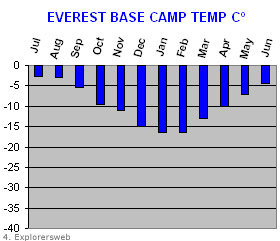 Each trekking trip up the grand Mt. Everest nearby its own incredible, memorable moment that everlastingly live on in the hearts and minds of those daring enough to make the mount. One of the most impulsive essentials of the Everest region is the weather. If you’re not suitably geared up for the twists, turns and volatility of the conditions that can occur in this breathtaking region, you might find yourself in an painful and unpleasant circumstances. Here are some weather basics to help ensure that you come to the Himalayas as well equipped and prepared to face anything. In general, the nights are much cooler than the daytime hours in the Everest province. Lots of first-time trekkers are flabbergasted to learn about the unbelievable range that may occur in a given day. During the day, the thermometer could reach temps as high as 25 degrees C, only to dip down as low as -20 degrees C in less than 24 hours. While there’s no way to know exactly what each day in the mountains will bring, the weather and temperature ranges tend to be somewhat conventional based on the month and season. Spring - March / April / May / June
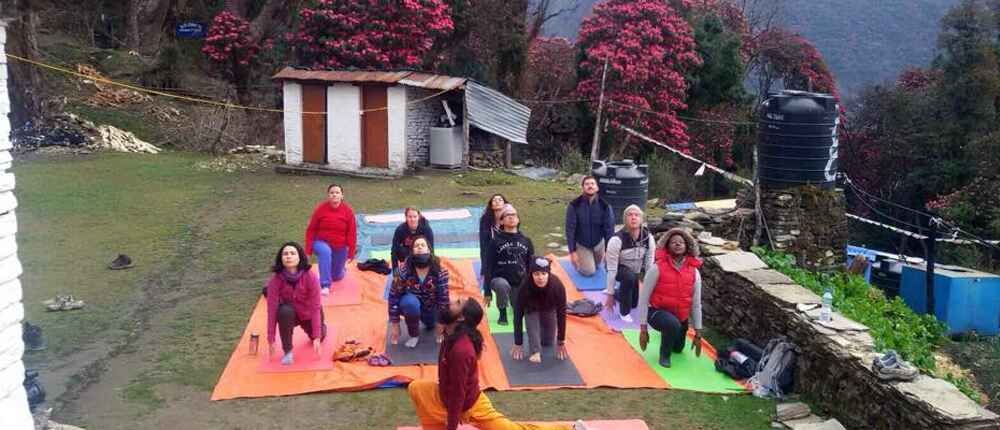
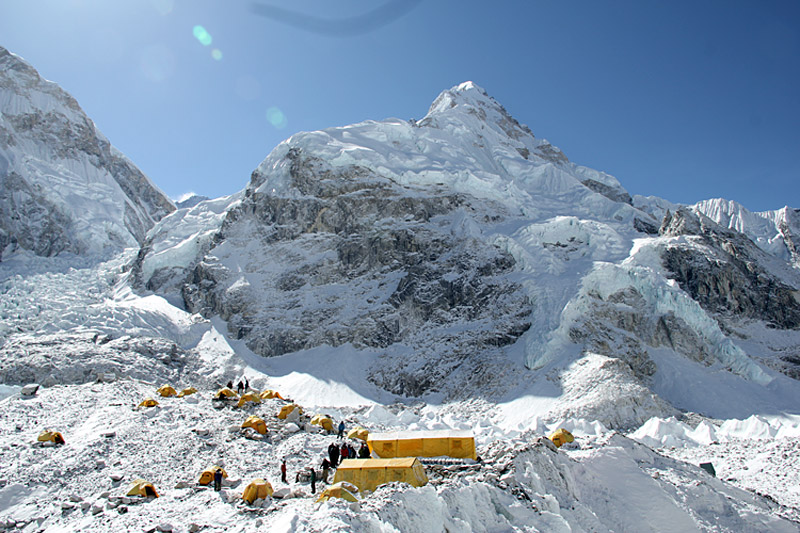
Spring happens to be one of the best times of the year to visit the Everest region, although because of this, it can become a bit crowded. One can meet many other Everest climbers during this time of year and base camp is full of tents. The stunning clear blue sky can be seen and the many different kind of flower are visible in the lower altitude.
During springtime, the average temperature is 17 degrees C with a maximum of 25 degrees C during sunny days and a minimum of -15 degrees C in the morning and at night for areas above 4000 meters. July / August Through Mid-September is Monsoon Season
This season is not really recommended to travel as it rains in the lower altitudes, below 3500 meters. In areas above 4000 meters, it rains sometimes and although it is also sometimes dry, very few people travel during this season. There are positives to trekking during the monsoon months, however. The excess rainfall can provide ample chance to see spectacular views of the waterfall and it’s also the best season to avoid the crowds.
The maximum temperature during the monsoon season averages 25 degrees C during sunny days with a minimum -15 degrees C in the morning and night at areas above 4000 meters. The average temperature tends to hover around a comfortable 18 degrees C.
Each trekking trip up the grand Mt. Everest nearby its own incredible, memorable moment that everlastingly live on in the hearts and minds of those daring enough to make the mount. One of the most impulsive essentials of the Everest region is the weather. If you’re not suitably geared up for the twists, turns and volatility of the conditions that can occur in this breathtaking region, you might find yourself in an painful and unpleasant circumstances. Here are some weather basics to help ensure that you come to the Himalayas as well equipped and prepared to face anything. In general, the nights are much cooler than the daytime hours in the Everest province. Lots of first-time trekkers are flabbergasted to learn about the unbelievable range that may occur in a given day. During the day, the thermometer could reach temps as high as 25 degrees C, only to dip down as low as -20 degrees C in less than 24 hours. While there’s no way to know exactly what each day in the mountains will bring, the weather and temperature ranges tend to be somewhat conventional based on the month and season. Spring - March / April / May / June
Spring happens to be one of the best times of the year to visit the Everest region, although because of this, it can become a bit crowded. One can meet many other Everest climbers during this time of year and base camp is full of tents. The stunning clear blue sky can be seen and the many different kind of flower are visible in the lower altitude.
During springtime, the average temperature is 17 degrees C with a maximum of 25 degrees C during sunny days and a minimum of -15 degrees C in the morning and at night for areas above 4000 meters. July / August Through Mid-September is Monsoon Season
This season is not really recommended to travel as it rains in the lower altitudes, below 3500 meters. In areas above 4000 meters, it rains sometimes and although it is also sometimes dry, very few people travel during this season. There are positives to trekking during the monsoon months, however. The excess rainfall can provide ample chance to see spectacular views of the waterfall and it’s also the best season to avoid the crowds.
The maximum temperature during the monsoon season averages 25 degrees C during sunny days with a minimum -15 degrees C in the morning and night at areas above 4000 meters. The average temperature tends to hover around a comfortable 18 degrees C.

Tags:
#weatherInEverest
#TemperatureInEverest
Share this article
A
admin
Crafted for travellers who want grounded planning insight, mountain context, and a clearer feel for the journey before they go.