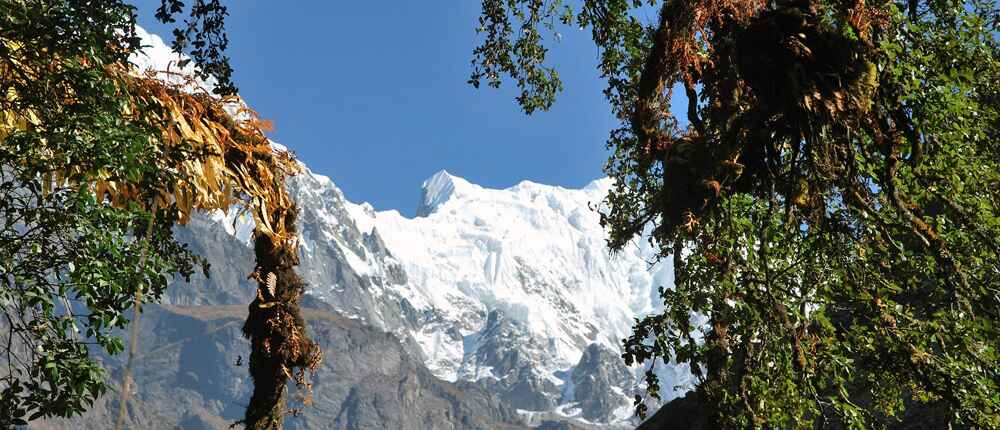
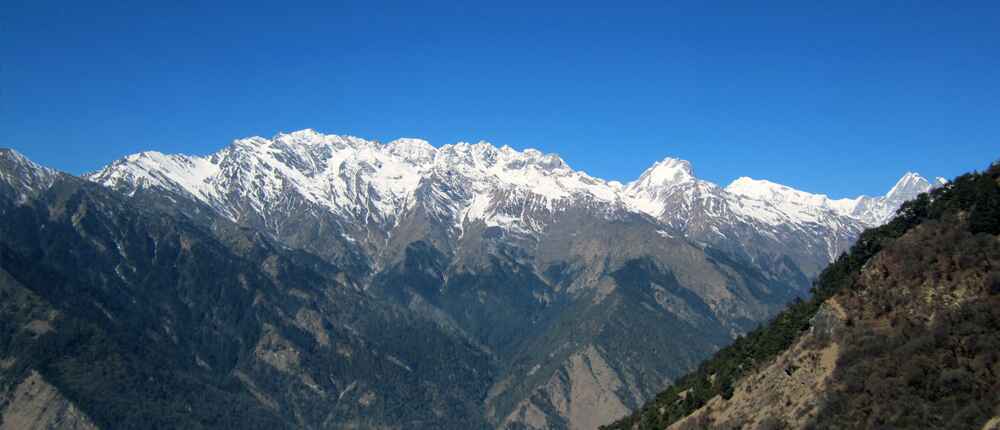
Tamang Heritage Trail is newly opened trekking trail for trekkers and probably the best for cultural seekers in Nepal Himalaya. This trekking route lies near Tibetain border. This trek leads you through the popular Tamang village where many ancient Gompas and Buddhist pray rocks which are set around the village and sometime even on the walking trail. This is an unique trail where you will have an experience of the Tibetain Tamang culture and their poor lifestyle. You can also directly interact with locals to get in touch with their interesting tradition.
Another trekking route Langtang is a name of Himalayan range and national park which lies to the northern border side of Nepal. Langtang national park was established in 1976 as the first Himalayan National park of Nepal. It is located an area of 1710 sq km. The protected area exceeds an altitudinal range of 6,450 m (21,160 ft) and one of the popular trekking destination on Nepal. It is also very famous for flora and fauna where you can see world’s rare animal such as Snow leopard, Red Panda etc. The trail where you walk is through the valley and village of Langtang. Langtang trail leads you along the Langtang Khola to Keynjing gompa which is the last village of the valley. There are some day trips around Keynjing Gompa to visit Glacier, Tserko Ri, Kharka and many more. The Cheese factory of Keynjing Gompa is very interesting to watch which was helped by Swiss government. There are lots of chance to see wild animals and birds along the route.
This combined trip Tamang Heritage Trail and Langtang Trek begins from Sybrubesi after a long bus ride from Kathmandu. The trail leads through the popular Tamang village, Hot spring at Totapani and continue goes up to Keynjing gompa through Langtang village. The major highlights of the trek are an ancient lifestyle of indigenous of Tamang inhabitants and healing baths in natural hot spring and Cheese factory as well as beautiful Himalayan scenery.
Trip Includes
Airport pick up and drop by private vehicle
3 Nights twin sharing accommodation in Kathmandu at tourist standard hotel with breakfast
One full day guided city tour by private vehicle
Welcome dinner and farewell dinner at one of the best Nepalese restaurant with traditional ethnic music and dance
Trekking permits and Tims permits
Kathmandu- Sybrubesi- Kathmandu transport by public bus
Breakfast in the city and full meals during the trek
Gov. licensed and well trained English speaking guide and his entire expenses
A porter (One porter for each 2 members) and his entire expenses
Insurance of Guide and Porter
All required local tax and Gov tax
Down jackets and sleeping bags
Trip Excludes
Nepal arrival visa
Monument entrance fees
Meals in the city except breakfast and above mentioned special dinner
Your personal nature expenses eg. Mineral water, Beer, Coke and entire beverage etc
Travel insurance that covers trip cancelation and Helicopter evacuation
Tips and any other extending trips and accommodation
Useful Information
Country Information
Nepal is a land located country which lies in between India and China. It is one of the richest countries in the world in terms of Biodiversity due to its unique geographical position and altitude variation. The elevation of the country ranges from 60 meters above sea level to the highest point of the world, Mt. Everest at 8,848 meter above sea level. Nepal is small country but many interesting things to see. Nepal is the second richest country in the world in terms of water resources. We have beautiful Himalayan range in the north and have many rivers begins from the Glacier of the Himalaya. Nepal has three major geographical range; Himalayan region, Hill region and Terai low land.
Nepal offers abundant potentials to evolve as a round the year travel destination. Based on this fact, many international tourists are indeed incorporating Nepal in their preferred travel itinerary. Nepal is known for its beautiful and dramatic scenery. Passionate walkers and non-walkers alike are attracted towards its mountains and foothills to view the Himalaya and the world highest peak. Many also discover the beauty of the forests and the enjoyment of time spent as a self contained expedition, far from the rush of the modern world and in the delightful company of the trek crew as they tend to our needs and ensure that we comfortable and able to enjoy the trek to the fullest. They are physically strong, sharp-witted and have an incredibly positive attitude towards a life that we would consider extremely tough. There is something trek in the Himalaya that draws you back time and time and again. For keen walkers it is a paradise and non-walkers find that one foot just seems to follow the other, drawn by the appeal of what lies beyond. Nepal's population of over 29 million people is a blend of Hindu, Buddhism and animist religion. Nepal is a mosaic of cultures, ethnic groups and languages. It is remarkable that there are over 100 different ethnic groups, with at least as many languages. More than three million people live in Kathmandu Valley, but at least ninety percent of the Population lives in the rural areas of the lower and middle hills of the Himalayan Range. Nepal is predominantly a simple rural society. Nepal has been declared Federal Republic State on May 28th 2008.This historic development followed the first elections held since 1999 after a ceasefire agreement between the government and the Maoists was signed in November 2006, putting an end to 10 years of instability in the Kingdom. The announcement of the abolishment of the Monarchy also brought an end to 240 years of Royal rule in the country. Today the general feeling amongst Nepalese is a positive one, and many believe that Nepal is now finally moving forward with a new identity as a democratic nation and a fresh outlook. All we people hope a lot for further progress.
Nepal at a glance
Area: 147,181 sq. kilometers
Geography: Situated between China in the north and India in the south
Capital: Kathmandu
Population: 2,642,799
Language: Nepali is the native language. However, travel-trade people understand and speak English as well.
Currency: Nepali Rupee
Political System: Multi-party democracy
Religion: The major number is Hindu. However, there is a harmonious blending of Hinduism and Buddhism.
People: Nepal has more than 91 ethnic groups and 70 different spoken languages.
Travel season
we do have two best seasons to visit our beautiful country. We suggest you to come at the right time of the year if possible. So the best time is spring and autumn.
Spring :- ( March, April, May) - Best warmest time to trek. Rhododendron flowers in bloom excellent trails and clear skies, best visibility. Good Temperature, warmest weather of the year.
Autumn: - (Mid September, October and November) - excellent trails, clear blue skies, best visibility.
Winter : - (December, January and February) are also good, but it’s obviously colder. You have to be prepared for this.
Summer: - Monsoon, so rain and visibility can be a big issue (from Mid June, July and August).We do not suggest you this time to visit Nepal. Nepal can be visited the whole year round.
Health and Fitness
We strongly recommend you to consult the doctor before planning your holidays. You should obtain professional advice from a travel clinic or your local GP about which vaccinations to have before you arrive in Nepal. Your doctor will advise current inoculation requirements. If a doctor has recommended against travel or indicated travel may be inconvenient then kindly inform us of the details. On all trekking trips technical experience is not required, hiking experience is an advantage, but positive attitude and strong determination is very important.
Train Yourself
This trip requires walking on altitude above 3000m from sea level for the duration of 2 days. So it is not so important to have walking or previous trekking experience. But trek preparation is required. Running will help your stamina but does not fully prepare your muscles for a strenuous hike. Go for walks. It is advisable to go for frequent walks which should include some uphill and downhill sections if possible in your surrounding area. Take your daypack with you with at least a weight of three kilograms or more. This will simulate the conditions you will encounter while on your trekking with us. Join a gymnasium. Ask your gym instructor to work out a fitness program that consists of progressive resistance exercises. An experienced instructor will be able to tailor a safe exercise regime based on your age, condition and strength. Work with a schedule that progresses to higher resistance or weights as you develop your fitness.
Mountain Weather
The weather conditions in the mountains are notoriously difficult to predict. During the day it can be nice and warm and the nights are generally always cooler. The weather you will experience on this Trek is extreme and rather unpredictable so it is best to be prepared for all eventualities. Temperature during the Tamang Heritage trail is very normal and even hot below 2500m; the expected temperature during a day is from 20 to 25 degree Celsius during spring months and 10 to 20 degree Celsius during the autumn months. The night time can drop to 3 to 5 degree Celsius. Temperature above Langtang village (3500m), the expected temperature during the day is from 5 to 10 Degree Celsius (also depends up on weather condition) at spring months and 6 to 15 degree Celsius at autumn months. The However, above mentioned chats of temperature are the expected but temperature can be different as per the everyday weather conditions of the mountain is hard to predict.
Acclimatization
There is no way to prepare for altitude other than to spend time at altitude. Being in very good physical condition will help ameliorate some of the exhaustion that people often feel, but it will not prevent altitude caused medical problems such as Acute Mountain Sickness. This itinerary is designed with a high degree of awareness of AMS (Acute Mountain Sickness) in mind and to ensure a comfortable and safe adventure trek in the Himalayas. Staying well hydrated and getting plenty of rest may help. The maximum elevation of this trek will be reached at Keynjing Gomba at 3800 meter above sea level. You can even climb further up to the Tserko ri at 4800 meter for the better view if health and weather condition allow. This is not serious altitude line but it may happen if you do not care about it. We have specially designed our trek itinerary with keeping maximum acclimatization days into the itinerary to make you acclimatize but ultimately your response at altitude is due to genetic factors. Trekking above from 3500m, walking will be more difficult because of the drop in oxygen levels and the humidity. At these heights there is around 20%- 30% less oxygen than at sea level, so your body needs time to adapt these conditions and it is absolutely essential to have sufficient time for acclimatization. That’s why; in this given itinerary all of these factors have been taken into consideration while design this itinerary to minimize the risk of Acute Mountain Sickness.
Communication facilities on this trek
These days, there are enough communication facilities on this trek, most of the local villages has local telephone booth if required, you can easily communicate with your friends and family however the cost is slightly expensive. Nowadays, during the clear days, reception of Nepalese cell phones is on throughout the trail, our guide will have Cell phone on the trip so that we can talk to you very often to pass message to your family if required. You can even use internet facility at Sybrubesi, the first day of the trip or the last day in the mountain.
Foods and Accommodation
In Kathmandu we use tourist standard hotel to ensure a comfortable stay and relaxed environment before and after your adventure. All breakfasts are included at the hotel in Kathmandu. Rooms are generally twin share – depending on group size and room availability, triple share may be offered up on your request. A single supplement room is available at an additional cost for accommodation and required expenses during the trek to provide good quality food and services. For breakfast you expect to have porridge, toast or chapattis, omelet and local bread. We will provide all meals on full board (Breakfast, Lunch, Dinner and tea & coffee) from the teahouse menu during the trekking period. Whilst trekking on the Tamang Trail and Langtang trail, the accommodation is in guesthouses or Lodges which are basic with shared facilities. On the Tamang Heritage Trail trek one night you will have to stay at home stay with family which is an experience of lifetime. Some lodges offers shower and mostly offers bucket hot water up on request.
Our Guides helper and safety trip
Our Trekking trip takes you to the remote Himalayan region, it is very essential that you are accompanied with the very experienced and qualified guide for the safety and successful trip. We have local trek guide working with us who is trained and qualified on the trip. There would be our one assistance Sherpa on each additional 4 peoples on the trek- this arrangement would ensure that even if any of our guide/ assistance guides get sick or if any travelers gets sick and need to be back or delay the days of walking, it would still works smoothly and there would not be any impact on our original trek plan. Also each two trekker would have one Sherpa helper (porter) for carrying your trekking bags.
Our effort while you are on a trek
while you are on a trek, there are not much communication facilities so that we would pass your message to your family and friends if required. Our guide will have cell phone and we often speak with you so that easy for us to deliver message. Our every effort will be made to keep to the proposed itinerary, however as this is adventure travel in a remote Himalayan region. The health of member, weather conditions can all contribute to changes the itinerary. The leader will try to ensure that the trip runs according to plan, but please be prepared to be flexible if necessary. If you are delayed longer than the itinerary date we can help reschedule your international flights but prepare to pay some extra charge if required.
Travel Insurance
you should have travel insurance to be adequately protected in terms of insurance. A travel insurance policy that should cover cancellation, injury, death, lost baggage, theft, liability, medical treatment and expenses is strongly recommended. Make sure the insurance covers all the activities that you will be undertaking during your stay in Nepal. If you become ill, all hospital expenses, doctors' fees and repatriation costs are your responsibility. If you are injured and unable to travel, you can ask for a rescue helicopter from a remote area only if you have definite proof you can pay for it. They pay a cash deposit to the helicopter operator and collect the money from you if you have been rescued. Be sure your policy specifically covers those.
Vaccination
Vaccination is required to plan to your trip to Nepal but it is not a must to have thing to come, but highly suggested. Your doctor will have the information of vaccination you would require to the country where you will be travelling. Hepatitis A, Japanese Encephalitis, Polio, Rabies, Tetanus, Typhoid and Malaria etc. are the recommended vaccination for travel Nepal.
What to bring
Pack list: It is essential to have warm clothing and equipment to plan this trip as per season. Here below are some suggestions for planning this trip. Please kindly take it as a reference and prepare yourself.
Equipments:
Head;
Sunglasses with UV protection
Sun Hat
Lip balm
Upper body:
T- Shirts (2)
Light and expedition weight thermal tops
Fleece jacket or pullover
Fleece Wind-Stopper jacket (optional)
Waterproof (preferably breathable fabric) shell jacket
Down vest and/ or jacket
Hands:
Lightweight gloves
Heavyweight gloves/ mittens with a waterproof outer shell
Lower body:
Underwear (4)
Hiking shorts (2)
Lightweight cotton long pants
Light and expedition weight thermal bottoms
Fleece or wool pants
Waterproof (preferably breathable fabric) shell pants
Feet:
Thin, lightweight inner socks (3)
Thick, warm wool hiking socks (2)
Hiking boots with spare laces
Camp shoes (sneakers and/ or sandals)
Gaiters only for winter)
Accessories:
Sleeping bag rated to zero degrees F
Headlamp with spare bulbs and batteries
Small padlock or combination lock
Basic First Aid Kit
Large plastic bags- for keeping items dry inside trek bag
Day pack (you will carry your own small daypack)
Water bottles (2)
Hiking poles/ walking sticks
Toiletries:
Soap, shampoo, toothbrush, toothbrush etc
Ear plugs
Small wash towel
Extras:
Camera with extra batteries and cards/ film
Binoculars
Sun hat or scarf
Light balaclava or warm fleece hat
Reading book
Trail Map/ Guide book
Journal & Pen
IPod & Travel games (i.e. cards, chess, and backgammon)
Passport & Visa Information
Nepal visa is probably the easiest to obtain. You can buy your Nepal visa at your nearest Nepalese Embassy/ Consulate or Mission offices abroad or buy this upon on arrival to Kathmandu international airport as per your convenient. You have to have 2 passport size photographs, Visa fees in US cash & valid passport at least for 6 months valid at the starting of the trip. Nationals of SAARC countries and China do not need visa when visiting Nepal. As per this rule, Indian nationals do not require visa. Transit visa is provided for foreign nationality for 3 days. Visa must be obtained for staying over the initial period of three days.
Tourist Visa Fees
3 days transit visa - Free of cost
Multiple entry 15 days - US$ 30 or equivalent convertible currency
Multiple entry 30 days - US$ 50 or equivalent convertible currency
Multiple entry 90 days - US$ 125 or equivalent convertible currency
(For further information, please, contact Department of Immigration, Kalikasthan, Dillibazar, Kathmandu
Tel: 00977-1 4433934 / 4429660 / 4438862 / 4438868, Download visa form-: www.immi.gov.np