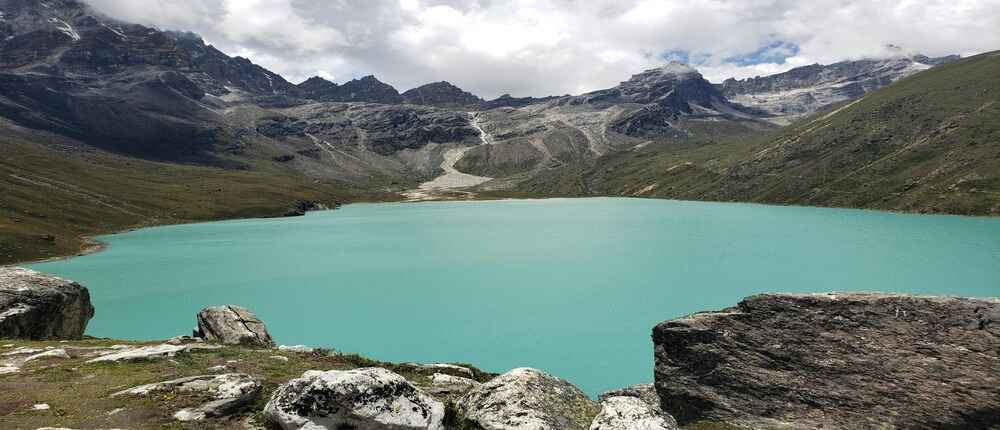
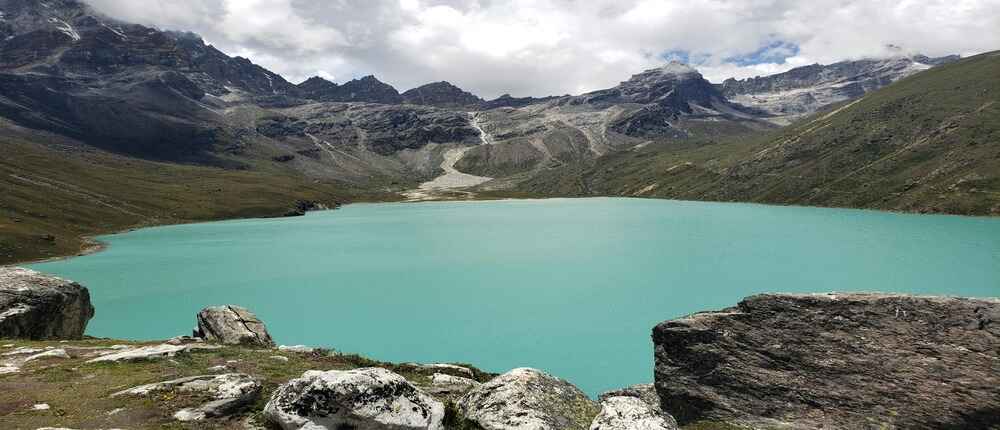
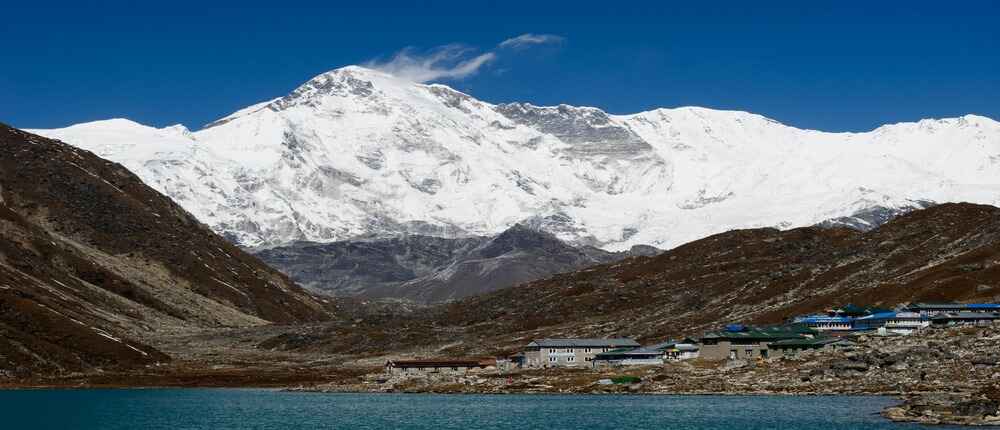
The Gokyo Valley trek is the most popular trek in the Everest region after the Everest base camp trek. To put it simply, the Gokyo Valley trek is a much more calm trek since it is less busy and suited for those who want a peaceful adventure. You could think of the Gokyo Valley Trek as an alternative to the Everest Base Camp Trek. We are sure that although being an alternative, this trek still provides a unique experience by leading you to unbeaten and untrodden paths around the Everest region.
The Gokyo Valley trek offers a full grasp of local village life as well as breathtaking views of rivers, glaciers, mountains, and, obviously, the turquoise Gokyo Lakes itself. Moreover, trekkers get a one-of-a-kind chance to see the breathtaking 8000-meter Himalayan peaks, which include Mt. Everest, Lhote, Cho-Oyu, and Makalu, from a panoramic vantage point as they undertake the Gokyo valley trek. Also, you will be exploring the Ngozumpa Glacier which is the largest glacier in Nepal.
As more and more trekkers arrive in this region, the Gokyo Valley trek has emerged as one of the region's most popular trekking destinations. Particularly to do this trek, trekkers do not require previous trekking experience. Since this trek takes you to the maximum height of 5400 meters, the trek is only rated moderately difficult. Basically, you'll roughly spend 6-7 hours a day walking on this route which follows through valleys, high-altitude passes, and several ascents and descents. So for that reason, we advise you to prepare yourself to be in a good physical and mental condition before beginning this adventure.
Special Notice: Due to unpredictable weather conditions in the Himalayas there may be unforeseen schedule changes with domestic flights to Lukla and from Lukla. The flights may be delayed for several hours or pushed back by a day or more, depending on the circumstances. Although this is rare, it can happen even during the best trekking seasons. As you know, high-altitude weather conditions can be difficult to predict. Therefore, we strongly suggest that you plan for this by allowing for an extra day or two in Nepal after your trek, if possible. This will help ensure that you have some flexibility with regard to your trek. On the other hand, if everything goes according to plan, you will have time to enjoy other activities such as rafting, wildlife viewing, shopping, or just relaxing after your adventure.
Trip Includes
- Airport Pick-up and Drop-off service in a private vehicle
- 3 nights of twin-sharing accommodation (3* Standard Hotel) with breakfast
- Kathmandu guided tour covering 4 monument sites (which are listed in the UNESCO world heritage site)
- Farewell dinner with feedback session after the trek
- Airport transfer for domestic flights (private transport for Ramechap flights during the main season)
- Sagarmatha National Park entrance fees
- TIMS (Trekkers Security Card) Card
- Kathmandu-Lukla-Kathmandu flight tickets (During the main season all Lukla flights are via Ramechap airport which is 5 hour's drive from Kathmandu)
- Airport departure tax both way
- All meals (breakfast, lunch, and dinner) during the trek
- Twin Sharing accommodation (Lodge or guest house) during the trek (5 hot showers)
- Seasonal fresh fruits after every dinner while on a trek
- Purified (medicated-proof) drinking water while on a trek
- Government-licensed and well trained English speaking guide and his entire expenses
- Porters (One porter for every 2 members) and his entire expenses
- Insurance of Guide and Porter
- Rescue arrangements (Only in emergency cases)
- All required government taxes and service charges
- Local (Khumbu Gaunpalika) Tax
- Down jackets and sleeping bags ( rented items if required)
- Company duffel bag as a porter bag (You can keep it after use)
- Trip route map
- Medical kit along with Oximeter
- Adventure certificate (After completion of the trek if needed)
Trip Excludes
- Nepal arrival visa (In cash USD25 for 15 days and USD40 for 30 days)
- Meals in Kathmandu except for breakfast and other mentioned special dinner
- Extra accommodation and meals in Kathmandu (in the case of an early return from the mountain than the scheduled itinerary)
- Personal expenses like all kinds of drinks, alcoholic and soft beverages, snacks
- All kinds of drinks
- Extra luggage excess on Lukla flight (Only 15 kg per person included)
- Tour in Kathmandu (Optional with an extra cost)
- Your travel insurance that covers Helicopter evacuation, trip interruption, and flight cancelation or delay
- Tips (as an appreciation) and any other extending trips and accommodation
Useful Information
Travel Insurance
You should have travel insurance to be adequately protected in terms of insurance. A travel insurance policy that should cover cancellation, injury, death, lost baggage, theft, liability, medical treatment and expenses is strongly recommended. Make sure the insurance covers all the activities that you will be undertaking during your stay in Nepal. If a client becomes ill, all hospital expenses, doctors' fees and repatriation costs are the client's responsibility. If you are injured and unable to travel, you can ask for a rescue helicopter from a remote area only if you have definite proof you can pay for it. They pay a cash deposit to the helicopter operator and collect the money from you if you have been rescued. Be sure your policy specifically covers those.
Health and Fitness
We strongly recommend you to consult the doctor before planning your holidays. You should obtain professional advice from a travel clinic or your local GP about which vaccinations to have before you arrive in Nepal. Your doctor will advise current inoculation requirements. If a doctor has recommended against travel or indicated travel may be inconvenient then kindly inform us of the details. On all trekking and exploratory trips technical experience is not required, hiking/camping experience is an advantage, but by far the most important thing is a positive attitude and a generous amount of determination. We run regular first aid courses for our all trekking guides and Sherpa helpers.
Foods and Accommodation
In Kathmandu we use tourist standard hotel to ensure a comfortable stay and relaxed environment before and after your adventure. All breakfasts are included at the hotel in Kathmandu. Rooms are generally twin share – depending on group size and room availability, triple share may be offered up on your request. A single supplement room is available at an additional cost for accommodation and required expenses during the trek to provide good quality food and services. For breakfast you expect to have porridge, toast or chapattis, omelet and local bread. We will provide all meals on full board (Breakfast, Lunch, Dinner and tea & coffee) from the teahouse menu during the trekking period. Whilst trekking on the Everest, the accommodation is in guesthouses or Lodges which are basic with shared facilities. Some lodges offers shower and mostly offers bucket hot water up on request. During the trip you can expect for 2 times hot shower.
Our effort while you are on a trek
while you are on a trek, there are not much communication facilities so that we would pass your message to your family and friends if required. Our guide will have cell phone and we often speak with you so that easy for us to deliver message. Our every effort will be made to keep to the proposed itinerary, however as this is adventure travel in a remote Himalayan region. The health of member, weather conditions can all contribute to changes the itinerary. The leader will try to ensure that the trip runs according to plan, but please be prepared to be flexible if necessary. If you are delayed longer than the itinerary date we can help reschedule your international flights but prepare to pay some extra charge if required.
Why to Trek with us!
We are passionate to deliver real adventure experience that allows you to visit places that unseen and cultures and traditions that untouched. Trip itineraries are optimized to the best of our knowledge to cover the most famous travel routes and interests of the discerning traveler. We have put our heart, soul and over 15 years of experience into an outstanding adventure trips. We are committed to a high level of service so that all of our customers' expectations are met. Our local Sherpas and Leaders are very much dedicated to their services. It is our highest priority to provide you with the best services available through our company. We are here to fulfill your desire. We can tailor trips to your liking. We know how to cater to the needs of our valuable clients. Our specially trained staff understands the best destinations for people with varying interests, physical abilities, budgets, and ages. Customer care is our priority. We also pass your day to day trip update to your family if required. Our guide and Sherps will have cell phone which works most places on this route. Hence, you can tell us what to write to your family about your trip so that they should not worry about your adventure trip.
Our legal documents
We are a government authorized and certified company. We have special authorization from the government of Nepal to operate trekking tours, expeditions, Tibetan tours, Bhutan tours and many other tourism related services. Besides being registered with the government, we are proud to be members of different professional organizations such as the following:
Ministry of Finance, Department of Taxation PAN No. 304585539
Company Registration Office, Pvt. Ltd. No. 79438/067/068
Ministry of Tourism and Civil Aviation, Department of Tourism Industry License No. 1288/067
Central Bank of Nepal, Nepal Rasta Bank Foreign Exchange Department License No. 1159/1/068
Nepal Tourism Board
Trekking Agent Association of Nepal (TAAN)
Kathmandu Environment Education Project (KEEP)
Travel season
we do have two best seasons to visit our beautiful country. We suggest you to come at the right time of the year if possible. So the best time is spring and autumn.
Spring :-( March, April, May) - Best warmest time to trek. Rhododendron flowers in bloom excellent trails and clear skies, best visibility. Good Temperature, warmest weather of the year.
Autumn: -(Mid September, October and November) - excellent trails, clear blue skies, best visibility.
Winter : -(December, January and February) are also good, but it’s obviously colder. You have to be prepared for this.
Summer: -Monsoon, so rain and visibility can be a big issue (from Mid June, July and August).We do not suggest you this time to visit Nepal. Nepal can be visited the whole year round.
What to bring
Pack list: It is essential to have warm clothing and equipment to plan this trip. Here below are some suggestions for planning this trip. Please kindly take it as a reference and prepare yourself.
Equipments:
Head;
Sunglasses with UV protection
Sun Hat
Lip balm
Upper body:
T- Shirts (2)
Light and expedition weight thermal tops
Fleece jacket or pullover
Fleece Wind-Stopper jacket (optional)
Waterproof (preferably breathable fabric) shell jacket
Down vest and/ or jacket ( we provide you down jacket)
Hands:
Lightweight gloves
Heavyweight gloves/ mittens with a waterproof outer shell
Lower body:
Underwear (4)
Hiking shorts (2)
Lightweight cotton long pants
Light and expedition weight thermal bottoms
Fleece or wool pants
Waterproof (preferably breathable fabric) shell pants
Feet:
Thin, lightweight inner socks (4)
Thick, warm wool hiking socks (4)
Hiking boots with spare laces
Camp shoes (sneakers and/ or sandals)
Gaiters only for winter)
Accessories:
Sleeping bag rated to zero degrees F ( we would provide you)
Headlamp with spare bulbs and batteries
Small padlock or combination lock
Basic First Aid Kit
Large plastic bags- for keeping items dry inside trek bag
Day pack (you will carry your own small daypack)
Water bottles (2)
Hiking poles/ walking sticks
Toiletries:
Soap, shampoo, toothbrush, toothbrush etc
Ear plugs
Small wash towel
Extras:
Camera with extra batteries and cards/ film
Binoculars
Sun hat or scarf
Light balaclava or warm fleece hat
Reading book
Trail Map/ Guide book
Journal & Pen
IPod & Travel games (i.e. cards, chess, and backgammon)
Passport & Visa Information
Nepal visa is the easiest visa to obtain; you may buy your Nepal visa at your nearest Nepalese Embassy/ Consulate or Mission offices abroad or buy this upon on arrival to Kathmandu international airport as per your convenient. You have to have 2 passport size photographs, Visa fees in US cash & valid passport at least for 6 months valid at the starting of the trip. Nationals of SAARC countries and China do not need visa when visiting Nepal. As per this rule, Indian nationals do not require visa. Transit visa is provided for foreign nationality for 3 days. Visa must be obtained for staying over the initial period of three days. Currently, foreign national can obtain Nepalese visa from the following border.
Tribhuvan International Airport, Kathmandu
Kakarvitta, Jhapa (Eastern Nepal)
Birganj, Parsa (Central Nepal)
Kodari, Sindhupalchowk (Northern Border)
Belhiya, Bhairahawa (Rupandehi, Western Nepal)
Jamuna, Nepalgunj (Banke, Mid Western Nepal)
Mohana, Dhangadhi (Kailali, Far Western Nepal)
Gaddachauki, Mahendranagar (Kanchanpur, Far Western Nepal)
Tourist Visa Fees
3 days transit visa - Free of cost
Multiple entry 15 days - US$ 30 or equivalent convertible currency
Multiple entry 30 days - US$ 50 or equivalent convertible currency
Multiple entry 90 days - US$ 125 or equivalent convertible currency
(For further information, please, contact Department of Immigration, Kalikastha, Dillibazar, Kathmandu
Tel: 00977-1 4433934 / 4429660 / 4438862 / 4438868, Download visa form-: www.immi.gov.np