Trip Overview
Great fusion of implausible mountain scenery, challenging high altitude, ragged and off-the-beaten trail, exclusive Sherpa culture, in fact, the Everest Three High Passes trek is a complete exploration of the beauty and challenge, offered by the Everest region, in one go. It is an ultimate mountain journey, exclusively designed for adventure trekkers, seeking the highest level of thrill and challenge in the Everest region. Thus, it presents a definitive challenge to even the most veteran trekkers around the word.
Including the arrival, departure and one day city tour, AME Treks and Expedition’s 19 days Everest Three High Passes trek is a teahouse trek that starts with a scenic flight from Kathmandu to Lukla. From Lukla, you will continue on the regular Everest Base Camp trail till Namche. However, from Namche embarking on the three passes trail, you will cross the 3 high passes (all over 5000m): Renjo La, Cho La and Kongma La to make a complete circuit at Namche. This trek is possible both clockwise and anti-clockwise. While doing this trek, you will also hike to the Everest base camp and Kala Patthar, before attempting Kongma La - the highest of all three passes. From Namche, you will retrace your path to end your trek at Lukla. This package also ensures enough acclimatization and side trips. 5,550m (Kala Patthar)is the highest elevation gained during this trek. Along with guiding you to your destinations, your English speaking guide will do his best to make this trip a memorable experience. Kindly check the Cost Details for details regarding the services and the benefits guaranteed by this package. If required, you always have an option to customize the package, to meet your specific needs and requirements. From our end, we guarantee 100% departure on all customized packages.
Rated ‘Challenging’, this trekking in the Khumbu region of Nepal demands high level of physical and mental fitness. Also, the success rate substantially increases, if you plan this trek at the right time of the year, that is, either October-November, or the beginning of March to mid-May. However, if you are looking for less challenging treks in the Khumbu Region, Everest Base Camp Trek-15 days, or Everest Base Camp Trek with Gokyo Lake and Chola Pass -18 days are some of the best trekking options. Moreover, if you are looking to experience luxuries in the mountain, our Ultra-Luxury Everest Base Camp Trek – 13 days is the one for you.
Please Note:
Due to obstructive weather conditions (even during the best trekking seasons), sometimes they may announce sudden changes regarding the previously provided domestic flight schedule to and from Lukla. The plane many be delayed for few hours or even few following days. This entirely depends upon the weather condition. In order to cope with this situation, AME Treks and Expedition, kindly requests all the trekkers to add a few extra days to your plan. Nevertheless, if everything goes well, we can also make arrangements for you to enjoy other attractions like bungee jumping, jungle safari, rafting, shopping and so on.
Furthermore, trekker’s safety is always the top priority in any trek. Therefore, the team leader on duty is given every authority to make changes in the itinerary provided, in case of unexpected weather change, unsuitable health condition of a group member or an unforeseen natural disaster. If needed, team leader might also cancel any part of the itinerary. Hence, in such a situation we request you to co-operate with our team leader and remain flexible.
Due to the air traffic in Kathmandu International Airport, Civil Aviation Authority of Nepal (CAAN) decided to operate Lukla flights to/from Manthali Airport Ramechhap during major trekking seasons. For this autumn, 2022, It is likely that all the flights to/from Lukla will be operated from Ramechhap airport from 1st October. Ramechhap is about 130 km northeast of Kathmandu, and takes about 4 hours and 30 min drive. As the flight to Lukla will be in the morning, we should be there on time./ To make sure we would like to do half day city tour on day 3 and drive to Ramechap in the evening. Spend a night near the airport and the next morning fly to Lukla. We will organize a private transfer to/from Kathmandu to Ramechhap for Lukla flight.
Trip Highlights
- Everest Three High Passes Renjo La (5,360m), Cho La (5,420m)and Kongma La (5,535m)
- The base camp of the world’s highest mountain, the Mt. Everest Base Camp (5,364m)
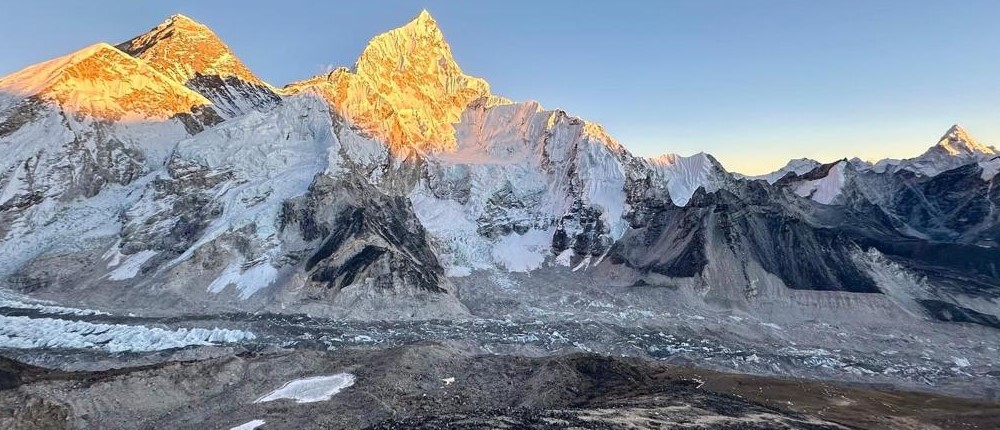
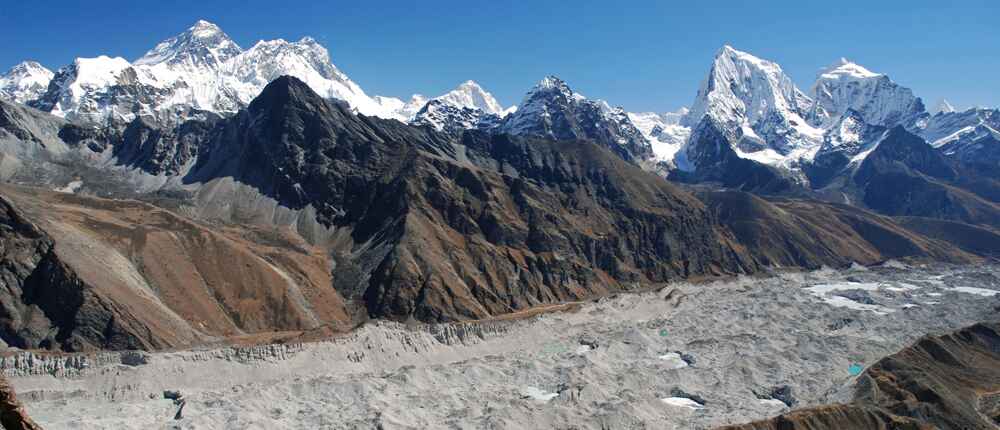
- View of Mt. Everest (8,848m), Lhotse (8,516m), Makalu (8,481m)and Cho Oyu (8,210m)-1st, 4th, 5th and 6th highest peaks in the world
- Sunrise view over Himalayan giants and the view of Everest from the base camp to the summit, from Kala Patthar (5,550m)
- The Khumbu Glacier (world’s highest glacier) and Ngozumpa Glacier (the longest glacier in the Himalayas)
- Gokyo Tsho and the village of Gokyo
- Tengboche Monastery, the largest monastery in the Khumbu region
- Sagarmatha National Park, one of the UNESCO World Heritage Sites in Nepal
- Scenic flight Kathmandu-Lukla-Kathmandu and Tenzing-Hillary Airport, one of the most dangerous airports to land on in the world
- Traditional Sherpa settlements and their lifestyle, culture, tradition and hospitality
- Pashupatinath, Swayambhunath, Boudhanath and the Kathmandu Durbar Square -UNESCO World Heritage Sites in Kathmandu
Trip Includes
- Airport Pick-up and Drop-off service in a private vehicle
- 3 nights twin-sharing accommodation (3* Boutique Hotel) with breakfast
- Farewell dinner with feedback session after the trek
- Airport transfer for domestic & international flight
- Sagarmatha National Park entrance fees
- TIMS (Trekkers Security Card) Card
- Khumbu Gaupalika Tax (Local Tax)
- Kathmandu-Lukla-Kathmandu flight tickets
- Airport departure tax
- All meals (breakfast, lunch, and dinner) during the trek
- Twin Sharing accommodation (Lodge or guest house) during the trek (5 hot showers)
- Seasonal fresh fruits after every dinner while on a trek
- Purified (medicated proof) drinking water while on a trek
- Government licensed and well trained English speaking guide and his entire expenses
- Porters (One porter for every 2 members) and his entire expenses
- Insurance of Guide and Porter
- Rescue arrangements (Only in emergency cases)
- All required government taxes
- Down jackets and sleeping bags (if required)
- Company duffel bag as a porter bag (You can keep it after use)
- Trip route map for you to keep as a souvenir.
- Medical kit along with Oximeter
- Adventure certificate (After completion of the trek)
Trip Excludes
- Nepal arrival visa
- Meals in the city except breakfast and above mentioned special dinner
- Kathmandu valley city tour ( can be arranged with an extra cost)
- All kinds of drinks
- Extra accommodation and meals in Kathmandu (in the case of early return from the mountain than the scheduled itinerary)
- Your personal nature expenses eg. Mineral water, Beer, Coke and entire beverage etc
- Travel insurance that covers trip cancelation and Helicopter evacuation
- Tips and any other extending trips and accommodation.
Useful Information
Do I need travel insurance to do the Everest Three High Passes Trek in Nepal? If yes, what type?
Yes, you need a travel insurance to do the Everest Three High Passes Trek in Nepal. In fact, it is compulsory. Travel insurance can cut back on major financial risk of traveling, like accidents, illness missed flights, canceled trips, lost baggage, theft, emergency evacuation and the dead body repatriation. Therefore, be careful while choosing your insurance policy. Make sure that the policy covers five major courses: trip cancellation or interruption, medical evacuation (treatment cost, hospital charges, doctor’s fee, and cost of the medicine), flight insurance (cancellations and delays) and baggage insurance (misplaced or lost luggage). You can also add supplemental policies to cover particular issues, like identity theft, and security and political evacuation (natural disasters, civil uprisings, military coups, political unrest, etc.). Or, get a ‘Comprehensive Insurance’ that covers all of the above given courses plus expenses caused by delayed trips, missed flights or any alterations in the itinerary by the tour company. Moreover, the maximum elevation gained during this trek is 5,550 meters; therefore, it’s important to ensure that the policy covers helicopter and medical evacuation up to 6000 meters (some standard policies only cover up to 4000 meters).
Which is the best season to plan the Everest Three High Passes Trek in Nepal?
Autumn (October to November) and spring (March to May) are the two best seasons to plan the Everest Three High Passes Trek in Nepal. These two seasons are very supportive in terms of weather, climate, visibility and trail condition. Heavy rainfall, during monsoon and heavy snowfall during winter make monsoon and winter not the best time to plan this trek in Nepal. However, if you are ready for these conditions, this trekking in Nepal can be planned throughout the year.
Does this package guarantee accommodation and meal?
Yes, this package guarantees full board (meal and accommodation), during the trek and bed and breakfast in Kathmandu.
The accommodation in Kathmandu is arranged in a tourist standard hotel and lodges/guest houses/teahouses (with shared amenities), during the trek. The rooms are booked on a twin-share basis, where you will be paired up with another member (same sex) of your group. Triple share can be arranged on request, both in Kathmandu and during the trek. Single supplements are also available, but at extra cost. The accommodation options used during the trek are very basic. The room amenities are also basic, which decrease with the increase in altitude. However, the rooms are comfortable and are the best available in the area. Toilets and bathrooms are usually common. Some of these accommodations provide hot shower facility, while the others provide a few buckets of hot water on request (extra charge applicable). This facility also decreases with the increase in elevation.
Meals (Breakfast, Lunch, Dinner and tea/coffee), during the trek will be served as per the tea house menu. All meals will be freshly made, using organic and local ingredients and will be plentiful. Soft drinks and other snacks can be purchased at your own expenses (the prices significantly increase, with the increase in elevation). Breakfast in Kathmandu will be served as per the hotel breakfast menu (usually buffet). Typical Nepali cuisine will be served for welcome dinner. However, farewell dinner will be as per the restaurant menu.
How healthy, fit and experienced should I be, in order to plan the Everest Three High Passes trek in Nepal?
The Everest Three High Passes trekking in Nepal is a challenging trek. Trekkers need to cross the three high passes: Renjo La (5,360m), Cho La (5,420m) and Kongma La (5,535m) and also hike to Kala Patthar (5,550m). Some days require 9-10 hours walking. The trail is demanding. Therefore, high level of fitness, healthy body, excellent stamina and tough determination is required to successfully complete this trek.
Therefore, it is highly suggest that you seek advice, medication and permission from your local General Practitioner, before planning your trek. Especially those with acute or chronic health conditions are highly recommended to consult your doctor prior to trek booking. It is also recommended that you consult regarding the necessary guide walks required to prepare your body for this trek. In the absence of GP, we suggest you seek advice from travel clinics.
No technical skill is required to plan this trek in Nepal. But, prior hiking or camping experiences are a plus point. Also, few weeks of regular exercise like jogging, running, swimming, cycling, uphill climbing is highly recommended to build the required stamina, before the trip.
(Please Note: We kindly request you to inform us regarding your present health condition, medical situation, ongoing illness and the regular medicines that you are taking. We expect you to be honest regarding these issues, so that we can get prepared for emergencies.)
What happens if I get sick or injured during the Everest Three High Passes trek?
Your safety is our prime concern. We make sure that your trek is led by one of the most professional, experienced and licensed and First-Aid trained guide. In case of any sickness or injury, the guides will provide the necessary first-aid treatment and in serious situations, they will call a rescue helicopter to fly you back to Kathmandu for further medical help.
Should I tip my guide and porters?
Tipping your service provider is customary. Tipping shows that you are happy and satisfied with the service provided. Therefore, if you are happy and the satisfied with the service provided by your guide and porters a small gratuity is always appreciated.
Is the transportation cost included in the package?
This Everest Three High Passes Trek package includes the cost of airport transfers, the cost of vehicle used for city tour and the cost of the Kathmandu-Lukla-Kathmandu flight tickets.
How do I get in touch with my family members, while I am doing the Everest Three High Passes trek?
At places, where internet service is available, you can use it (extra charges applicable) to get in touch with your family and friends. However, other times, when you do not have access to internet, or in the case of emergencies, you can use the cellular phone provided to our guide by the company to either call, or send a text to the off-site team in Kathmandu, from where, the message will further be delivered to the related person. Or, you also have an option to purchase and use prepaid phone cards (submission of 2 passport sized photos and passport visa copy is required to purchase the SIM), during your stay in Nepal.
Why should I book my Everest Three High Passes trek with your company?
Although, AME Treks and Expedition provides services like any other trekking companies in Nepal, there still are a few things that make us stand out in the crowd. Highly dedicated to perfection and superior service, we offer years of experience to plan an outstanding adventure trip for you. Our partnership with local people will help you explore those areas, culture and tradition in the Khumbu region that have seldom been explored before. We cater to every possible needs of yours, during your stay in Nepal, be it food, accommodation, varied destination or communication needs. If our standard packages do the meet your requirements, we offer an option to fully customize the trip to meet the needs and requirements of each individual traveler. Our best packages are available at the most competitive rates in the market.
Moreover, registered under the government of Nepal, AME Treks and Expedition is fully licensed and certified to organize adventure trips like trekking, hiking, expedition, tour and other tourism related services in Nepal, Bhutan and Tibet. We believe in and practice responsible tourism. In addition to this, we also are a very active member following organizations:
Nepal Tourism Board (NTB)
Trekking Agents Association of Nepal (TAAN)
Kathmandu Environment Education Project (KEEP)
Ministry of Finance, Department of Taxation
Company Registration Office, Pvt. Ltd.
Ministry of Tourism and Civil Aviation, Department of Tourism Industry
What should I bring?
To make it easier for you to pack for your Everest Three Passes Trek in Nepal, we request you follow the list given below. The items may vary according to the season and the duration of the trek. The weight limitation for this trip is 15 kilograms; therefore, we request you not to carry the things that are not required during the trek. We also suggest you not to bring any valuables and even if you happen to bring any, we request you to leave it in a safety deposit box in your hotel in Kathmandu.
Documents:
- Valid Passport and passport sized photos (4 copies)
- Airline tickets
- Photocopies of passport, visa form and insurance policy
- Cash, in dollars, pounds or Euros to be used in Nepal
- Debit/Credit Card or traveler’s check.
Head/Face:
- Bandana or head scarf
- Light balaclava or warm fleece/wool/synthetic hat that covers your ears
- Headlamp with extra bulbs and batteries
- Sunglasses with UV protection
- Neck warmer (Optional)
- Lip balm (SPF 20 at least)
- Sunscreen (SPF 40 at least)
Upper Body:
- Light and expedition weight thermal tops
- Fleece wind-proof jackets or pullover
- Waterproof shell jacket (breathable fabric)
- Down jacket
- Waterproof and breathable Gore-Tex jacket with hood
- Polypropylene shirts (both half and long sleeves)
- T-shirts
Hand:
- 1 pair of lightweight liner gloves (thin wool or synthetic)
- 1 pair of warm gloves ( wool or heavier fleece gloves)
- 1 pair of mittens or shell gloves (Gore-Tex preferred)
Lower Body:
- 4 Underwear/briefs (non-cotton)
- 2 pairs of hiking shorts (Nylon preferred)
- 2 pairs of lightweight long underwear
- 1 pair of soft shell pants
- 2 pairs of trekking pants
- 1 pair of cotton pants
- 1 pair of hard shell pants (waterproof and breathable fabric; Gore-Tex preferred)
Feet:
- 1 pair of light weight socks
- 4 pairs of liner socks (synthetic/capilene)
- 3 pairs of heavy poly or wool socks
- 1 pair of light to medium weight Trekking boots with spare laces
- 1 pair of sneakers or light trekking shoes
- 1 pair of hiking gaiters (optional)
- 1 pair of trainers or running shoes/sandals
- Crampons
General:
- 4 season sleeping bag
- Fleece sleeping bag liner (optional)
- 1 large duffle bag
- A small daypack/backpack for carrying your valuables
- Small padlock for duffle-kit bags
- 2 large waterproof rucksack covers (optional)
- Down Jacket (optional)
- Trekking poles
- Durable wallet for travel documents, money & passport
Medicine:
- Personal First Aid kit
- Aspirin, first-aid tape and band aids
- 1 skin blister repair kit
- Medicines for headache, diarrhea, cough and cold, Diamox or Acetylzolamide,
- Antibiotics: Ciproflosacin
- Water purification Iodine tablets or water filter
- Prescription glasses, contact lenses
Miscellaneous:
- Pocket knife
- Toiletry kit: Toilet paper, hand wipes, liquid hand sanitizer, towel, soap, toothpaste, toothbrush, face wash, sanitary pads, 1 medium-sized quick drying towel, deodorants, nail clippers, face and body moisturizer, small mirror,
- Reading book, journal and pen, iPod, travel games, plug adapter
- 1 small roll of repair tape, 1 sewing-repair kit
- Digital camera with extra batteries
- Large Ziplocs and waterproof and disposable rubbish sacks
- Water bottles
Optional:
- Snacks, chocolates or energy bars
- Binoculars (optional)
- Stainless steel thermos
Passport and Visa Information:
It is very easy to obtain Nepal’s visa. You may either apply for a visa at your nearest Nepalese Embassy/Consulate or Mission offices in your own country or you can buy this upon your arrival at Tribhuvan International Airport in Kathmandu. To apply for a visa, you need 2 passport size photographs, Visa fees in US dollars and your passport that is valid for at least 6 months, before the trip. Indian Nationals do not require any visa to enter Nepal and Chinese Nationals can obtain visa absolutely free of cost. Transit visa for foreign nationalities is only provided for 3 days. Therefore, visa is required for longer stays. However, for the convenience or foreign nationals, a visa is also provided from the borders listed below:
Tribhuvan International Airport (Kathmandu)
Tel: 977-1-4485173/4113045
Fax: 977-1-4113090
Kakarvitta, Jhapa (Eastern Nepal)
Tel: 977-23-562054
Fax: 977-23-563569
Birgunj, Parsa (Central Nepal)
Tel/Fax: 977-51-5527447
Kodari, Sindhupalchowk (Northern Border of Nepal)
Tel/Fax: 977-11-840196
Belhiya, Bhairahawa (Western Nepal)
Tel/Fax: 977-71-520629
Jamuna, Nepalgunj (Mid Western Nepal)
Tel/Fax: 977-81-412005
Mohana, Dhangadhi (Far Western Nepal)
Tel/Fax: 977-91-523246
Kanchanpur (Far Western Nepal)
Tel/Fax: 977-99-402004
Rashuwagadi
Tel: 977-10-6922722
Fax: 977-10-540133
Tourist Visa Fees:
Transit visa (3 days) Free of cost
Minimum USD 30 for up to 15 days
After 15 days USD 2/day (extension of the tourist visa, the fees chargeable for 15 days shall be levied if the period is less than 15 days in every extension)
Extra USD 20 for MRE facility for valid visa period.
Late fee to be charged extra USD 3/day
In case of minor, below 10 years of age, the visa is free of cost
(For more information, please visit http://www.nepalimmigration.gov.np or contact the Department of Immigration, Kalikasthan, Dillibazar, Kathmandu.)
Tel: 977-1- 4429659/4429660/4438862/4438868.
Fax: 977-1- 4433934/4433935
Email: [email protected], [email protected]