Everest Base Camp Trek from Jiri trekking in Nepal – AME Treks
Hard Nepal Himalayas 23 Days Signature Journey

Everest Base Camp Trek from Jiri

Kathmandu-Jiri-Junbesi-Namche-Gorekshep-Everest Base Camp-Namche-Lukla-Kathmandu

4.9/5 (156 reviews)
5000 trekkers hosted
Duration
23 Days
Max Altitude
5545
Difficulty
Hard
Best Season
March-May September -December
Group Size
2–12 People
Accommodation
Tea Houses

Product Description

A fuller introduction to the route, pace, terrain, and overall trip style.

The Everest base camp trek from Jiri can be recognized as the finest classic trail trek in the Himalayas. This journey follows the same route that Sir Edmund Hillary and Tenzing Norgay Sherpa followed in 1953 to reach the summit of Mount Everest. Since the Lukla airport hadn't yet been built, this route was the only way to get to the Everest region back then. For that reason, it is known as a classical route to the Everest base camp.

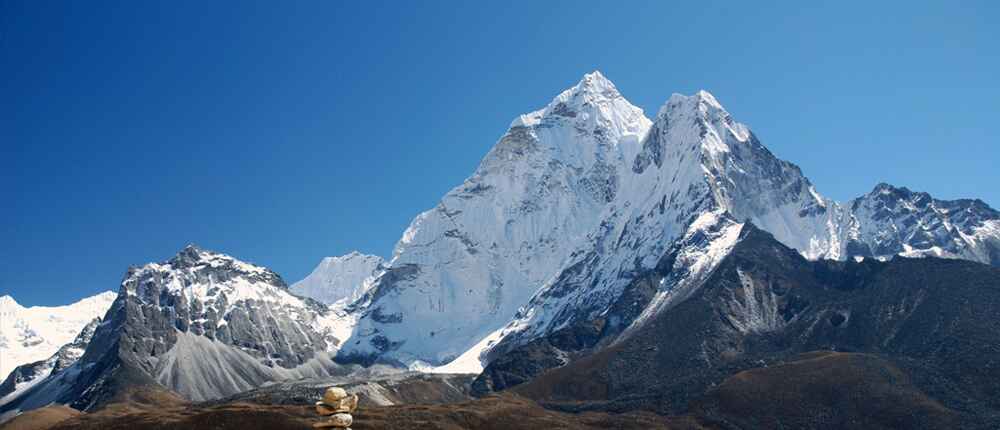
As you make your way to Everest base camp on this journey, it is obvious that you will be passing through stunning alpine, forests, glacier rivers, and moraines. the route will never fail to impress you with the views of mani walls, chortens, prayer wheels, and many other cultural landmarks. Along this route, trekkers will pass through a lot of villages. Tengboche, Lobuche, and Gorakshep are a few of the Everest region villages that are always going to provide you with breathtaking views of mountains like Mt. Everest, Lhotse, Ama Dablam, Makalu, Cho-Oyu and many others.

On this trek, trekkers will have the chance to explore and enjoy the natural landscapes of both hilly and the Himalayan regions. In addition to these fabulous natural landscapes, trekkers will also gain insight into different local communities, culture, people, and their way of life. Most of the time on this trek, trekkers will come across Sherpa people. They are the locals in the majority of regions, and their gracious hospitality has always enchanted their hearts.

The trek from Jiri to Everest base camp is one of the longest and toughest journeys. Most people who attempt this route are highly dedicated trekkers who want to experience actual adventure and experience the thrill of accomplishment. This is a hard journey that is very certain to put your physical and mental abilities to the test. So, before beginning this adventure, we highly suggest you be dedicated and well-prepared.

Trip Includes

  • Airport pick up and drop by private vehicle
  • 3 Nights twin sharing accommodation in Kathmandu at tourist standard hotel with breakfast
  • One full day guided city tour by private vehicle
  • Welcome dinner and farewell dinner at one of the best Nepalese restaurant with traditional ethnic music and dance
  • Trekking permits and Tims permits
  • Flight tickets to Kathmandu from Lukla
  • All meals during the trek (Breakfast/Lunch/Dinner)
  • Public bus to Jiri ( private car by request but price may vary)
  • Gov. licensed and well trained English speaking guide and his entire expenses
  • A porter (One porter for each 2 members) and his entire expenses
  • Insurance of Guide and Porter
  • All required local tax and Gov tax
  • Down jackets and sleeping bags
  • Trekking route Map

Trip Excludes

  • Nepal arrival visa
  • Meals in the city except breakfast and above mentioned special dinner
  • Monument entrance fees
  • Your personal nature expenses eg. All drinks,Mineral water, Beer, Coke and entire beverage
     

Useful Information

Travel Insurance

If you are planning your next trek in the Annapurna region of Nepal, then it is highly recommended that you get a travel insurance that covers all the additional and unforeseen expenses that might occur as a result of different injuries or accidents (together with ambulance, helicopter, rescue and other treatment cost) and various other health related issues. Moreover, the policy should also fund the entire activities that you are planning to take on throughout your stay in Nepal. In addition, the policy should also finance misplaced luggage, theft and liability, cancellations, medical treatment (including hospital charges, cost of the medicine and doctor’s fees), death and repatriation cost as well. This trek requires walking above the altitude of 4,000, therefore, it is kindly requested to ensure that your insurance policy covers trek that goes over 4000m. In short, all unforeseen expenses during the entire trek are trekkers’ sole responsibility.

Health, fitness and experience requirements:

Trekking along the trail of Annapurna region is identified as one of the long distance trekking in the world. Therefore, the trek demands good stamina, excellent health condition and the highest level of mental determination. Some sections of the trek take you to the altitude of over 4000m and some days require 7-8 hours of walking. Therefore, it is well recommended to plan your trek when you are at your best health condition.

The trek is considerably moderate and attainable. Yet, it is highly recommended that you seek advice, medication, and permission from your doctor before scheduling your trek. You can also take the help of the local General Practitioner in order to consult the necessary guide walks before planning the trek. (Running, cycling, or a few hours of uphill walking are considered as some of the best ways to practice for your next trek. This also helps in minimizing the potential effect of Altitude Mountain Sickness.) In the absence of GP, various travel clinics can also assist you with the needed guidance. However, this trek can be easily attained even without any technical knowledge, but prior hiking, trekking and camping experience will definitely make the walk easier. 

Note:

We kindly request you to submit your medical fitness certificate (which must include your present health condition, medical situation, preceding illness, and the medications you are taking) before booking the packages. We also request you to be honest so that we can get prepared and take quick action in case of any emergencies.

Meals and Accommodation:

In order to ensure a comfortable stay and relaxed ambiance, we do the booking in one of the best tourist standard hotels before and after your trek. The rooms offered by these hotels are normally twin share, which requires you to share your room with another member of your group. However, this totally depends upon the size of your group and the availability of rooms in the hotel. Triple share is also available on request and a single supplement room is also available at an additional cost.

During the trek, your stay is arranged in local guesthouses or lodges (with shared amenities) en route. You can enjoy a hot shower in most of these lodges, however, in the absence of hot shower few buckets of hot water will also be arranged by the lodge itself. A full board meal (Breakfast, Lunch, Dinner and tea & coffee) will be served from the teahouse menu. For breakfast usually western food like porridge, oatmeal, local bread, and toast are offered. The food served for lunch and dinner can be chosen from the teahouse menu.

Our attempt while you are on a trek:

Our guides will make every possible attempt to make your trip successful and for this purpose they strictly follow the itinerary provided to you (except for any formidable situation). Trekking in the Annapurna region of Nepal takes you to those remote areas of Nepal, where communication facilities are very rare. Hence, to maintain regular contact our guides are also provided with cell phones. This can also be used by trekkers to send any message that you want us to deliver to your family, friends or relatives. We can also help you reschedule your international flight (extra charge applicable) if you are looking to extend the days to complete your trek.

Why trek with us?

AME Treks and Expedition offers fully customized packages that are specifically designed to meet each individual trekker’s needs, requirements and budget. Partnering with AME directly allows you to deal with someone who has an in-depth practice of walking and knowledge regarding the track we follow. This in turn will definitely benefit you as you can get information based on their personal experience. We also team up with the local residents of Annapurna region who can take you to those remote areas of Annapurna region that have never been explored before. It is simply a bonus trip for you.

We only hire professional, experienced and knowledgeable guides and team leaders that are dedicated to offering their trekking experience to make your trip successful. Moreover, the most important thing during the entire trek is trekkers’ safety. Therefore, we provide those trek leaders that possess the highest level of qualification in Advanced Wilderness First Aid so that they can take every possible safety measures required to respond rapidly to changing situations during the trek.  We also try our best to communicate with you, to help you with your additional requirements during the trek.

To provide a top level of food and accommodation experience, we partner with some of the best lodges and teahouses en route that can produce culinary delights both locally grown and western varieties. We also make sure that the food provided to you is hygienic and balanced and the living space clean and cozy.

Moreover, all the formalities required during the trek will be taken care of by the team leader assigned to your group. Therefore, partnering with gives you the opportunity enjoy a hassle-free trek.  

Our legal documents:

AME Treks and Expedition is a certified company and is registered under the government of Nepal. We have special authority of the government of Nepal to operate treks, tours, expedition and other tourism related programs in Nepal, Tibet and Bhutan. Besides, we are also a very active member of other professional organizations like;

Ministry of Finance, Department of Taxation

Company Registration Office, Pvt. Ltd.

Ministry of Tourism and Civil Aviation, Department of Tourism Industry

Central Bank of Nepal, Nepal Rastra Bank Foreign Exchange Department

Nepal Tourism Board (NTB)

Trekking Agents Association of Nepal (TAAN)

Kathmandu Environment Education Project (KEEP)

What are the best seasons to plan this trek?

Though Nepal can be visited any time of the year, the best season to plan your trek in the Annapurna region of Nepal is spring and autumn.

Spring - March, April and May are considered the best month to pay your visit to the Annapurna region because during these months you can experience the warm weather, clear skies, good temperature and the best visibility.

Autumn – Mid September, October and November is also considered the best month to visit the Annapurna region because of the best visibility, clear blue skies and excellent trail.

Winter – December, January and February are good, if you can prepare yourself to experience the extreme cold weather.

Summer – Mid June, July and August are not considered as the right time to visit the Annapurna range as the monsoon rain affects everything that is, trail, weather, temperature as well as the visibility.


What should I bring?

Along with warm clothes you will also need other equipment for the sufficient protection of your body. Below is the list of necessary items that you need to pack before commencing your trek.

Head- Hat (with a wide brim), Sunglasses (with UV protection), Sunscreen lotion and Lip balm

Upper body- T-shirts (2), light and expedition weight thermal tops, Fleece jacket and pullover, Fleece wind-stopper jacket (Optional), waterproof (preferably breathable fabric) shell jacket, down vest/jacket (included)

Hands - Lightweight gloves, heavy-weight gloves/mittens with a waterproof outer shell

Lower body - Underwear (4), hiking shorts (2), lightweight cotton long pants, light and expedition weight thermal bottoms, Fleece or wool pants, waterproof (preferably breathable fabric) shell pants

Feet - Thin, light-wear inner socks (4), thick, warm wool hiking socks (4), hiking boots with spare laces, camp shoes (sneakers and/or sandals), gaiters (only for winter)

Accessories  - Sleeping bag rated to zero degrees F (included), headlamp with spare bulb and batteries, small padlock or combination lock, basic first aid kit, large plastic bags (for keeping items dry inside trek bag), day pack, water bottles (2), hiking pole/walking sticks, small ear plugs

Toiletries – Soap, shampoo, toothbrush, small wash towel

Extras - Cameras with extra batteries and cards, binoculars, light balaclava or warm fleece hat, reading books, trip map/guide book, journal & pen, iPod & travel games (like cards, chess, and backgammon)

Passport and Visa Information:

It is very easy to obtain Nepal’s visa. You may either apply for a visa at your nearest Nepalese Embassy/Consulate or Mission offices in your own country or you can buy this upon your arrival at Tribhuvan International Airport in Kathmandu. To apply for a visa, you need 2 passport size photographs, Visa fees in US dollars and your passport that is valid for at least 6 months before the trip. However, nationals of SAARC countries (India, Bhutan, Sri Lanka, Pakistan, Bangladesh, Maldives and Afghanistan) and China do not require any visa to visit Nepal. Transit visa for foreign nationalities is only provided for 3 days. Therefore, visa is required for longer stays. However, for the convenience or foreign nationals, a visa is also provided from the borders listed below:

Tribhuvan International Airport (Kathmandu)

Kakarvitta, Jhapa (Eastern Nepal)

Birgunj, Parsa (Central Nepal)

Kodari, Sindhupalchowk (Northern Border of Nepal)

Belhiya, Bhairahawa (Western Nepal)

Jamuna, Nepalgunj (Mid Western Nepal)

Mohana, Dhangadhi (Far Western Nepal)

Gaddachauki, Mahendranagar (Far Western Nepal)


Tourist Visa Fees:

Transit visa (3 days) – Free of cost

Multiple entry (15 days) – 30 USD or equivalent convertible currency

Multiple entry (30 days) – 50 USD or equivalent convertible currency

Multiple entry (90 days) – 125 USD or equivalent convertible currency

(For more information, please contact the Department of Immigration, Kalikasthan, Dillibazar, Kathmandu.

Tel: 00977-1 4433934/4429660/4438862/4438868. You can also download visa form from – www.immi.gov.np
Trip Snapshot

Route
Everest Region, Nepal
Trip Style
Tea Houses
Best Months
March-May September -December
Next Start
Private dates on request

Why Book With AME

Well-paced itinerary with acclimatization-friendly flow

Licensed local guides, porter support, and 24/7 operations team

Private customization available for pace, dates, and comfort level

Gallery

Trail gallery

A quick look at the landscapes, lodges, and trail atmosphere before you move into the itinerary.

Everest Base Camp Trek from Jiri – trekking scenery

Next up

Day-by-day itinerary and pacing

Scroll into the detailed itinerary to review daily movement, overnight stops, elevation, and practical route flow.

Explore itinerary

Everest Base Camp Trek from Jiri – Day-by-Day Itinerary

Click any day to expand full details, elevation notes, meals, and overnight stops.

  1. Hello and welcome to Nepal! One of our representatives will be ready for you to meet and welcome you as soon as you arrive at Tribhuvan International Airport. After the meeting and greeting, he will soon transport you to the three-star hotel in the heart of the town. As soon as you get to the hotel, you can relax your jetlagged body. After some time, you must prepare for the pre-trek briefing, where all of the details of your trip will be decided. During this time, you will be ready to speak with your trek guide and ask any questions you may have about the adventure. He will explain everything to you.

    Also on this day, you will prepare for your Jiri to Everest base camp trek by making a packing list and getting your clothes ready. Shortly after getting everything ready and relaxing for a bit, we will head to the best traditional Nepali restaurant in the evening for the welcome meal. You'll get a fantastic chance to introduce yourself to a few other trekkers and trek leaders during this time. Overnight at the hotel in Kathmandu.

  2. Today we are heading to the Kathmandu Valley's well-known sights. We will get ready for the city tour following a delicious breakfast at the hotel in the early morning. We'll begin the Kathmandu sightseeing tour after a quick introduction from your tour guide for the day. The UNESCO World Heritage Sites such as Boudhanath, Swayambhunath, Pashupatinath, and Kathmandu Durbar Square will be the primary destinations of this journey. Following a full-day tour of the valley, you'll go back to your hotel. Once you get to the hotel, you can once again keep an eye out for goods to add to your packing list. You may also look for any further preparations needed for the trek tomorrow in accordance with the advice of the guide. Overnight at the hotel in Kathmandu.

  3. After having an early morning breakfast in Kathmandu, your guide will again give a brief summary of your journey. After completing all the preparation for your Jiri to Everest base camp trek, we will take a private car. This will journey will be long, but it will be totally worth it as you will pass through the beautiful scenery along the way. As it is a long ride, the bus will stop twice. You will have lunch and snacks at these stops. After spending a long time you will finally reach Shivalaya and head into the lodge. When you get into the lodge, you may relax and take a break there or go for a short walk through the charming town of Jiri. Overnight at the hotel in Jiri.

  4. After enjoying a satisfying breakfast at the lodge, your guide will watch and validate your permit at the check post. After completing the process you will begin your uphill trek toward the Deurali pass. You will have a pleasant view of the mountains and lovely valley from this pass. After enjoying the fantastic views from this point, we descend to Bhandar through a forest route. Overnight at the lodge in Bhandar.

  5. Today we will start our trek from Bhandar toward Sete. The trek will go down and pass the small village. After crossing a few ascend and descending along the route, we will get down to the river and cross the bridge. After crossing it, we will reach Kinja village. We will have a short lunch break in this village. If it's possible, you will also have fresh fish meat from the river for your lunch. We will trek up toward Sete shortly as your meal is finished. Trekkers can enjoy breathtaking views of Numbur Himal from the hill when going from Kinja to Sete on clear days. Overnight at the lodge in Sete.

  6. Today we head in toward Junbesi, leaving Sete Village behind. We will head all the way up to the Lamjura pass 3530m which will somewhat prove hard for the trekkers. Moving on you will soon arrive in the village of Ghaurasey which will go through the magnificent rhododendron and pine forests. Ghaurasey is a little village in the midst of a forest with a few homes. After a short break at Ghaurasey, we will continue on the trail to finally reach Lamjura-La pass by crossing the ridge. After spending some time there, we will descend through a forest of fir and rhododendrons, and arrive in Taktor. We will however carry on with our journey to the north side of the valley and eventually descend to the Sherpa settlement of Junbesi. We stay the night at the lodge after spending the afternoon here visiting the village.

  7. Today is the first acclimatization day of our trip. The rest is very important since it allows our body to adjust to the altitude and prevents the effects of it. Although it is our rest day, we will not stay in the lodge all the time. We will do short hikes nearby and be used to the environment. Stay Overnight at the same lodge in Junbesi.

  8. Today we will again go through the forests, where we will view the sights of Everest and nearby peaks for the first time. Early on, you will see Everest from a far distance so the other peaks will appear much taller. You will continue to ascend the trail and descend from Junbesi to Ringmo. From here, the trail ascends once more from Ringmo to Taksindo Pass 2960m. Finally, from this pass, you will descend to Nunthala, where you will spend the night.

  9. The first part of today's journey will involve walking downhill toward the river and crossing a suspension bridge. You may take in the breathtaking vistas of Karyolung, Gyachung Kang, Khumbila, Kusum Kanguru, and a few more peaks as you make your way down to the river. Following this bridge, you must climb uphill to reach Kharikhola. You will pass through a few villages en route and eventually arrive at Khari Khola. Overnight stay at Khari Khola.

  10. After a delicious breakfast, it will take us about an hour and a half to travel across the Suspension Bridge and up to Bupsa. Once more passing through the forest, the trail then passes through Khari-La before coming in at Paiya. You'll need about 2.5 hours to complete this. You will enjoy this walk so much, simply because of the stunning mountain vistas along the way. After passing through a few tea shops along the road, you will eventually arrive in Paiya for an overnight stay.

  11. After having breakfast at Paiya, we will head out for the trek and spend an hour climbing a ridge. The route then descends to Surkhe, which is near the bank of the Dudh Koshi. The path to Phakding continues after that as we go alongside the Dudh Koshi River. Mani Walls, Cheplung Khola, Thado Koshigaon, and Nurning will all be crossed as you go through. You will also enjoy breathtaking views of Kusum Kanguru from here. Then after, we go through quiet paths lined with prayer flags, prayer wheels, and mani walls until we arrive at the settlement of Phakding. Overnight at a lodge in Phakding.

  12. Namche Bazaar, a well-known town in the Everest region, is where we're going today. We'll start off by following the Dudh Koshi River, then ascend through rhododendron and pine forests which ends with a breathtaking view of the Thamserku and Kusum Kanguru Mountains. Prior to entering the Sagarmatha National Park, our trekking permits will be checked in Monjo. Following your entrance into the park, you'll continue to follow the trail as it gradually descends to the Dudh Koshi River bridge. You'll take a lunch break here on the route to the Jorsale. After lunch, we will continue walking for a few hours through pine-covered forests and through plateaus. Eventually, after some moments, we will arrive at the lively town of Namche Bazaar. You'll check into the lodge as soon as you get to Namche. After resting for a bit, you may explore at nearby bakeries or coffee shops while exploring the town. Overnight at a lodge in Namche Bazaar.

  13. This is our second acclimatization day of your wonderful trip. Before attempting to go to a much higher altitude, we must spend a day in Namche to become acclimated. Instead of getting sleep, you should keep active by going on short hikes across the area to accelerate the acclimatization process. A lot of things can be done on this day of acclimatization. You can head out for a day trip to Thame village which is an old Sherpa community located on the western side of Namche Bazaar. Besides that, you might choose to visit Syangboche, Khunde, and Khumjung. This will also be a fantastic substitute for the close acclimatization hike. After doing one of these hikes, you will return to Namche. Once you arrive in Namche, you can use the remaining time to visit monasteries or the national park headquarters. Or you just might relax browsing the internet in one of the town's cafés or restaurants. Overnight at the lodge in Namche Bazaar.

  14. Today after breakfast, we will depart Namche Bazaar and head towards Tengboche. Most trekkers describe this trail as the most fascinating route they came across on their way to Everest base camp. First, we go along the main Everest path via the Khumjung and on to Sanasa. Moving on, we'll pass via Tarshinga and basically cross the path to reach Phunki Thenga by the way of the Dudh Koshi River. From this point, you will slowly climb uphill toward Tengboche. After a short while, you'll be standing atop the mountain. You can enjoy stunning views of Mt. Everest, Lhotse, Nuptse, and Ama Dablam from this viewpoint.

    Shortly as you arrive in Tengboche, you will check into a lodge and leave with your guide for the Tengboche Monastery visit. He will guide you through the background and ideology of the monastery. After enjoying the surroundings and the Monastery visit, you will then return to your lodge. Overnight at the lodge in Tengboche.

  15. After crossing Tengboche, the landscape will change to an open grassland since the elevation will start to rise above 4000 meters. In a short while, the trails will descend to Dingboche and cross the Imja River. You will then pass past the magnificent mani stone monuments and ultimately get to Pangboche at 3860 meters. The Pangboche Monastery is the most well-known and historic site in the region. Paying a visit to this location will be worthwhile. Following Pangboche, the trail ascends to Pheriche at a height of 4240 meters. You may get medical services and information on altitude sickness at Pheriche. After taking some information and exploring the village, you will head to the lodge for an overnight stay.

  16. Today is the third acclimatization day of our journey. Besides resting for a whole day, you will ascend to a ridge above Pheriche. You will be reaching a height of 5000 meters. Since the main idea is to climb high and sleep low, you will come down after finishing a hike. While descending, you can stop to enjoy a cup of coffee and pastries at Dingboche's bakery. After spending some time here, you'll soon come to Pheriche and spend the night there.

  17. Starting the trek you will get to see some beautiful views of  Mt. Ama Dablam, Tawache, Pokalde, Makalu, and Nuptse. Before arriving in Lobuche, we will first go through Dughla by crossing the Khumbu Glacier stream. As we continue, we will cross the Thugla pass (4830m) and go over the moraines of the Khumbu Glacier. From Thugla Pass, you can see the magnificent Mount Pumori and the peaks located west of Mount Everest. After taking in the scenery for a bit, we will cross the Thugla Pass and hike through Khumbu Glacier's moraines to reach Lobuche. Moving on, we will cross the High Camp and reach Lobuche. You may go explore the Khumbu Glacier or the Italian Pyramid after your arrival in Lobuche. Overnight at the lodge in Lobuche.

  18. day of our journey. We will begin our journey by walking down via the lateral moraine of the Khumbu Glacier. After a few challenging walks, you will reach Gorakshep through this path. You will be welcomed at Gorakshep, a town at the foot of Kala Patthar with breathtaking views of Mounts Changtse, Lingtren, Khubutse, and Pumori. Eventually, you will check in at the Gorakshep lodge, leave your belongings, have lunch, and then depart for the Everest base camp. Once you start to notice the colorful flags at the base of the Khumbu icefall, you will quickly realize that you have reached Everest Base Camp.

    It is thrilling to arrive at the base of Everest, and it is an accomplishment for every trekker. In order to keep this great milestone in our collective memory, we will make the most of our time in base camp by taking some photos, enjoying the scenery, and celebrating our success. In an hour, we will depart the Everest base camp and return to Gorakshep. When we return to Gorakshep, we'll take the same path we did to get to Everest base camp. Take some time to relax after you get to Gorakshep. Overnight at a lodge in Gorakshep.

  19. Today on this next most special day, you will wake up early and hike to Kalapatthar. The day prior, you were in Everest base camp but couldn't see Everest. Don't worry, you will view it from a far better perspective today. It takes around two hours to walk from Gorakshep to Kalapatthar. Like other sights in the Everest region, Kalapatthar also greets you with fluttering Buddhist prayer flags. From here, one can view Mount Everest, Ama Dablam, Nuptse, Lhotse, and Pumori, with every aspect of their amazing beauty.

    Likewise, the astonishing Gorak Shep, Khumbu Glacier, Khumbu Icefall, and Everest Base Camp can be seen from the top of Kala Patthar. We take our time while we photograph the breathtaking views of the imposing mountains and surrounding landscapes. While still at Kala Patthar, we will take in the view of the sunlight touching Mount Everest before making our way down to Gorakshep for breakfast. We will then reverse our route back to Lobuche after some refreshments in Gorakshep. We continue on in the direction of Dingboche, leaving the landscapes filled with glacial lateral moraines. Upon arriving in Dingboche, you will check into the lodge and relax to recover from the tough day. Overnight at the lodge in Dingboche.

  20. There are different ups and downs in the routes as we leave today. Despite the long walk, the surrounding mountains may be seen in endless panoramic views. The spectacular vistas of the Everest region might trigger many stops. We gradually descend while admiring the surrounding Alpine scenery from the picturesque villages of Orsho, Somare, Pangboche, Tengboche, and eventually Namche. When you finally reach Namche Bazaar, you might want to relax at the lodge and think back on your time at Everest base camp. Or, you could decide to hang out at the nearby restaurants and cafés. Overnight at a lodge in Namche Bazaar.

  21. Today you'll leave the breathtaking mountain beauty behind and descend to Lukla. As we descend, we will go over the towns of Jorsale, Monjo, Phakding, and Lukla. While descending this route, you will go through forests and along hilly pathways, which will yet give you an overall sensation of freshness. Keep in mind that you will need to complete all the necessary formalities to check out of the National Park in Monjo when you return. Further, after going to Phakding and eating lunch there, we will now eventually ascend to Lukla.

    Here, we will stop along the route to take one last look at prayer flags, prayer stones, rhododendron and pine woods, and Sherpa settlements. And then, when you finally reach Lukla, you have the option of relaxing with your group and celebrating your accomplishments. Besides that, you could spend some quiet time reflecting on those challenging moments and appreciating how far you've come to get to this phase of the journey. Today is our last day of trekking, and we'll stay overnight in Lukla.

  22. After taking in one more breakfast in Lukla Village, you will say your final goodbyes to the Khumbu region. Since you must catch an early flight from Lukla to Kathmandu, you must get ready early on this day. Soon after getting on the plane from Lukla to Kathmandu, you will again get a fabulous view of the Everest region's mountains. You'll be able to identify most of the mountains from your window seat this time since you've got plenty of expertise.

    Once you reach Kathmandu, you'll see the city's bustling streets again. You'll surely experience a new spark after spending so much time in the mountains. After settling into the hotel, you may go shopping and look at some old Nepali items in the marketplaces. We'll have a farewell meal later tonight. Here, we'll look back on our memorable experiences and ask for your insightful reflections on the trip. After you've enjoyed our delightful dinner, we'll transport you back to your hotel. Overnight at the hotel in Kathmandu.

  23. Your trip to this lovely nation ends today. Exactly 3 hours prior to the departure time of your home flight, a representative from our company will transfer you to Tribhuvan International Airport. We'll have to say goodbye after sending you sincere regards and our best wishes. Even when we say goodbye, we make an effort to get in touch with you regularly via a variety of means and always think back on the pleasant times we have had. Happy trekking : )

Itinerary PDF

Take the full plan offline with day-by-day details, trip facts, inclusions, and planning notes.

Want this paced differently? We can shorten, extend, or make it private.

Everest Base Camp Trek from Jiri – Dates & Pricing

Compare scheduled departures or request a private version tailored to your group.

No group dates are listed right now, but private departures can usually be arranged for the dates that suit you.

Need a different date or a private departure?

Make it your own

Private departures can usually start on the dates that work for you, with the pace, route style, and group setup adjusted around your plans.

5+ People
Best value
Request Quote
tailored pricing

Selected option

You can adjust the traveller count again in the booking form if needed.

Trip Includes & Excludes

A clearer breakdown of what is covered and what you should plan separately.

Included

Included services will be confirmed once this product setup is completed in the admin panel.

Not Included

Personal extras and excluded services can be reviewed with our team before you confirm your booking.

Before you book

Travel insurance, personal mountain gear, and international flights are usually arranged separately. If you want help reviewing gear or insurance before you book, our team is happy to guide you.

Everest Base Camp Trek from Jiri – Frequently Asked Questions

Practical planning questions generated from this route, itinerary, and trip setup.

The Everest Base Camp Trek from Jiri is generally planned as a Moderate trek in Everest Region, with route pacing, altitude gain, and overnight stops shaped around the published itinerary. If you want a lighter or more private pace, our team can usually customize the plan.

You should plan around 23 days for the full trek, including the published route flow, acclimatization needs, and arrival-to-departure logistics. If you need extra buffer days for weather or private extensions, we can map that out before booking.

This journey reaches around 5545 and is usually best enjoyed in March-May September -December. Trail conditions in Nepal can change quickly with weather, so we recommend preparing for cool mornings, layered clothing, and flexible mountain timing.

The advertised rate starts from $2,280.00 and typically covers the main trip services such as guide support, accommodation, and the core logistics listed in the itinerary. Items commonly handled separately include international flights, insurance, and personal spending, unless your custom quote says otherwise.

The Everest Base Camp Trek from Jiri is a strong fit for travelers looking for small, flexible groups, local lodges and trek accommodation, and a guided Himalayan experience in Everest Region. If you are unsure about fitness, private departures, or the right route style, send us your preferred dates and we will guide you to the best option.

Useful Information

Extra planning notes, route expectations, and pre-trip guidance for this journey.

Travel insurance, personal mountain gear, and international flights are usually arranged separately. If you want help reviewing gear or insurance before you book, our team is happy to guide you.

Recent guest reviews

Recent guest reviews from similar active journeys while this product gathers its first direct reviews.

Fresh route feedback

These are recent approved reviews from comparable journeys in the same destination or trip style.

Great people who arranged my trip with in my budget

"Several months ago, a friend of mine came back from world-round-trip and said, “A.B.C trekking is what you cannot see in any other places but Nepal”, and excitingly showed me a lot of incredibly beautiful pictures from t..."

"Several months ago, a friend of mine came back from world-round-trip and said, “A.B.C trekking is what you cannot see in any other places but Nepal”, and excitingly showed me a lot of incredibly beautiful pictures from the mountain and the country, Nepal. The story he shared caught my heart and strongly made me want to visit this country. And now, I also strongly recommend this adventure into wild nature. This is the reason why I am here, coming back from 10days Annapurna base camp(A.B.C) to write a review for one of the best agency (Adventure Mountain Explore Treks & Expedition P. Ltd) in Kathmandu and for you. What I have found during this trip is that this trip is therapeutic, educational, and exciting. First of all, in the mountain area, there are no such things as mobile, familiar TV show, disturbing noise, and annoying friends. You are literally surrounded by nature and all you can trust is your guide and your heart. You also have much free time in the mountain, which makes you think a lot about your future. Second, trekking is educational. You may see a various people from around the world as well as local people. This, I believe, is the best way of getting to know each other, as you will see them again and again during the trail. Exchanging their personal story and back ground helps you grow your personality as well. Third, it is exciting. There is no question about it. When I saw the panorama view from A.B.C, I got so excited that I could not take my camera away (I am sure I took more than 100 pictures and video there). That was defiantly worth it. Now, I am going to share a bit about my trekking partner, my guide, Lok Bhatta. He is friendly guy. He is not only experienced guide, but he knows how he can entertain us during the whole trip. His caring and his humor take up my good memory of trip. Since Lok and I spent 11days together, it is no wonder we became a best friends. Also he persistently looks after me. When I wanted him to take pictures, he always s..."

A Fantastic Experience!

"My mother and I arrived in Kathmandu with just 2 days to prepare for a trek around Annapurna Circuit. We feel very lucky to have met Mr. Tika Regmi and through Adventure Mountain Explore treks we were able to hire a port..."

"My mother and I arrived in Kathmandu with just 2 days to prepare for a trek around Annapurna Circuit. We feel very lucky to have met Mr. Tika Regmi and through Adventure Mountain Explore treks we were able to hire a porter-guide to facilitate exactly the kind of trek we wanted, a self-directed trek with Nepali assistance. Our porter-guide Sujan was a trusted and integral part of our little trekking party. He was very knowledgeable about the route, its hotels and side trips, and he even introduced us to local people and gave us interactions with local Nepalese that we could not have experienced on our own, like a tea in the home of a local family! We couldn’t be any more pleased with our trek. Shanna Simmons 1152 Crescent Avenue Klamath Falls, OR 97601 USA shannasimmons@hotmail.com"

Eine Erfahrung, die wir nie vergessen werden!

"Urspruenglich hatten meine Freundin und ich geplant, das Annapurna Base Camp in Angriff zu nehmen, doch Tika Regmi, Direktor von Adventure Mountain Explore hat uns den Langtang Trek empfohlen. Es war definitive eine gute..."

"Urspruenglich hatten meine Freundin und ich geplant, das Annapurna Base Camp in Angriff zu nehmen, doch Tika Regmi, Direktor von Adventure Mountain Explore hat uns den Langtang Trek empfohlen. Es war definitive eine gute Entscheidung, in eine der weniger frequentierten Gegenden Nepals zu gehen, wo sich die Anzahl der Touristen in Grenzen haelt. Das Langtang Tal bietet sowohl eine beeindruckende Bergwelt als auch urspruengliche Doerfer und somit einen Einblick in die Lebensweise der Tamang. Der Hoehepunkt unserer 8 taegigen Tour war der Aufstieg auf den 4984 Meter hohen Tsergo Ri, der eine atemberaubende Panoramasicht auf weisse Bergriesen bietet. Auf Empfehlung der Company haben wir einen Guide und einen Traeger gebucht. Beide waren ausserst zuvorkommend und freundlich, stets hilfsbereit und ortskundig. Durch sie bekamen wir nicht nur tatkraeftige Unterstuetzung beim Tragen und Pfadfinden sondern auch Kontakt zu den Einheimischen sowie Einsicht in Kultur und Braeuche. Rico Grass & Tiziana Margelist 8050 Zuerich, Switzerlanda rchico7@hotmail.com"

Lifetime experienced with Adventure Mountain Explore Treks.

"Thanks Tika We arrived in Kathmandu on November 4, 2011 with hopes to do the Annapurna Circuit Trek to Muktinah. We had no firm guide or porters arranged as yet but were lucky to stay at the Blue Horizon Hotel in Thamel..."

"Thanks Tika We arrived in Kathmandu on November 4, 2011 with hopes to do the Annapurna Circuit Trek to Muktinah. We had no firm guide or porters arranged as yet but were lucky to stay at the Blue Horizon Hotel in Thamel where we met Tika Regmi at the Hotel Blue Horizon. Tika is the director of Adventure Mountain Explore which wa located across the street. With Tika's expert help, our trek was arranged with an extraordinary guide, Sittal "Hom" Simkhada and two equally adept porters, Santosh Uperkoti and Sanjeep. Sittal knew the trail very well having done it more than 25 times. He provided information and insights about each peak and landmark along the way. He guided us up and down with care and confidence, setting a good pace that worked for each of us, our ages being 69, 67, and 30 years old. Sittal also got us to our teahouse rooms promptly and made sure we got our meals on time. We never had to ask for service; it was always provided with a smile. We enjoyed the camaraderie or our guide and porters and spent time playing cards together and exchanging stories. Clearly Sittal loved what he was doing and was experienced with every aspect of being a guide. When our daughter became ill along the way in Manang, Sittal conferred with Tika and we took an extra day to make sure all was well before continuing. There was no pressure to move on before we felt ready. When we reached the summit at Thorang la Pass we all celebrated together. It was a group achievement as well as a personal one for each of us. We are pleased to recommend Tika Regni as trek organizer and Sittal Simkhada as guide with our highest esteem and respect. Sincerely, Bob, Linda and Laura Bekes Robert Bekes Dept. of Mathematics and C.S. Santa Clara University Phone: (408) 554-4883 Fax: (408) 554-2370 rbekes@scu.edu"

Ready for the Everest Base Camp Trek from Jiri?

Join 5000 travellers who have trusted Adventure Mountain Explore for thoughtful planning, dependable support, and memorable Himalayan journeys.

Secure Booking Helpful Human Support Trusted Himalayan Travel Company 5000 Trekkers