A Complete Guide to the Annapurna Circuit Trek
Annapurna Region

A Complete Guide to the Annapurna Circuit Trek

A

admin

November 29, 2016
11 min read
9 views

A Complete Guide to the Annapurna Circuit Trek The Annapurna Circuit Trek or Around the Annapurna Trek is one of the most popular treks in the world. Normally, it takes about 15-18 days to complete around the Annapurna t

A Complete Guide to the Annapurna Circuit Trek The Annapurna Circuit Trek or Around the Annapurna Trek is one of the most popular treks in the world. Normally, it takes about 15-18 days to complete around the Annapurna trek; however, the number of days can always be abridged by taking flights or vehicles, or extended by taking one or more side trips. The entire trail is adorned with a variety of rich natural and cultural heritages that stimulates trekkers to explore more. The Annapurna Circuit Trek Highlights:
  • The grandiose view of a series of mountains ranging from 6000m to 8000m in the Annapurna region. The trekkers can enjoy the best views of Annapurna I (8,091m) - the 10th highest mountain in the world, Annapurna II, Annapurna III, Annapurna IV, Machhapuchhre, Dhaulagiri, Gangapurna, Tukuche, Nilgiri, Tilicho Peak, Manaslu and other sister peaks in the region.
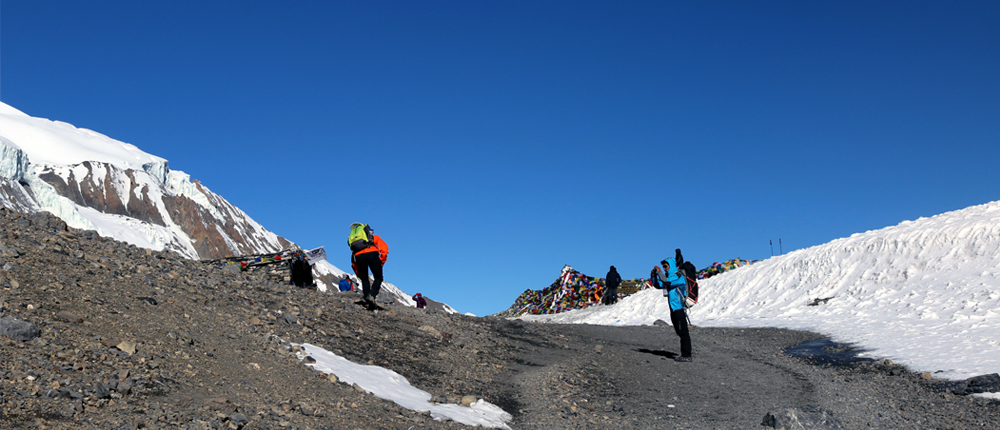
  • Thorang-La pass (5,415m), the highest point on the Annapurna Circuit although, is the most challenging section of the this trek, it is one of the famous view point in the Annapurna region.
  • Tilicho Lake (side trip required), the lake situated at the highest altitude (4,919m) in the world and the Kali Gandaki Gorge or Andha Galchi (between the Dhulagiri and Annapurna), the deepest canyon in the world.
  • Trail between two of the highest mountains in the world: Annapurna and Dhaulagiri.
  • The Muktinath Temple, one of the most important shrines of both Hindus and Buddhists.
  • Natural Hot Spring at Tatopani to relax your tired muscles.
  • Poon Hill the second famous view point in Nepal after Kala Patthar in the Everest region. (Side trip required)
  • Sunrise/sunset view from Poon Hill and Thorung La pass.
  • Beautiful and interesting ethnic Gurung, Thakali and Magar settlements, like Ghorepani, Marpha, Jomsom and Manang.
  • A huge variety of landscapes from lush green paddy field, sub-tropical rainforest, deep valleys, alpine slopes to an arid Tibetan plateau and the deepest gorge in the world.
  • Pokhara, the Lake city, a relaxing place to end the trip.
Typical Itinerary: Day 01: Besisahar to Bahundanda Day 02: Bahunanda to Chamje Day 03: Chamje to Bagarchhap Day 04: Bagarchhap to Chame Day 05: Chame to Pissang Day 06: Pissang to Manang Day 07: Acclimatization in Manang Day 08: Manang to Lader Day 09: Lader to Thorung Phedi or High Camp Day 09: Muktinath via Thorung La pass Day 10: Muktinath to Jomsom/Marpha Day 11: Marpha to Ghasa Day 12: Ghasa to Tatopani Day 13: Tatopani to Ghorepani Day 14: Ghorepani to Poon Hill for sunrise view and trek to Nayapul and drive to Pokhara Best season to plan the Annapurna Circuit Trek Annapurna Circuit Trek can be planed any time of the year; however, if you are looking for the best seasons, then Autumn (October-November/Mid December) and Spring (February-April) are the two best seasons to plan this trek in Nepal. October-November/mid-December: This is Nepal’s first best time to go Annapurna Circuit Trekking. Since it’s right after monsoon, the sky looks clear, the valleys are still green, the weather is very considerate and the views are simply spectacular. February-April: This is Nepal’s second best time to go Annapurna Circuit Trekking. Starting right after the dry and snowy season, the trails are now free from snow and supportive, the weather is fairly warm, blooming rhododendron and other flowers beautify the trail and the sun shines bright. May- September: Summer, quickly followed by monsoon is not considered the best season to go Annapurna Circuit Trekking. This season of the year it’s very hot and rainy (usually heavy downpours). The views are blocked by the clouds, the trails become muddy and sometimes even the landslides affect the trail. December to Early February: During this time of the year, the weather is very cold and dry. Heavy snowfall might sometime block the trail.Therefore, this time of the year is also not considered a good time to go Annapurna Circuit Trekking. What do I need to pack? The Annapurna Circuit Trek in Nepal is a teahouse trek. You will be staying in teahouses, sleeping in rooms and ordering meals from the teahouse menu. Therefore, the following packing list covers the things that you will be needing during the trek.
  1. Clothing:
  • Hiking Pants (1 pair)
  • Long sleeve shirt (1)
  • Short sleeve shirt (1)
  • Socks (2 pairs)
  • Comfortable and warm pants (1 pair)
  • Down Jacket (1)
  • Warm hat (1)
  • Underwear
  • Sun hat
  • Gloves
  • Raincoat
  • Hiking boots
  • Sunglasses
  1. Trekking Gears:
  • Backpack
  • Trekking poles
  • Camera with battery
  • Phone & Cord
  • Sleeping bag, pillow case
  • Plug adapter with built-in USB ports
  • Water bottle, headlamp
  • Pack rain cover
  • Passport and permits
  1. Toiletries:
  • Soap, Shampoo, Toothbrush, Toothpaste, Towel, Deodorant, Sunscreen, Lip Balm, Sanitary Napkin,
  1. Others:
  • First Aid Kit, Book/Kindle, Notebook/Journal, Extra cash, travel games, Binocular, Energy bars/Chocolates, Peanuts etc.
Permits required for the Annapurna Circuit trek: In order to trek the Annapurna Circuit trail, all hikers are required to purchase two permits: Annapurna Conservation Area Permit (ACAP) and Trekkers Information Management System (TIMS) card. These permits are required to enter the Annapurna Area. These cards will be checked at several checkpoints along the circuit route. These cards do not expire, which allows you to spend as much time as you want in the conservation area. However, once you check out from the conservation area, you will need a new permit to re-enter the area. If you are trekking on your own, without the help of any agent in Nepal, then you can obtain these permits at the Nepal Tourism Board in Kathmandu or Pokhara, before your trek. However, if you are with any agency, the agency will take care of it. In order to apply for these cards, you need to provide a copy of your passport and 2 passport-size photographs. TIMS: Free Individual travelers are required to obtain a Green TIMS card. For this the travelers will have to pay Nepali currency equivalent to USD 20/person. Those travelling in a group need to obtain a Blue TIMS card, which requires the amount equivalent to USD 10/person. ACAP: All trekkers are required to obtain individual Entry Permits to enter Annapurna Conservation Area (ACA). Entry fee for SAARC Nationals to enter ACA is NPR 200, while for other nationals it is NPR 2,000.However, children under the age of 10 do not require any entrance fees. Accommodation options during the Annapurna Circuit Trek The Annapurna Circuit trek is a teahouse trek. This means there are a plenty of tea houses, guest houses or lodges along the Annapurna Circuit trail that provide accommodation to trekkers. Accommodations are very basis and grow more basic with the increment in altitude. The rooms provided by these accommodations are usually on a twin share basis with very basic room amenities. Carrying your own sleeping bag is recommended. Attached bathrooms are rarely available. Most of the these accommodations operate on solar power for the shower. At higher elevations, where there is no facility of hot shower you can get a bucket of hot water for an extra charge. At lower elevation you can enjoy paid wifi service, however, at higher elevation even charging electronics requires extra money. Food during the Annapurna Circuit Trek Typical Nepalese meal (Rice, Dal, Curry, Pickle, Salads) is available through the Annapurna Circuit Trail. This combination of Nepalese meal is healthy, fresh and rich in calories, which make it the best choice during the Annapurna Circuit Trekking. However, some tea houses also provide options like Chow mien, pasta, pancakes, Chopsuey and other western meal options that you can choose from the teahouse menu. Water, beer, soda, tea/coffee, and hot lemon are also available throughout the trail, but the prices hike with the increment in altitude. Bringing water bottle and energy boosters like, chocolate bar, energy bars, cheese, peanuts are better than buying it along the trail, if you are looking to save money. How difficult is it to trek around the Annapurna? How fit do I need to be to successfully complete this trek? The Annapurna Circuit Trek is a fairly challenging trek in Nepal. It’s a long trek and required about 20 days to complete the trek. But any physically fit person with a stamina to walk for 4-8 hours in a day can easily complete this trek. You also need to be prepared for several tiring ascend and descend and walking on snow and ice trail (during the winter). Nevertheless, the most difficult section of this trekking is Thorung Phedi to Thorung La pass, but it can be completed in around 45 min. So, trekkers need to be prepared, but need not worry about the difficulty. To successfully complete the trek you need to be physically fit, need to have the stamina that is required to walk for 4-8 hours in a day and should have strong determination. How do I prepare my body ready for the Annapurna Circuit Trek? In order to prepare your body for the Annapurna Circuit Trek, the first thing you need to do is get a health check up. Once you receive an approval from your GP or doctor, consult regarding the required exercises and walks with your doctor to get yourself ready for the trip. While exercising, focus on the cardio and muscle strengthening exercises. Start exercising at least 4-6 weeks before the trek. Eat healthy. If possible go short campings. What else do I need to for the Annapurna Circuit Trek? Travel Insurance. Not just Annapurna Circuit Trek, but you need a travel insurance to do any trekking in Nepal. Your travel policy should cover every extra expenditure that might occur as a result of various injuries, health issues, or accidents. It should also cover the cost of an ambulance, helicopter rescue, doctor’s fees, treatment cost, hospital charges as well as the repatriation cost. Additionally, the policy should cover the cost of all extra activities that you will be undertaking in Nepal, which is not mentioned in the package as well as the cost of theft and liability, cancellation and misplaced luggage. The Annapurna Circuit Trek in Nepal goes over the elevation of 5,000 meters, therefore, the policy should also cover the trek that goes over 5,000m. Map: If you are with any agency in Nepal, they will provide map as a complementary gift from the company, however, if you are a free individual traveler, make sure to purchase a map before startin the trek. Transportation during the Annapurna Circuit Trek: The Annapurna Circuit trekking starts at Besisahar and ends at Nayapul (pure trekking). However, for trekkers, who do not want to walk the entire trail can always take a flight or local transportation from Jomsom. Recommendations for solo travelers: All solo travelers are recommended to hire a guide and a porter or join the group. It is always safe to travel in groups, plus you will be saving a lot if you are a budget traveler. However, if you insist on travelling alone, then we recommend you to travel during the peak season. What are the possible side treks during the Annapurna Circuit Trek? The Annapurna Circuit Trail provides a number of side treks that are worth your money and time. Some of the popular side treks are Tilicho Lake Trek, Poon Hill Trek, and Ghandruk Trek. Tilicho Lake trek allows you to enjoy the lake situated at the highest altitude (4,950m) in the world, Poon Hill Trek, requires only 45 mins from Ghorepani presents you the best views of the Annapurna Range and other peaks like Dhaulagiri, Nilgiri, Tukuche and Machhapuchhre, and Ghandruk Trek allows you to enjoy the world famous Gurung culture. However, if you have 6-7 days extra, we also recommend you to trek to the Annapurna Base Camp. If you are looking for a hassle-free trek, it’s always a good idea to take the help of trekking agents in Nepal. Adventure Mountain Explore Treks and Expedition Pvt. Ltd. one of the leading trekking agency in Nepal is experienced and in good collaboration with the service provider. Thus, taking the help of this agency in Nepal, can help you in planning a hassle-free and perfect Annapurna Circuit Trek in Nepal. For more information, you can always visit www.ametreks.com or send an email at info@ametreks.com.

Share this article

A

admin

Crafted for travellers who want grounded planning insight, mountain context, and a clearer feel for the journey before they go.
More Articles

View All