Even though our finest endeavor to arrange group for their trekking trip, there will always be a sense of ambiguity and unanswered queries and expectation. Just Looking through guide books, blogs and other related expose
 Even though our finest endeavor to arrange group for their trekking trip, there will always be a sense of ambiguity and unanswered queries and expectation. Just Looking through guide books, blogs and other related expose cannot prepare you for the prospect, sounds and smells of Nepal to trek to Everest base camp. Trek to Everest Base Camp is by far the most demanding trek, we AME Treks wanted to list the most popular questions and expectations people should have. An open mind and sense of adventure and enthusiasm are always a Top Priority! 1: It’s not as tough as people think
In spite of the books, movies and other stuffs you hear and read about on the news and the Internet, the hike to Everest Base Camp does not require you to be a super athlete or experienced hiker and climber. Somebody who is in good fitness and exercises on a regular basis can comfortably and safely complete this trekking route. Yes, altitude will always be the big unknown, but as most of us can’t train at altitude there’s no reason to offensively worry about it. There are some hard-hitting / long days walking to Base Camp (17,500 feet) and hiking up Kala Pathar (18,200 feet), but a slow and steady pace and proper hydration go a long way. If you don’t expect it to be easy and prepare yourself for it to not be, you will probably be pleasantly astonished that it is not as bad as you thought. 2: Trekking is a great mode to catch up on forty winks
There’s not much to do after dinner except chat with your travel partners and guide, Play cards with your trekking members, read a book and go to sleep. A typical wake-up time is around 6 am (unless for the sunrise at Kalapatther or any sunrise point along the route), breakfast at 7am and you are on the trail by 8 am. A standard day consists of 5 to 8 hours of walking duration with lots of ups and downs. 3: Altitude – The Big Unknown Factor
Regardless of your fitness level, altitude sickness can strike anyone at anytime even if you have been on a trek previously with no problem. At some point on the EBC Trek, everyone will get the basic symptoms of shortness of breath and mild headaches. Symptoms like severe headaches, nausea, vomiting and fever are much more serious and require instant descent to lower height. The best advice is to drink lots of fluids, pace yourself, get plenty of rest at night, keep yourself warm and eat proper amounts of food. Listen to your body. If you are having issues inform your trekking guide and please don’t try to tough it out. 4: Dietetic fear
The various lodges along the Everest Trail can cater (remarkably) to a wide range of diets. Just because the local staple diet is rice, lentils and vegetables, doesn’t mean you have to give up on chicken or beef. Meat products will become scarce at the higher villages (there is no refrigeration along the way), so you may have to fall back on that good old can of Spam. Hey, it’s a meat product! All kidding aside, the food is good and plentiful on the Everest Trek. The shops and bakeries along the way offer plenty to supplement your three main daily meals and baked and packaged goods are always safe. If you are a true carnivore, pack some jerky with you! It is a great source of protein and it will kill those hunger! 5: Heights
Many people have no idea they have a fear of heights until they are face to face in contact. Don’t worry, the trek to Everest Base Camp is rather straight-forward and does not involve any climbing. However, the route is serviced by many suspension bridges along the way and some are quite long and sway quite a bit. For those who know they suffer with heights these are good times when looking down may not be comforting. 6: Sleeping bag even on a lodge trek
Even on a lodge trek to Everest Base Camp, you will want to bring a lightweight (20 degree F) sleeping bag to supplement the bedding provided. As with most accommodation in the Himalaya, the higher you go the more rustic the accommodation. The lodges from Dingboche to Gorakshep are cinder block structures with metal roofs. Except for the main dining area, which has a large pot belly stove, the rooms are neither insulated or heated. You will welcome your warm down sleeping on these few nights up high. If you are traveling in November through early March, you’ll want to bring a down sleeping bag rated to zero degrees F. It can get very cold on a Christmas or New Years departure. Clothes-wise, pack accordingly. At almost no point on this trek, except for maybe Lukla or Phakding, is it shorts and t-shirt weather. Thermal layers, fleece jacket and pants and a down jacket are recommended. 7: What is Kala Pattar?
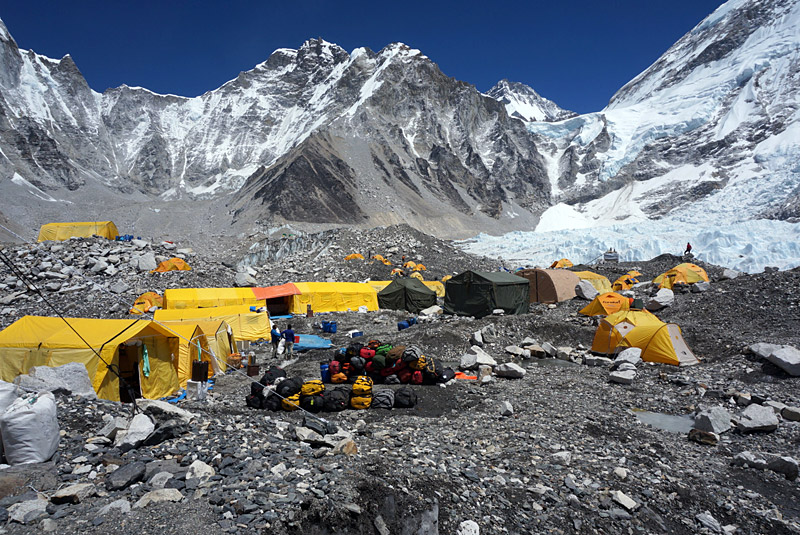
Regardless of being called the Everest Base Camp, few group realize that you can’t actually see Mount Everest from Base Camp. There are too many other huge mountains in the way. However, don’t vex or let this fact sway you away from doing this trek, there are plenty of opportunities to spot Everest, and if you want to see it up close and personal, you can do the optional hike (4 hours round-trip from Gorakshep) up to Kala Pattar at 18,200 feet. Kala Pattar is a brown “hill” situated on the opposite side of the valley and offers those amazing sunrise and sunset views of Everest, Lhotse and Nuptse on all the postcards. 8: give in to the yaks
Don’t learn this the hard way. Yaks ALWAYS have the right of way. Don’t even try to clash it or you will get hurt! For you, it is a tourist route. For them, it is a exertion trail. ALWAYS stay on the uphill side when a faced with a yak train on the trail. Do not try to bypass or out run a yak when faced with a bridge crossing. Be patient, let them pass, as you probably need a rest stop anyway. 9: Don’t forget to be cool !!
Please don’t allow the above implication and fore warnings get you down. The hike to Everest Base Camp is one of the best trekking routes in the world. It’s going to be hard at times, you’ll face many challenges, you may get a head or stomach ache…,but this trek is a lot of fun and a great personal accomplishment! 10: The Khumbu Cough
The Khumbu Cough is well-known amongst those having already completed this trek. This bothersome tiny cough is named after the region you are trekking in. Basically, it is a high altitude nagging cough (caused by the dry air and at times dusty trail). The best way to avoid or limit this cough is to cover your mouth and nose while trekking when the trail gets covered in dust. Use a scarf, bandana or a Buff to act as a filter for the air. Also, bring along zinc lozenges or hard candies to alleviate some of the discomfort. AME Treks Everest Base Camp Package
Even though our finest endeavor to arrange group for their trekking trip, there will always be a sense of ambiguity and unanswered queries and expectation. Just Looking through guide books, blogs and other related expose cannot prepare you for the prospect, sounds and smells of Nepal to trek to Everest base camp. Trek to Everest Base Camp is by far the most demanding trek, we AME Treks wanted to list the most popular questions and expectations people should have. An open mind and sense of adventure and enthusiasm are always a Top Priority! 1: It’s not as tough as people think
In spite of the books, movies and other stuffs you hear and read about on the news and the Internet, the hike to Everest Base Camp does not require you to be a super athlete or experienced hiker and climber. Somebody who is in good fitness and exercises on a regular basis can comfortably and safely complete this trekking route. Yes, altitude will always be the big unknown, but as most of us can’t train at altitude there’s no reason to offensively worry about it. There are some hard-hitting / long days walking to Base Camp (17,500 feet) and hiking up Kala Pathar (18,200 feet), but a slow and steady pace and proper hydration go a long way. If you don’t expect it to be easy and prepare yourself for it to not be, you will probably be pleasantly astonished that it is not as bad as you thought. 2: Trekking is a great mode to catch up on forty winks
There’s not much to do after dinner except chat with your travel partners and guide, Play cards with your trekking members, read a book and go to sleep. A typical wake-up time is around 6 am (unless for the sunrise at Kalapatther or any sunrise point along the route), breakfast at 7am and you are on the trail by 8 am. A standard day consists of 5 to 8 hours of walking duration with lots of ups and downs. 3: Altitude – The Big Unknown Factor
Regardless of your fitness level, altitude sickness can strike anyone at anytime even if you have been on a trek previously with no problem. At some point on the EBC Trek, everyone will get the basic symptoms of shortness of breath and mild headaches. Symptoms like severe headaches, nausea, vomiting and fever are much more serious and require instant descent to lower height. The best advice is to drink lots of fluids, pace yourself, get plenty of rest at night, keep yourself warm and eat proper amounts of food. Listen to your body. If you are having issues inform your trekking guide and please don’t try to tough it out. 4: Dietetic fear
The various lodges along the Everest Trail can cater (remarkably) to a wide range of diets. Just because the local staple diet is rice, lentils and vegetables, doesn’t mean you have to give up on chicken or beef. Meat products will become scarce at the higher villages (there is no refrigeration along the way), so you may have to fall back on that good old can of Spam. Hey, it’s a meat product! All kidding aside, the food is good and plentiful on the Everest Trek. The shops and bakeries along the way offer plenty to supplement your three main daily meals and baked and packaged goods are always safe. If you are a true carnivore, pack some jerky with you! It is a great source of protein and it will kill those hunger! 5: Heights
Many people have no idea they have a fear of heights until they are face to face in contact. Don’t worry, the trek to Everest Base Camp is rather straight-forward and does not involve any climbing. However, the route is serviced by many suspension bridges along the way and some are quite long and sway quite a bit. For those who know they suffer with heights these are good times when looking down may not be comforting. 6: Sleeping bag even on a lodge trek
Even on a lodge trek to Everest Base Camp, you will want to bring a lightweight (20 degree F) sleeping bag to supplement the bedding provided. As with most accommodation in the Himalaya, the higher you go the more rustic the accommodation. The lodges from Dingboche to Gorakshep are cinder block structures with metal roofs. Except for the main dining area, which has a large pot belly stove, the rooms are neither insulated or heated. You will welcome your warm down sleeping on these few nights up high. If you are traveling in November through early March, you’ll want to bring a down sleeping bag rated to zero degrees F. It can get very cold on a Christmas or New Years departure. Clothes-wise, pack accordingly. At almost no point on this trek, except for maybe Lukla or Phakding, is it shorts and t-shirt weather. Thermal layers, fleece jacket and pants and a down jacket are recommended. 7: What is Kala Pattar?
Regardless of being called the Everest Base Camp, few group realize that you can’t actually see Mount Everest from Base Camp. There are too many other huge mountains in the way. However, don’t vex or let this fact sway you away from doing this trek, there are plenty of opportunities to spot Everest, and if you want to see it up close and personal, you can do the optional hike (4 hours round-trip from Gorakshep) up to Kala Pattar at 18,200 feet. Kala Pattar is a brown “hill” situated on the opposite side of the valley and offers those amazing sunrise and sunset views of Everest, Lhotse and Nuptse on all the postcards. 8: give in to the yaks
Don’t learn this the hard way. Yaks ALWAYS have the right of way. Don’t even try to clash it or you will get hurt! For you, it is a tourist route. For them, it is a exertion trail. ALWAYS stay on the uphill side when a faced with a yak train on the trail. Do not try to bypass or out run a yak when faced with a bridge crossing. Be patient, let them pass, as you probably need a rest stop anyway. 9: Don’t forget to be cool !!
Please don’t allow the above implication and fore warnings get you down. The hike to Everest Base Camp is one of the best trekking routes in the world. It’s going to be hard at times, you’ll face many challenges, you may get a head or stomach ache…,but this trek is a lot of fun and a great personal accomplishment! 10: The Khumbu Cough
The Khumbu Cough is well-known amongst those having already completed this trek. This bothersome tiny cough is named after the region you are trekking in. Basically, it is a high altitude nagging cough (caused by the dry air and at times dusty trail). The best way to avoid or limit this cough is to cover your mouth and nose while trekking when the trail gets covered in dust. Use a scarf, bandana or a Buff to act as a filter for the air. Also, bring along zinc lozenges or hard candies to alleviate some of the discomfort. AME Treks Everest Base Camp Package
Tags:
#everest base camp facts
#expectation on everest base camp
#what to expect on everest base camp
#things to remember while trekking ebc
Share this article
A
admin
Crafted for travellers who want grounded planning insight, mountain context, and a clearer feel for the journey before they go.