Upper Dolpo Trek trekking in Nepal – AME Treks
Moderate Nepal Himalayas 28 Days Signature Journey

Upper Dolpo Trek

Kathmandu-Nepalgunj-Phoksundo Lake-Saldang-Phedi

4.9/5 (156 reviews)
5000 trekkers hosted
Duration
28 Days
Max Altitude
Difficulty
Moderate
Best Season
September to December and March to May
Group Size
2–12 People
Accommodation
Tea Houses

Product Description

A fuller introduction to the route, pace, terrain, and overall trip style.

Dolpo region is the most remote and least developed district in Nepal. Although a few anthropologists and geographers had explored the region, the entire district was closed to trekkers until 1989 when the southern part of Dolpo was opened to organized trekking groups. Peter Matheson’s book - The Snow Leopard and Snell grove - Himalayan pilgrimage have contributed to the mystique and attraction of Dolpo.


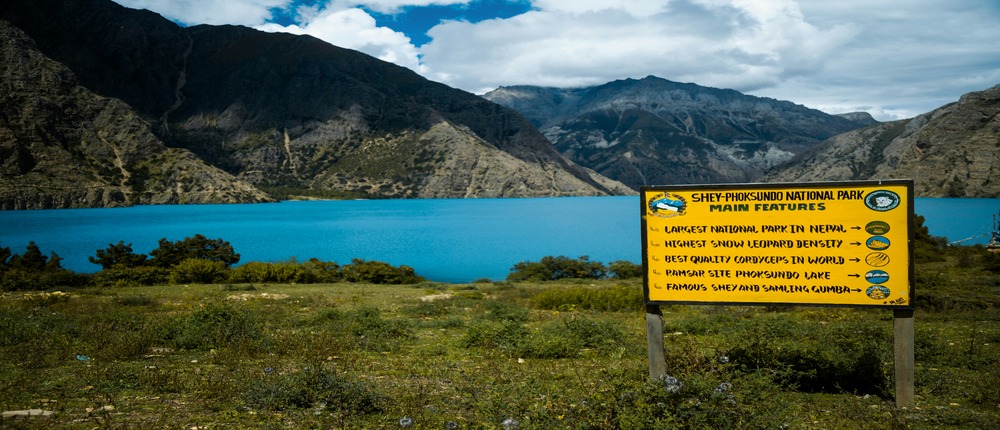
Dolpo region situated between the Tibetan plateau and the Dhaulagiri Himalayan range is the highest inhabited land of Dolpo. Geographically a southern extension of Tibet, it lies within the borders of the state of Nepal, since 1984 has been the countrys largest national park and conservation, the park sustains an abundance of wild life including Musk Deer, Himalayan Blue Sheep and the legendary elusive Snow Leopard, as well as being home to a fascinating race of Tibetan speaking people. The hardy highlanders of Dolpo are traders, exchanging barley for Tibetan rock salt and they take their yaks onto the Tibetan plateau during the summer for grazing.


Nepal’s first English subtitled movie on Dolpo -The Caravan- or -The Himalaya- was a huge success and was nominated for the Oscar Award in the best foreign language film category. Boundaries of the park include within 3,500 square kilometers of land, mostly above 4,000 meters. Before 1989, when the southern regions were opened to trekking groups, very few explorers had visited the area. Two notable visits were the first mountaineering expedition by Dr. Herbert Tichy in 1953 based in Kaigon and the other visit by John Tyson in the early sixties. Dolpo is one of the most beautiful treks in the remote areas of Nepal, very rarely visited by outsider.


During the Upper Dolpo we start from Jhupal village, we begin this wonderful adventure, encountering interesting places, people, villages, valleys and serene forest of pines, oaks and rhododendron, the trek passes many gigantic mountain ranges and over the Numala pass at 5,400m till we reach the Phoksundo lake at Ringmo village in the "Phoksundo National Park".


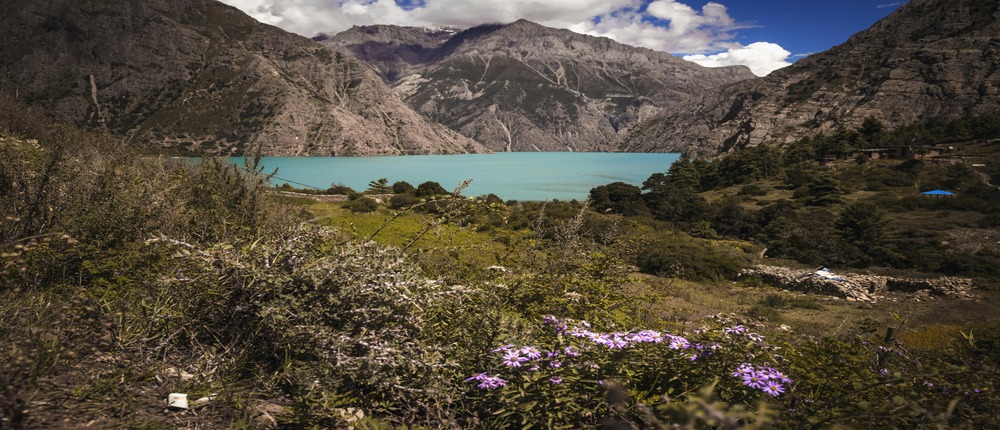
At Ringmo, the highlight of our trip  we will have two nights here to enjoy the beauty of the deep blue waters of the Phoksundo lake and the surrounding snow peaks of Kanjirowa Himalayan range, with time  to visit the nearby isolated village of Ringmo and its Monastery. Our classic journey continues to the amazing country of Crystal Mountain at Shey Gomba, following the ancient Trans Himalayan Trade route and back to Jhuphal for the flight back by an alternative route, giving you more opportunity to explore this fascinating wild west of Nepal Himalaya.

Trip Includes

  • -Airport pick up and drop by private vehicle
  • -3 Nights twin sharing accommodation in Kathmandu at tourist standard hotel with breakfast
  • -Round air ticket of Nepalgunj
  • -One full day guided city tour by private vehicle
  • -Welcome dinner and farewell dinner at one of the best Nepalese restaurant with traditional ethnic music and dance
  • -Trekking permits and Tims permits
  • -All meals during the trek (Breakfast/Lunch/Dinner)
  • -Gov. licensed and well trained English speaking guide and his entire expenses
  • -A porter (One porter for each 2 members) and his entire expenses
  • -Insurance of Guide and Porter
  • -All required local tax and Gov tax
  • -Down jackets and sleeping bags
  • -Trekking route Map
     

Trip Excludes

-Nepal arrival visa
-Meals in the city except breakfast and above mentioned special dinner
-Monument entrance fees
-Your personal nature expenses eg. Mineral water, Beer, Coke and entire beverage etc
-Travel insurance that covers trip cancelation and Helicopter evacuation
-Tips and any other extending trips and accommodation.

Useful Information

Travel Insurance

If you are planning your next trek in the Annapurna region of Nepal, then it is highly recommended that you get a travel insurance that covers all the additional and unforeseen expenses that might occur as a result of different injuries or accidents (together with ambulance, helicopter, rescue and other treatment cost) and various other health related issues. Moreover, the policy should also fund the entire activities that you are planning to take on throughout your stay in Nepal. In addition, the policy should also finance misplaced luggage, theft and liability, cancellations, medical treatment (including hospital charges, cost of the medicine and doctor’s fees), death and repatriation cost as well. This trek requires walking above the altitude of 4,000, therefore, it is kindly requested to ensure that your insurance policy covers trek that goes over 4000m. In short, all unforeseen expenses during the entire trek are trekkers’ sole responsibility.

Health, fitness and experience requirements:

Trekking along the trail of Annapurna region is identified as one of the long distance trekking in the world. Therefore, the trek demands good stamina, excellent health condition and the highest level of mental determination. Some sections of the trek take you to the altitude of over 4000m and some days require 7-8 hours of walking. Therefore, it is well recommended to plan your trek when you are at your best health condition.

The trek is considerably moderate and attainable. Yet, it is highly recommended that you seek advice, medication, and permission from your doctor before scheduling your trek. You can also take the help of the local General Practitioner in order to consult the necessary guide walks before planning the trek. (Running, cycling, or a few hours of uphill walking are considered as some of the best ways to practice for your next trek. This also helps in minimizing the potential effect of Altitude Mountain Sickness.) In the absence of GP, various travel clinics can also assist you with the needed guidance. However, this trek can be easily attained even without any technical knowledge, but prior hiking, trekking and camping experience will definitely make the walk easier. 

Note:

We kindly request you to submit your medical fitness certificate (which must include your present health condition, medical situation, preceding illness, and the medications you are taking) before booking the packages. We also request you to be honest so that we can get prepared and take quick action in case of any emergencies.

Meals and Accommodation:

In order to ensure a comfortable stay and relaxed ambiance, we do the booking in one of the best tourist standard hotels before and after your trek. The rooms offered by these hotels are normally twin share, which requires you to share your room with another member of your group. However, this totally depends upon the size of your group and the availability of rooms in the hotel. Triple share is also available on request and a single supplement room is also available at an additional cost.

During the trek, your stay is arranged in local guesthouses or lodges (with shared amenities) en route. You can enjoy a hot shower in most of these lodges, however, in the absence of hot shower few buckets of hot water will also be arranged by the lodge itself. A full board meal (Breakfast, Lunch, Dinner and tea & coffee) will be served from the teahouse menu. For breakfast usually western food like porridge, oatmeal, local bread, and toast are offered. The food served for lunch and dinner can be chosen from the teahouse menu.

Our attempt while you are on a trek:

Our guides will make every possible attempt to make your trip successful and for this purpose they strictly follow the itinerary provided to you (except for any formidable situation). Trekking in the Annapurna region of Nepal takes you to those remote areas of Nepal, where communication facilities are very rare. Hence, to maintain regular contact our guides are also provided with cell phones. This can also be used by trekkers to send any message that you want us to deliver to your family, friends or relatives. We can also help you reschedule your international flight (extra charge applicable) if you are looking to extend the days to complete your trek.

Why trek with us?

AME Treks and Expedition offers fully customized packages that are specifically designed to meet each individual trekker’s needs, requirements and budget. Partnering with AME directly allows you to deal with someone who has an in-depth practice of walking and knowledge regarding the track we follow. This in turn will definitely benefit you as you can get information based on their personal experience. We also team up with the local residents of Annapurna region who can take you to those remote areas of Annapurna region that have never been explored before. It is simply a bonus trip for you.

We only hire professional, experienced and knowledgeable guides and team leaders that are dedicated to offering their trekking experience to make your trip successful. Moreover, the most important thing during the entire trek is trekkers’ safety. Therefore, we provide those trek leaders that possess the highest level of qualification in Advanced Wilderness First Aid so that they can take every possible safety measures required to respond rapidly to changing situations during the trek.  We also try our best to communicate with you, to help you with your additional requirements during the trek.

To provide a top level of food and accommodation experience, we partner with some of the best lodges and teahouses en route that can produce culinary delights both locally grown and western varieties. We also make sure that the food provided to you is hygienic and balanced and the living space clean and cozy.

Moreover, all the formalities required during the trek will be taken care of by the team leader assigned to your group. Therefore, partnering with gives you the opportunity enjoy a hassle-free trek.  

Our legal documents:

AME Treks and Expedition is a certified company and is registered under the government of Nepal. We have special authority of the government of Nepal to operate treks, tours, expedition and other tourism related programs in Nepal, Tibet and Bhutan. Besides, we are also a very active member of other professional organizations like;

Ministry of Finance, Department of Taxation

Company Registration Office, Pvt. Ltd.

Ministry of Tourism and Civil Aviation, Department of Tourism Industry

Central Bank of Nepal, Nepal Rastra Bank Foreign Exchange Department

Nepal Tourism Board (NTB)

Trekking Agents Association of Nepal (TAAN)

Kathmandu Environment Education Project (KEEP)

What are the best seasons to plan this trek?

Though Nepal can be visited any time of the year, the best season to plan your trek in the Annapurna region of Nepal is spring and autumn.

Spring - March, April and May are considered the best month to pay your visit to the Annapurna region because during these months you can experience the warm weather, clear skies, good temperature and the best visibility.

Autumn – Mid September, October and November is also considered the best month to visit the Annapurna region because of the best visibility, clear blue skies and excellent trail.

Winter – December, January and February are good, if you can prepare yourself to experience the extreme cold weather.

Summer – Mid June, July and August are not considered as the right time to visit the Annapurna range as the monsoon rain affects everything that is, trail, weather, temperature as well as the visibility.

What should I bring?

Along with warm clothes you will also need other equipment for the sufficient protection of your body. Below is the list of necessary items that you need to pack before commencing your trek.

Head- Hat (with a wide brim), Sunglasses (with UV protection), Sunscreen lotion and Lip balm

Upper body- T-shirts (2), light and expedition weight thermal tops, Fleece jacket and pullover, Fleece wind-stopper jacket (Optional), waterproof (preferably breathable fabric) shell jacket, down vest/jacket (included)

Hands - Lightweight gloves, heavy-weight gloves/mittens with a waterproof outer shell

Lower body - Underwear (4), hiking shorts (2), lightweight cotton long pants, light and expedition weight thermal bottoms, Fleece or wool pants, waterproof (preferably breathable fabric) shell pants

Feet - Thin, light-wear inner socks (4), thick, warm wool hiking socks (4), hiking boots with spare laces, camp shoes (sneakers and/or sandals), gaiters (only for winter)

Accessories  - Sleeping bag rated to zero degrees F (included), headlamp with spare bulb and batteries, small padlock or combination lock, basic first aid kit, large plastic bags (for keeping items dry inside trek bag), day pack, water bottles (2), hiking pole/walking sticks, small ear plugs

Toiletries – Soap, shampoo, toothbrush, small wash towel

Extras - Cameras with extra batteries and cards, binoculars, light balaclava or warm fleece hat, reading books, trip map/guide book, journal & pen, iPod & travel games (like cards, chess, and backgammon)

Passport and Visa Information:

It is very easy to obtain Nepal’s visa. You may either apply for a visa at your nearest Nepalese Embassy/Consulate or Mission offices in your own country or you can buy this upon your arrival at Tribhuvan International Airport in Kathmandu. To apply for a visa, you need 2 passport size photographs, Visa fees in US dollars and your passport that is valid for at least 6 months before the trip. However, nationals of SAARC countries (India, Bhutan, Sri Lanka, Pakistan, Bangladesh, Maldives and Afghanistan) and China do not require any visa to visit Nepal. Transit visa for foreign nationalities is only provided for 3 days. Therefore, visa is required for longer stays. However, for the convenience or foreign nationals, a visa is also provided from the borders listed below:

Tribhuvan International Airport (Kathmandu)

Kakarvitta, Jhapa (Eastern Nepal)

Birgunj, Parsa (Central Nepal)

Kodari, Sindhupalchowk (Northern Border of Nepal)

Belhiya, Bhairahawa (Western Nepal)

Jamuna, Nepalgunj (Mid Western Nepal)

Mohana, Dhangadhi (Far Western Nepal)

Gaddachauki, Mahendranagar (Far Western Nepal)

Tourist Visa Fees:

Transit visa (3 days) – Free of cost

Multiple entry (15 days) – 30 USD or equivalent convertible currency

Multiple entry (30 days) – 50 USD or equivalent convertible currency

Multiple entry (90 days) – 125 USD or equivalent convertible currency

(For more information, please contact the Department of Immigration, Kalikasthan, Dillibazar, Kathmandu.

Tel: 00977-1 4433934/4429660/4438862/4438868. You can also download visa form from – www.immi.gov.np

Call

Send SMS

Add to Skype

You'll need Skype CreditFree via Skype
Trip Snapshot

Route
Himalayas, Nepal
Trip Style
Tea Houses
Best Months
September to December and March to May
Next Start
Private dates on request

Why Book With AME

Well-paced itinerary with acclimatization-friendly flow

Licensed local guides, porter support, and 24/7 operations team

Private customization available for pace, dates, and comfort level

Gallery

Trail gallery

A quick look at the landscapes, lodges, and trail atmosphere before you move into the itinerary.

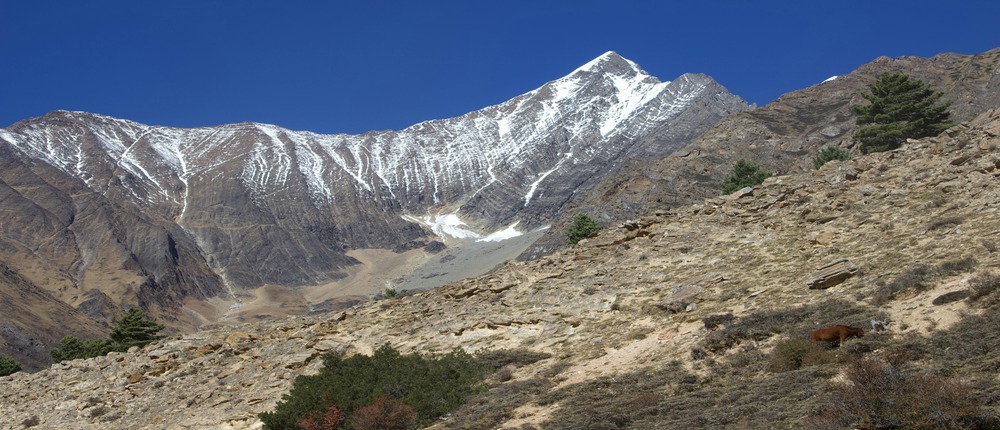
Upper Dolpo Trek – trekking scenery

Next up

Day-by-day itinerary and pacing

Scroll into the detailed itinerary to review daily movement, overnight stops, elevation, and practical route flow.

Explore itinerary

Upper Dolpo Trek – Day-by-Day Itinerary

Click any day to expand full details, elevation notes, meals, and overnight stops.

  1. Upon arrival at Kathmandu's Tribhuvan International Airport, we will greet you and assist you to the hotel.  We will meet either later on that day or the next day ( as per your comfort) to take you to our head office, where we will brief you on your upcoming trek with us. At that time, we will introduce you to your trekking guide and Sherpa. If your flight arrives on time, we will take you to one of the most popular local restaurants with delicious Nepalese food, cultural music and ethnic dance. This will give you a glimpse into the different ethnic groups of the country. If you arrive late in the evening, we can do this the next day instead.

  2. After breakfast, you will begin a city tour of Kathmandu where you will see the main attractions of the valley. On this tour you will visit the Boudhnath Stupa, Pashupatinath temple, Swyambhunath Stupa (Monkey Temple), and Kathmandu Durbar Square (the old palace). After finishing the city tour, we will meet again to check your clothing and trekking equipment (sleeping bag, jacket and trekking boots). This evening will be spent in Kathmandu.

  3. As per the flight schedule for Nepalgunj we transfer to the domestic airport for one and half hour scenic flight to Nepalgung. At Nepalgunj we will have time in the late afternoon or evening to have a look around the town which is situated on the southern Nepal border with India. Here it is quite hot and tropical in character.

  4. Early morning transfer to airport for the 45 minute flight to Juphal over the Himalayan foothills, with views of Annapurna and Dhaulagiri peaks to the north. On arriving at Juphal our trekking staffs will receive you, who have walked all the way from Nepalgunj with the camping gear and food supply taking 5-6 days. Here at Juphal a short 2-3 hrs walk from the airstrip leads to our overnight camp at Dunai village (2,850m/9,348ft). Our first day adventure begins with an hour downhill walk through the village below the airstrip, then leading through the terraced fields to the Bheri River and the narrow gorge taking 2-3 hours to camp at Dunai. This is a much larger village or small township, with a new hospital and it is administrate headquarter of the Dolpo region. Here we have ample time for leisure walk around the village.

  5. From the camp at Dunai, route diverts from the King Mahendra statue to cross the new suspension bridge and turning west, following the trail past the hospital. The path soon begins to climb up the side of the treeless Thulo Bheri valley, where it crests a ridge and then enters the Phoksundo river valley, finally reaching another ridge which is marked by cairns at 2,499m/8,197ft. During the walk can be seen excellent view of the Kagmara Peak up the valley. This wonderful walk leads to a large side canyon, then descending gently on the long downhill slope through the scattered houses and walnut groves to a stream at 2,810m/9,217ft the trail below the stream leads to Dhera, a winter settlement where people from higher villages keep herds of cows and goats, however the route leads the upper trail climbing to Rahagaon, a Thakuri village at 2,900m/9,512ft, where there is a Gompa dedicated to the local god, Mastha, guardians of this village. Trek from here passes through the lower part of Rahagaon and then descending to the village water supply at the Phoksundo khola. Passing through another canyon, the path heads downhill through deep dark forests to a large stream, finally emerging at the entrance to the Shey Phoksundo National Park at Ankhe (2,896m/9,499ft) where we will stay for the overnight camp.

  6. The path from this camp leads to small ups and downs along the forested riverbed, then ascending steeply to about 2,900m. The ups and downs can begin to get a bit monotonous, but there are several streams along the way that offer a chance to cool off. The trail eventually leaves the forests and traverses a grassy slope high above the river. After a while the path once begin to descend steeply into forest until it reaches a cliff, whereby a dizzying drop on a wobbly stone staircase to the river bank has to be undertaken. You can almost look down between your toes to see the fast-flowing river below. After reaching the river at 2,950m, the trail becomes a collection of rocks and sticks that form a dyke along the river bank. It's hard to imagine how the local people bring their yaks and cows along this trail, but they do. Journey continues upstream to a bridge near Ryajik village for the overnight camp 3,500m/11,480ft, after a good day's walk. (Breakfast, lunch & dinner are Included)

  7. Journey continues along the valley floor to the confluence of the Phoksundo and Pungmo Kholas. After crossing to the western side of the Phoksundo Khola on a wooden bridge, then the path follows the west bank of the Pungmo Khola which leads all the way to Phoksundo Lake 3,500m/11,480ft near Ringmo village. The path passes through a cedar forest and finally to Palam, a winter settlement used by the people of Ringmo village. The houses here are almost buried in the sandy soil. From here our route heads up to open country, at an altitude of around 3,350m/10,988ft. From the ridge one can see the distant views of Phoksundo Lake and a spectacular 300m/984ft high waterfall, one of the highest in Nepal. After a brief stop here with the great views, finally the walk descent through birch forests to the upper reaches of the Phoksundo Khola, and then to the picturesque settlement of Ringmo with its mud plastered chortens and mani walls. From here it is a short walk to the shores of Phoksundo Lake for the overnight at camp.

  8. A well deserved rest day free from packing, at Phoksundo we can go for a short hike to the village of Ringmo and its Tibetan Buddhist Monastery is well worth a visit.

  9. From Phoksundo, adventure continues skirting the shore of the lake as it contours on a rocky ledge along the western bank. This unsteady trail suspended on a gangway of wood supported on pegs driven into crevasse in the rocks, signals the remoteness of the area we are about to enter. At the westernmost edge of the lake the path leads through a lush meadow that opens up into the flood plain of the Phoksundo Khola. Then the walk leads through the valley, crossing the river and avoiding the occasional boggy marsh underfoot and then coming on the bank of the river to the overnight camp.

  10. Today's first hour walk leads along the level path through a glacial valley that now heads due north. At the confluence of the Phoksundo Khola and another mountain stream, there is an old wooden bridge. Here taking the barely distinct path to the north-east of the valley. There is no trail as such, so it is necessary to clamber over the rocks and boulders and to ford a stream that rushes down the steep valley. A long climb brings us to a sheep meadow where the trail veers up a steep ravine. A hard climb to the top brings to yet another valley where one can see the Kang-La, the pass which will lead towards Shey Gompa. Overnight camp will be just before the pass in a place that Peter Matthiessen christened 'Snowfields Camp'.

  11. Morning walk leads up to a steep climb littered with slate towards the pass. The climb is quite strenuous, especially on the slate screed. From the top of Kang-la 5,360m/17,581ft, there are excellent views down upon a large valley which is bisected by a gushing river. On descending steeply to the valley floor, then the path leads a long meandering trek along the banks of the river, crossing and re-crossing it several times. There are mud caves lining the hills overlooking the river and we pass through meadows where hairy yaks, hundreds of sheep and domestic mountain goat (Chengra) can be found grazing as well near the odd nomadic hut of the herders. A red chorten heralds our arrival at Shey Gompa 4,500m/14,760ft where a quaint wooden, log bridge leads up to our destination at Shey Gompa compound for our overnight camp.

  12. Another well earned rest day for local hike around Shey meaning crystal, this monastery is also known as the Crystal Mountain (well described in Peter Matthissen classic novel Snow Leopard). The lama of Shey resides at a red hermitage known as Tsakang gompa which is north of Shey. It is rather a retreat than a monastery. Tsakang had been a meditation centre of many famous lamas from Tibet. Shey Gompa belong to the Chaiba community, followers of great saint Padmasambhava, known as Guru Ringpoche and Kagyu sects. It was the first Kagyupa monastery and its founder was the lama Tenzing Ra-Pa, built during 11th century. Shey is famous for its ancient pre-Buddhist culture the Bon Po. In Dolpo the ancient Tibetan way of life combines animism with the teaching of Buddha. Drutup Yeshe first introduced Buddhism in the Dolpo valley. Hundreds of years ago he came to Dolpo encountering a wild people whose supreme God was a 'fierce mountain and nature spirit'. Crystal Mountain is to the east of Shey gompa it is one of the strangest mountain, as its contorted cliffs are laced with quartz and embedded with a rich variety of marine fossils. Shey Gompa stands above the confluence of Kangjunala and Yeju Nala River. Near the confluence there is a group of prayer mills turned by water wheels. Each year people from all over Dolpo region travel great distances to attend the festival at Shey and to complete the circuit of Crystal Mountain. This is an amazing trip to here that certainly makes this trek as special as only few Westerners have ever ventured up to Shey gompa.

  13. The day begins by following a pleasant trail amidst juniper which descends into a grey, stony canyon. Then the path begins to zig zag over bare rocks and coarse eroded soil until it eventually brings us to the top of Saldang-la 5,200m/17,056ft. The subsequent descent towards the north which is long and tiring but we finally come upon the welcome sight of pastures of grazing yaks and sheep, and nomadic tents made from yak hair. This signals our approach to Namduna Gaun 4,800m/15,744ft. Like Shey, the Namgung monastery is of the Karma-pa sect. The monastery, a red stone structure, is built against the backdrop of a cliff on the north wall of a gorge. The red and white colors of the gimpy and its stupas are the only color in this stark landscape. The village itself consists of only six stone houses and has terraced fields on both sides of the tributary, which flow down to the Nam Khong valley. The economy of the region is based on agriculture, animal husbandry and trading. In Dolpo only one crop a year can be grown and this is mainly barley. In some villagesâ, buckwheat, oil seed, potato and radish are also cultivated. Recently the main cliff temple collapsed and the villagers have now built a beautiful new monastery in the village itself.

  14. On leaving the Namduna Gaun our route leads to a climb up a scree slope. Further on it begins a long traverse along some dusty barren mountains. After 3-4 hours of hard climb, Saldang 3,620m/ 11,874ft appears below on a plateau high above the Nam Khongmala. It has a picturesque appearance. Saldang is the largest village of the inner Dolpo area. Though the village lies at about the same altitude as Ringmo it is totally different then Ringmo, a Himalayan village is situated below the tree line while Saldang belongs to the arid zone of the Trans-Himalayan Tibetan plateau. The village stretches for nearly two kilometers on an open slope. Saldang consists of five villages having about eighty well built houses with nearly six hundred people. Saldang is a prosperous village not only agriculturally but also for its strategic location on a trade route to Tibet. After the Chinese invasion of Tibet in 1959, trade with Tibet was virtually stopped. It has been restored to some extent through the barter system by which Tibetan salt reaches mid-Nepal. The Drokpa people from the western plains of Tibet collect salt from the dried lakes north of Tsangpo.

  15. Journey from here diverts further far north to the least unexplored area by westerners or by any other commercial adventure trekking companies. The trail follows the Nang Chu river most of the way on this wild barren windswept terrain. Walk begins along the fairly gradual path with few ups and downs slope and then passing through the small settlement of Tiling and Lurigaon till we reach to our overnight camp at Yangze also known as Yangtsher, just before Yangze near Lurigaon. Here we cross the tributary Panzang river, a short walk from here brings us to an unexplored region of Yangze 4,960m/16,267ft and its very old Bon-Po Monastery for the overnight halt with time for exploration around the villages and the Monastery.

  16. From Yangze there are two trails that connect Sibu (4,560m/14,957ft), the long way trail heads due west passing through the very remote villages of Nishalgaon and further past Shimengaon. To save time and energy we will retrace the path back towards Saldang village which will be much easier and shorter than the other north western route. From Saldang the trail following the river bed we pass through terraced fields, stupas, chortens, heaps of mani stones and a Chaiba monastery, then passing through the Namdo village which is also prosperous with about sixty houses having nearly 400 inhabitants. It stretches for more than 5 km on the high slopes to the left of Nam Khong Khola. The Namdo monastery is located near the river bed. Our journey continues further down the river for another two hours to camp near the small settlement of Sibu.

  17. The trail follows the Nam Khong Khola for a while on the morning walk coming across caravan of laden yaks that are on their way towards Tibet border. After days of following the same river, finally we part turning east till we arrive at the confluence of two small tributaries, from here our walk leads to a steep climb to the bottom of Jeng la (4,900m/16,072ft), where we stay for the overnight on a nice meadow.

  18. Morning trek leads to two hours climb towards the top of the Jeng La (5,090m/16,695ft). An excellent view of snow ranges emerges to the south. The north face of the Dhaualgiri massif shines in the morning light. After a wonderful moment here at the pass, our walk leads to descend on the rough path towards Tarap valley. By afternoon we come to the green valley which leads us on the pleasant track down towards Tarap Chu. Tarap is a fascinating valley with vast plains in high mountains. It extends twenty kilo meters along the river. Tarap Chu is having ten villages with its cultivated fields and many gompas, chortens of both sects. We stop for the night at Tokyu monastery (4,200m/13,776ft). This monastery also belongs to the Chaiba sect.

  19. Today, the route leads eastward along the downhill course of Tarap Chu in a plain valley with patches of lush verdant grass on both sides of the river which is completely different from other parts of inner Dolpo. There is also a marsh which is a common feature in the Desert Mountains of Tibet and the Ladakh Himalaya. In this valley both Bon Po and Chaiba sects reside together in harmony. After a short trek on this beautiful valley we come to Dho Tarap (4,040m/13,251ft) for the overnight camp with ample time to visit around the villages. This village is surrounded by an irregular stone wall. At Dho, about 40 houses are divided into three clusters and built in a haphazard way inhabited by few Tibetans and mostly Magars hill tribe of Nepal who have lived here for many generations.

  20. Today, we have a full rest day or exploration of local areas. During the visit you will have an opportunity to make friends with the people from Dolpo. They wear home spun clothing that is sometimes dyed maroon and they prefer Tibetan style somba (boots with upturned toes) for footwear. Men and women often wear both religious amulets and strings of coral and turquoise. The villagers are both Bon Po and Buddhist of Nyingmapa sect. The Buddhist gompa is the nearest one to the campsite, the Bon Gompa is further 40 minutes walk.

  21. Today can be quite a long day or moderate walk depending upon the choice of several different campsites so the itinerary can be as flexible as you like. From the quite bare country around Tarap, we descend towards a wide valley which eventually narrows into a gorge. We walk along the juniper bush and wild rose, typical of dry inner Himalayan valleys, to just above the tree line. On this route we might see herds of blue sheep. By the afternoon time we reach at the confluence of the Tarap Chu and the Lang Khola, a stream that joins with Tarap River from further east. We will make our camp on a nice meadow, this place is also known as Kamakharka (3,800m/12,464ft), while our porters will perhaps take shelter in a nearby spacious cave.

  22. This morning again continues down the gorge of the Tarap River, at times alongside it, rising high above on a trail built from the steep slopes might come across people from Dolpo taking their herds to lower pastures for the winter. There are many possible campsites by the river. This will be one of the exciting days of this trip walk, as the valley becomes so narrow in a deep gorge that in some places we can jump from one side to another. Sometimes there is no trace of any path and we have to walk across stone slabs fitted on logs in between the walls which act as a bridge. The gorge also provides unexpected adventure and thrills. At some places, the bridges are either damaged or washed away and we may be forced to cross the icy torrent on foot. Finally, reaching to the camping spot beside the Tarap khola at Khanigaon (3,150m/10,332ft) we stop for overnight stay.

  23. Today from this camp path follows an indistinct trail to the village of Lalberi. Then passing through an area of impressive forest, before descending into another gorge our walk continue following the river again downstream to reach Tarakot where colourful terraced fields greet us. Tarakot (2,537m/8,321ft) is an old fortress town known by the local people as Dzong, meaning 'fort'. Before the Gorkha dynasty Tarakot was the capital and had a dzong. The famous Sandul gompa lies about 8 km east of Tarakot and at the junction of Barbung Khola and Tarap Chu. It stands on a knoll to the south of Bheri River and at one time supervised collections of tolls for the trading caravans traversing an area called Tichu Rong. It is possible to camp by the river about 150 meters below Tarakot, near the police post or we climb a steep hill for over an hour to the small village on a spur on the other side of a valley opposite Tarakot. There are chortens and a gompa here on the edge of a grassy plateau, with an interesting solitary tree.

  24. The walk continues beside the Bheri River in a tremendous gorge with pine trees and an ingenious path built about seven meters above the river. On reaching Dunai (2,140m/7,019ft) after completing the circuit with time for celebration, particularly as bottled beers is available in Dunai or else try the local brew.

  25. We retrace the journey back to Jhuphal, which is a short distance walk along the Bheri River to the small airstrip for the last overnight camp of this great memorable adventure.(

  26. Early morning, a short scenic flight for thirty five minutes to Nepalgunj, over the Himalayan foothills overlooking stunning views of the main peaks including Annapurna and Dhaulagiri to the north. On arrival at Nepalgunj depending upon the connecting flight schedule to Kathmandu. If it is in the afternoon have time for few hours refreshment in the comfort of the Hotel Batika or similar at Nepalgunj. Then connect with the flight back to Kathmandu.

  27.  

    This pleasant day you may have full day at leisure and either relax at hotel or explore the Thamel and overnight at hotel.

  28. oday is the last day of your trip with us. If you would like to extend your holiday with us, we would be more than happy to help you plan further adventures. Otherwise, we will take you to the airport for the final departure as per your flight time.

Itinerary PDF

Take the full plan offline with day-by-day details, trip facts, inclusions, and planning notes.

Want this paced differently? We can shorten, extend, or make it private.

Upper Dolpo Trek – Dates & Pricing

Compare scheduled departures or request a private version tailored to your group.

No group dates are listed right now, but private departures can usually be arranged for the dates that suit you.

Need a different date or a private departure?

Make it your own

Private departures can usually start on the dates that work for you, with the pace, route style, and group setup adjusted around your plans.

5+ People
Best value
Request Quote
tailored pricing

Selected option

You can adjust the traveller count again in the booking form if needed.

Trip Includes & Excludes

A clearer breakdown of what is covered and what you should plan separately.

Included

Included services will be confirmed once this product setup is completed in the admin panel.

Not Included

Personal extras and excluded services can be reviewed with our team before you confirm your booking.

Before you book

Travel insurance, personal mountain gear, and international flights are usually arranged separately. If you want help reviewing gear or insurance before you book, our team is happy to guide you.

Upper Dolpo Trek – Frequently Asked Questions

Practical planning questions generated from this route, itinerary, and trip setup.

The Upper Dolpo Trek is generally planned as a Moderate trek in Nepal, with route pacing, altitude gain, and overnight stops shaped around the published itinerary. If you want a lighter or more private pace, our team can usually customize the plan.

You should plan around 28 days for the full trek, including the published route flow, acclimatization needs, and arrival-to-departure logistics. If you need extra buffer days for weather or private extensions, we can map that out before booking.

This journey reaches around high Himalayan elevations and is usually best enjoyed in September to December and March to May. Trail conditions in Nepal can change quickly with weather, so we recommend preparing for cool mornings, layered clothing, and flexible mountain timing.

The advertised rate starts from $4,600.00 and typically covers the main trip services such as guide support, accommodation, and the core logistics listed in the itinerary. Items commonly handled separately include international flights, insurance, and personal spending, unless your custom quote says otherwise.

The Upper Dolpo Trek is a strong fit for travelers looking for small, flexible groups, local lodges and trek accommodation, and a guided Himalayan experience in Nepal. If you are unsure about fitness, private departures, or the right route style, send us your preferred dates and we will guide you to the best option.

Useful Information

Extra planning notes, route expectations, and pre-trip guidance for this journey.

Travel insurance, personal mountain gear, and international flights are usually arranged separately. If you want help reviewing gear or insurance before you book, our team is happy to guide you.

Recent guest reviews

Recent guest reviews from similar active journeys while this product gathers its first direct reviews.

Fresh route feedback

These are recent approved reviews from comparable journeys in the same destination or trip style.

Great people who arranged my trip with in my budget

"Several months ago, a friend of mine came back from world-round-trip and said, “A.B.C trekking is what you cannot see in any other places but Nepal”, and excitingly showed me a lot of incredibly beautiful pictures from t..."

"Several months ago, a friend of mine came back from world-round-trip and said, “A.B.C trekking is what you cannot see in any other places but Nepal”, and excitingly showed me a lot of incredibly beautiful pictures from the mountain and the country, Nepal. The story he shared caught my heart and strongly made me want to visit this country. And now, I also strongly recommend this adventure into wild nature. This is the reason why I am here, coming back from 10days Annapurna base camp(A.B.C) to write a review for one of the best agency (Adventure Mountain Explore Treks & Expedition P. Ltd) in Kathmandu and for you. What I have found during this trip is that this trip is therapeutic, educational, and exciting. First of all, in the mountain area, there are no such things as mobile, familiar TV show, disturbing noise, and annoying friends. You are literally surrounded by nature and all you can trust is your guide and your heart. You also have much free time in the mountain, which makes you think a lot about your future. Second, trekking is educational. You may see a various people from around the world as well as local people. This, I believe, is the best way of getting to know each other, as you will see them again and again during the trail. Exchanging their personal story and back ground helps you grow your personality as well. Third, it is exciting. There is no question about it. When I saw the panorama view from A.B.C, I got so excited that I could not take my camera away (I am sure I took more than 100 pictures and video there). That was defiantly worth it. Now, I am going to share a bit about my trekking partner, my guide, Lok Bhatta. He is friendly guy. He is not only experienced guide, but he knows how he can entertain us during the whole trip. His caring and his humor take up my good memory of trip. Since Lok and I spent 11days together, it is no wonder we became a best friends. Also he persistently looks after me. When I wanted him to take pictures, he always s..."

A Fantastic Experience!

"My mother and I arrived in Kathmandu with just 2 days to prepare for a trek around Annapurna Circuit. We feel very lucky to have met Mr. Tika Regmi and through Adventure Mountain Explore treks we were able to hire a port..."

"My mother and I arrived in Kathmandu with just 2 days to prepare for a trek around Annapurna Circuit. We feel very lucky to have met Mr. Tika Regmi and through Adventure Mountain Explore treks we were able to hire a porter-guide to facilitate exactly the kind of trek we wanted, a self-directed trek with Nepali assistance. Our porter-guide Sujan was a trusted and integral part of our little trekking party. He was very knowledgeable about the route, its hotels and side trips, and he even introduced us to local people and gave us interactions with local Nepalese that we could not have experienced on our own, like a tea in the home of a local family! We couldn’t be any more pleased with our trek. Shanna Simmons 1152 Crescent Avenue Klamath Falls, OR 97601 USA shannasimmons@hotmail.com"

Eine Erfahrung, die wir nie vergessen werden!

"Urspruenglich hatten meine Freundin und ich geplant, das Annapurna Base Camp in Angriff zu nehmen, doch Tika Regmi, Direktor von Adventure Mountain Explore hat uns den Langtang Trek empfohlen. Es war definitive eine gute..."

"Urspruenglich hatten meine Freundin und ich geplant, das Annapurna Base Camp in Angriff zu nehmen, doch Tika Regmi, Direktor von Adventure Mountain Explore hat uns den Langtang Trek empfohlen. Es war definitive eine gute Entscheidung, in eine der weniger frequentierten Gegenden Nepals zu gehen, wo sich die Anzahl der Touristen in Grenzen haelt. Das Langtang Tal bietet sowohl eine beeindruckende Bergwelt als auch urspruengliche Doerfer und somit einen Einblick in die Lebensweise der Tamang. Der Hoehepunkt unserer 8 taegigen Tour war der Aufstieg auf den 4984 Meter hohen Tsergo Ri, der eine atemberaubende Panoramasicht auf weisse Bergriesen bietet. Auf Empfehlung der Company haben wir einen Guide und einen Traeger gebucht. Beide waren ausserst zuvorkommend und freundlich, stets hilfsbereit und ortskundig. Durch sie bekamen wir nicht nur tatkraeftige Unterstuetzung beim Tragen und Pfadfinden sondern auch Kontakt zu den Einheimischen sowie Einsicht in Kultur und Braeuche. Rico Grass & Tiziana Margelist 8050 Zuerich, Switzerlanda rchico7@hotmail.com"

Lifetime experienced with Adventure Mountain Explore Treks.

"Thanks Tika We arrived in Kathmandu on November 4, 2011 with hopes to do the Annapurna Circuit Trek to Muktinah. We had no firm guide or porters arranged as yet but were lucky to stay at the Blue Horizon Hotel in Thamel..."

"Thanks Tika We arrived in Kathmandu on November 4, 2011 with hopes to do the Annapurna Circuit Trek to Muktinah. We had no firm guide or porters arranged as yet but were lucky to stay at the Blue Horizon Hotel in Thamel where we met Tika Regmi at the Hotel Blue Horizon. Tika is the director of Adventure Mountain Explore which wa located across the street. With Tika's expert help, our trek was arranged with an extraordinary guide, Sittal "Hom" Simkhada and two equally adept porters, Santosh Uperkoti and Sanjeep. Sittal knew the trail very well having done it more than 25 times. He provided information and insights about each peak and landmark along the way. He guided us up and down with care and confidence, setting a good pace that worked for each of us, our ages being 69, 67, and 30 years old. Sittal also got us to our teahouse rooms promptly and made sure we got our meals on time. We never had to ask for service; it was always provided with a smile. We enjoyed the camaraderie or our guide and porters and spent time playing cards together and exchanging stories. Clearly Sittal loved what he was doing and was experienced with every aspect of being a guide. When our daughter became ill along the way in Manang, Sittal conferred with Tika and we took an extra day to make sure all was well before continuing. There was no pressure to move on before we felt ready. When we reached the summit at Thorang la Pass we all celebrated together. It was a group achievement as well as a personal one for each of us. We are pleased to recommend Tika Regni as trek organizer and Sittal Simkhada as guide with our highest esteem and respect. Sincerely, Bob, Linda and Laura Bekes Robert Bekes Dept. of Mathematics and C.S. Santa Clara University Phone: (408) 554-4883 Fax: (408) 554-2370 rbekes@scu.edu"

Ready for the Upper Dolpo Trek?

Join 5000 travellers who have trusted Adventure Mountain Explore for thoughtful planning, dependable support, and memorable Himalayan journeys.

Secure Booking Helpful Human Support Trusted Himalayan Travel Company 5000 Trekkers