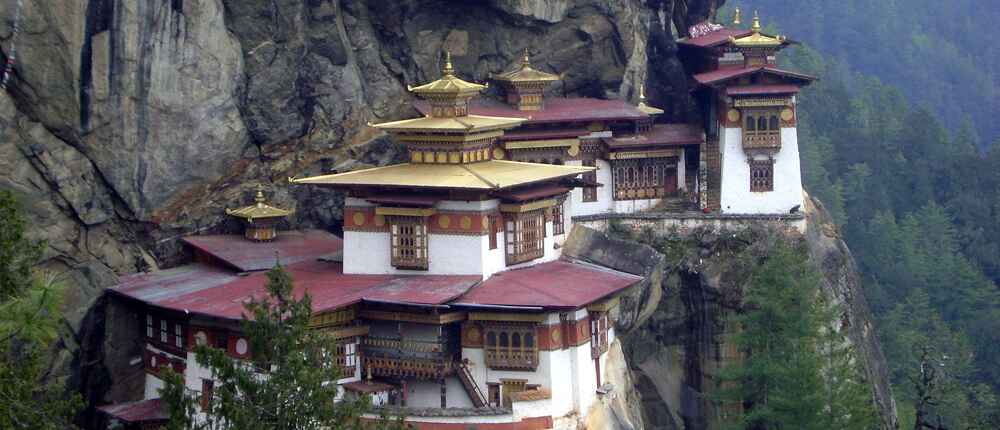
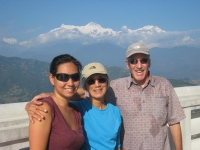
We have designed Himalayan destinations of Nepal, Tibet and Bhutan which are three beautiful Himalayan countries of Asia.The land of Thunder Dragon, also known as last Shangri-La, is land located country which lies between Tibet in the North and India in the South, East and West. Bhutan's landscape ranges from subtropical plains in the south to the Sub-alpine Himalayan heights in the north, with some mountain peaks exceeding 7,000 meters (23,000 ft). The state population is 691,141, major number of Buddhist with the second larger number if Hindu. Thimpu is a capital of Bhutan. The climate of Bhutan varies with altitude, from subtropical in the south to all ever snow in the north. Bhutan has five different seasons: summer, monsoon, autumn, winter and spring. Western Bhutan has the heavier monsoon rains; southern Bhutan has hot humid summers and cool winters; central and eastern Bhutan is temperate and drier than the west.
Nepal is land located country between India and Tibet. It is located an area of 147181 sq km and has different landscape and culture as well as temples and monasteries. Our combined tour covers Kathmandu valley tour and Chitwan national park where you will have an experience of Flora and Fauna. Another destination is Pokhara which is the second biggest city of Nepal and also called city of paradise. It has beautiful caves, waterfalls, lakes and stupas.
Our third destination, Tibet, has been a mysterious land of lakes and rivers, mighty snow peaks, and beautiful and ancient monasteries - with its spiritual air, an unearthly mystical land of Buddhist culture and philosophy. Tibet emerged in the 7th century as a unified empire, but it soon divided into a variety of territories. The atmosphere is severely dry nine months of the year, and average annual snowfall is only 18 inches, due to the rain shadow effect. Western passes receive small amounts of fresh snow each year but remain traversable all year round. Low temperatures are prevalent throughout these western regions, where bleak desolation is unrelieved by any vegetation beyond the size of low bushes, and where wind sweeps unchecked across vast expanses of arid plain. The Indian monsoon exerts some influence on eastern Tibet. Northern Tibet is subject to high temperatures in the summer and intense cold in the winter. This combined tour takes you to visit Dalai Lama's Potala and Norbulingka and visit Barkhor Market in Lhasa.
Trip Includes
All meals, in BhutanTeaCoffee and snacks
Government approved A category hotels in Bhutan on twin sharing basis
Airport transfer (Pick up and drop)
Bhutan Visa Fee and Tibet travel permit
3 nights accommodation in Kathmandu on twin sharing basis on BB plan
2 nights accommodation in Chitwan with full board basis
All jungle activities with a Guide
National park entrance tickets
2 nights accommodation in Pokhara on twin sharing basis on BB plan
City tour in Pokhara as per itinerary
Breakfast in Tibet
Land transportation with comfortable vehicle
An experienced English speaking guide and other staff if required
Monument entrance fees and museum entrance fees in Bhutan, Nepal and Tibet
Visa and all government taxes
Trip Excludes
All international flights (Paro to Kathamndu US $225 & Kathmandu to Lhasa US $400)
Nepal visa (available easily upon arrival in Kathmandu airport-prepare small bill cash US $40US $25)
Chinese Visa (US $175 for Americans and US $85 for other nationals)
Lunch and dinner in Tibet
Personal nature expenses ( personal equipments, phone calls, internet, laundry, hard drinks etc)
Insurance (Trip cancellation, medical and rescue evacuation)
Tips
Useful Information
Bhutan at a Glance
Population:697,000 (UN, 2009)
Capital and largest city:Thimphu
Area:38,364 sq km (14,812 sq miles)
Major language:Dzongkha (official), Nepali, Sharchop
Major religions:Buddhism (official), Hinduism
Life expectancy:64 years (men), 68 years (women) (UN)
Monetary unit:1 ngultrum = 100 chetrum
Main exports:Electricity, timber, cement, agricultural products, handicrafts
GNI per capita:US $1,900 (World Bank, 2008)
How to Get in to Bhutan
Bhutan is a landlocked country. There are two ways of getting into Bhutan: By air, and by land. Foreingers can get into Bhutan only through a Tour Company. The best way to enter Bhutan is by Druk Air. There are also online tickets available for Druk Air nowadays. Therefore, you can check the tickets with Druk Air yourself online at http://www.drukair.com.bt/
Druk Air is the only airline operating in Bhutan. As Druk Air flight can be delayed because of weather, it is advisable to keep a 24-hour gap before any onward international connections.The following cities are connected to Bhutan with Druk Air flights.
Ø India: Delhi (DEL) and Calcutta (CCU)
Ø Nepal: Kathmandu (KTM)
Ø Bangladesh: Dhaka (DAC)
Ø Thailand: Bangkok (BKK)
Ø Burma: Rangoon (RGN
Overland Entry
There are two overland entry/exit points. One is from the Indian state of West Bengal into Phuntsholing in southwest Bhutan. Four hours drive from Phuntsholing will take you to Bagdogra in the state of West Bengal (India) which is the nearest airport from from Phuntsholings. The drive from Phuntsholing to Thimphu takes six hours.The other point is Samdrup Jongkhar in the southeast, 110 km from Guwahati, India. An Inner Line Permit to enter Assam will also be required to enter/exit through Guwahati. Tashigang is six hours' drive from Samdrup Jongkhar.
Visa Information
Bhutan Visa is a must for every foreigner entering Bhutan. The visa has to be processed by local tour operators, such as our company Himalayan Glacier Trekking (HGT). No foreign mission or embassy abroad grants tourist visa. For the visa, a passport is required which must be valid for until at least 6 months after you leave Bhutan. The Druk Air allows boarding only if it has got your visa clearance from the Bhutan Government.
After your arrival at Paro Airport, a visa stamp will be issued on your passport. In case, if you’re traveling overland, visa stamp will be issued at Phuntsholing. We at the Himalayan Glacier Trekking will manage all procedures regarding the Bhutan Visa. We will organize your visa for Bhutan prior to the start of your trip. For the visa procedure, you have to send us two passport size color photographs and a color copy of your passport. Visas are issued for a 15 day period and extensions can be obtained in Thimphu at a cost of Nu.510
Custom formalities
All your baggage must be affirmed and cleared through the customs on arrival at the entry. Personal effects are permitted free entry. All visitors are required to complete a customs form and hand it over to the customs authorities on arrival. All articles for personal and professional use must be declared on the customs form. The baggage allowance by Druk Air is 20 kg in economic class and 30 kg in business class. An extra 5 kg allowed for storing in the overhead baggage bin or under the passenger’s seat.
Allowed Import:
The goods that may be imported into Bhutan are the following:
Ø 200 cigarettes.
Ø 1liter of spirits.
Ø Personal items for daily use, instruments or appliances for professional use.
Please note that cameras, videos, mobile telephones and all other electronic equipment for personal use must be registered with the authorities on arrival and will be checked by customs on departure. All tobacco items are subject to a 200% custom tax on arrival.
Prohibited Imports
The following items are prohibited for import: firearms, narcotics, plants.
Prohibited Exports
The items that are prohibited for export from Bhutan are antiques, religious objects, manuscripts, wildlife & plants, images and anthropological materials.
Climate
The seasons in Bhutan are pretty much the same as in Europe, opposite of the Australian seasons. In January it's cold, while in July you could make do with shorts and t-shirt. The climate of Bhutan is moderate which means the winters are dry and the summers are hot. But because of the huge range in altitude and landscape, climate of Bhutan differs significantly throughout the country.
Bhutan has four major seasons:
Winter: December-February
Spring: March-May
Summer: June-August
Autumn: September-November
Best time to visit Bhutan
Autumn: (September, October, and November)
Spring: (March, April and May)
Comunication facilities
Postal Services:
Bhutan has slow but reliable postal service. A letter takes about ten days to reach Europe, one week to Japan and three weeks to America . Package (up to 5 kg or 11 lb.) should be sent by registered mail. DHL and other courier services also now operate from Thimpu.
Telephone Services:
Telephone, fax, telex and telegraph services are available. Hotels and private communications centers provide long distance telephone.
Internet Services:
There are several internet cafes and communication centers in the Thimphu Valley and around the country. Tourists only need to find a place they are most comfortable with to use the facilities to keep in touch with home. E-mail and Internet services are also offered by hotels.
Media:
Bhutan Government controls the media in Bhutan. The newspaper Kuensel is a government-owned corporation circulating six days a week in Dzongkha and English. Bhutan Times is the country’s first government-authorized privately owned newspaper. There are also a few other news media in Bhutan. The Bhutan Broadcasting Service is the country’s government owned radio service. Bhutan introduced television broadcasts only in 1999.
Accommodation
Bhutan has a small hospitality industry. However, all towns have hotels and lodges and all tourist lodges, hotels, and resorts are registered with the Department of Tourism. There are some international standard hotels in such touristy area as Paro, Jakar, Punakha, Gangtey and Thimphu. A few 5 star luxurious hotels have also been opened mostly in Thimpu and Paro.
Bhutan Government has categorized the hotels into A, B, & C category. Foreign visitors entering Bhutan as part of a tour have to pay the tariff set by the government around $250 per person per night in general. While on the trek, we provide tent or camping facility for the trekking group.
Forex & Banking
Foreign currencies must be exchanged only through banks or authorized foreign exchange dealers. The receipts from such transaction are to be obtained and retained. Visitors can exchange money at the foreign exchange counter at the airport upon arrival also. Credit cards are not widely accepted in Bhutan. When credit cards are accepted, usually during bank hours, an extra service fee, usually a percentage of the overall purchase, is charged. ATM facility has recently been opened in Bhutan, but it is available for the local people only for the time being.
Bhutanese currency is the Ngultrum, divided into Chetrums, which are at a par with the Indian Rupee. The Indian Rupee is also legal tender in Bhutan. Indian rupees up to the 100 rupee denomination are accepted for purchases in Bhutan. Very few establishments will accept 500 and 1000 rupee notes.
Electricity
The voltage in Bhutan is 230 Volts, 50 cycles AC. If you try to plug an American appliance such as a shaver or hairdryer into an outlet of a different voltage, you may destroy the appliance and cause yourself injury. There are few things you should know about other countries (here Bhutan) before you travel.
Bhutan’s Electricity is 240 Volts and 50 MHZ (some countries like U.S and Canada are 110-120 volts/60 MHZ).
In Bhutan, you will need a voltage converter, and plug adapter in order to use U.S. - like appliances
Health
Owing to a sudden change in climate, altitude and other factors, it is obvious that there could arise some alterations in your health. It would be hard to know all aspects of Bhutan's health problems. However, it would be useful to gather information on altitude sickness (AMS), diarrhea, dysentery, cholera, hepatitis rabies, typhoid, tetanus, meningitis diphtheria, malaria. Common sense can often save lives.
You will be eating and drinking in various outlets. Diarrhea is a common illness that a tourist would be facing. So, it is recommended to drink purified water and eat in clean outlets. Drinking and eating precautions will surely help to take care of many health problems that could arise during the trip. Staying hydrated during the travel, trekking, tours is highly recommended too. Being on good health before leaving for a trip would help you to enjoy your trip to the fullest.
Vaccinations:
There is no need to present inoculation/immunization certificates to enter Bhutan for any legal purpose. However, vaccination for diseases such as Malaria (widely found in lowerlands of Bhutan), Small Pox, Typhoid, Tetanus, Meningitis, Hepatitis and Polio are recommended before you commence your travel to Bhutan to be on the safe side. We advise you to consult your doctor before beginning your travel and also to carry necessary health certificates (immunization certificates), should they be required in any case.
Medical Services:
Health posts have been set up by the government in different parts of rural Bhutan. However, facilities are not on equivalence with those found in Bhutan capital.
Insurance:
A travel insurance policy that covers theft, loss and medical treatment is recommended. Make sure the insurance also covers the activities that you will be undertaking during your stay in Bhutan such as trekking, rafting and all adventures activities.
Nepal at a glance
Area: 147,181 sq. kilometers
Geography: Situated between China in the north and India in the south
Capital: Kathmandu
Population: 2,642,799
Language: Nepali is the native language. However, travel-trade people understand and speak English as well.
Currency: Nepali Rupee
Political System: Multi-party democracy
Religion: The major number is Hindu. However, there is a harmonious blending of Hinduism and Buddhism.
People: Nepal has more than 91 ethnic groups and 70 different spoken languages.
Climate: Nepal has four major seasons:
(1) Winter: December-February
(2) Spring: March-May
(3) Summer: June-August
(4) Autumn: September-November
Best time to visit Nepal
Autumn (September, October and November)
Spring (March, April and May) are the best seasons for high altitudes and climbing activities.
Winter (December, January and February) are good months for low altitude treks and tours.
Monsoon (June, July and August) is also okay to visit Nepal but visibility could be of matter due to rain.
Health
Owing to a sudden change in climate, altitude and other factors, it is obvious that there could arise some alterations in your health. It would be hard to know all aspects of Nepal's health problems. However, it would be useful to gather information on altitude sickness (AMS), diarrhea, dysentery, cholera, hepatitis rabies, typhoid, tetanus, meningitis diphtheria, malaria and HIV/AIDS. Common sense can often save lives.You will be eating and drinking in various outlets. Diarrhea is a common illness that a tourist would be f acing. So, it is recommended to drink purified water and eat in clean outlets. Drinking and eating precautions will surely help to take care of many health problems that could arise during the trip. Staying hydrated during the travel, trekking, tours is highly recommended too. Being on good health before leaving for a trip would help you to enjoy your trip to the fullest.
Physical Examination:
We always recommend undergoing a thorough check up before commencing travel to Asian countries so that if you are considering demanding tour such as trekking or mountaineering you do not have doubt about your health or fitness.
Vaccinations:
There is no need to present inoculation/immunization certificates to enter Nepal for any legal purpose. However, vaccination for diseases such as Malaria (widely found in lowerlands of Nepal – Terai), Small Pox, Typhoid, Tetanus, Meningitis, Hepatitis and Polio are recommended before you commence your travel to Nepal to be on the safe side. We advise you to consult your doctor before beginning your travel and also to carry necessary health certificates (immunization certificates), should they be required in any case.
The following is a ROUGH GUIDE for immunization. (We must stress that this is only a basic guide to the most commonly required vaccinations to travel to central Aisa.
(a) Polio (normally you will just need a booster.)
(b) Tetanus
(c) Cholera
(d) Meningitis
(e) Typhoid. A full course requires 2 injections separated by an interval of 4-6 weeks.
(f) Hepatitis A and B.
(g) Anti-malarial prophylaxis: Please refer to your doctor for the most up to date information about anti-malarial medication for the areas that you will be visiting.
(h) Rabies pre-exposure vaccination. Please refer to your doctor for advice on whether you need rabies pre-exposure vaccination. In the unlikely case of your being bitten, this vaccination does not eliminate the need for urgent evacuation to a suitable medical facility for additional treatment. However, it does simplify that additional treatment and also prolongs the period that you can safely delay before receiving post-exposure treatment.
Given enough notice, your doctor will be able to administer all the above vaccinations.
Communication
Postal Services:
Central Post Office located near Sundhara or Bhimsen Tower is open from 9 a.m. to 5 p.m., Sunday through Friday. The counters are open from 10 a.m. to 4 p.m. and provide stamps, postcards and aerograms. Post Restante is available Sunday through Friday from 10 a.m. to 5 p.m. Express Mail Service (EMS) is available at GPO and at Thamel, Basantapur and airport postal counters.
Telephone Services:
Telephone, fax, telex and telegraph services are available at the Nepal Telecommunications Corporation at Tripureshwar. Hotels and private communications centers provide long distance telephone. For calling from outside, country code for Nepal is 977 and the area code for Kathmandu is 1.
Internet Services:
There are several internet cafes and communication centers in the Kathmandu Valley and around the country. Tourists only need to find a place they are most comfortable with to use the facilities to keep in touch with home. E-mail and Internet services are also offered by hotels.
Media:
Nepali media has developed rapidly within just a few years of time. Besides the government medias, Radio Nepal and Nepal Television, there are numerous FM and television networks, numerous FM radio stations and upcoming regional television stations are dominating the market. Major Nepali daily newspapers are Gorkhapatra and Kantipur, Nagarik, while the English dailies are The Rising Nepal, The Kathmandu Post, Republica, The Himalaya Times, etc.
Forex and Banking
Foreign currencies must be exchanged only through banks or authorized foreign exchange dealers. The receipts from such transaction are to be obtained and retained. Visitors can exchange money at the foreign exchange counter at the airport upon arrival also.
NOTE FOR TRAVELERS FROM INDIA/ VIA INDIA:
Indian currency of Rs.500 and Rs.1, 000 bills are not allowed to be brought into Nepal. They will not be exchanged and will not be accepted for transaction of any kind.
Cards
Credit cards like the American Express, Visa and Master Card are accepted. Convertible currencies are as follows: Dollar (U.S., Australian, Hong Kong, Canadian, and Singapore); Euro (Swiss, French, Belgium, Netherlands, Germany, Italy); Pound (U.K.); Yen (Japan). Please keep hold of your encashment for changing back local currency into foreign currency on departure at exit points or at Tribhuvan International Airport departure lounge.
Cash Machines
The mainstream banks in Kathmandu and Pokhara all have a cash machine where you fill your wallet 24 hours a day using your normal bankcard or Master Card / Visa. Banks have cash machines, though we would recommend only using these machines during bank opening hours so as not to run the risk of losing your card if the system crashes.
Banks in Kathmandu Valley are open between 9:30 a.m. to 2:30 p.m. from Sunday through Friday. They are closed on Saturdays and other public holidays. In other places banks are open from 10 a.m. to 2:30 p.m. from Sunday to Friday and are closed on Saturdays and government holidays. ATM machines are located in many banks in the capital. Money can be transferred from other parts of the world from the numerous transfer agencies in the capital.
For more information:
Currency Converter: http://www.oanda.com/convert/classic
Foreign Currency Exchange Rates: http://www.kantipuronline.com/forex.php
Accommodation facilities
Nepal today has altogether more than 300 big and small hotels which are registered with the Department of Tourism, ranging from 5 star deluxe categories to the small one star and tourist standard hotels. A general outline of facilities available in five, four and three star hotels are given below:
Five Star Hotels:
A five star hotel has all its rooms air-conditioned, well furnished and with attached bath. More than two restaurants and bars serving a variety of cuisine and drinks, swimming pool, tennis court, beauty parlor, sauna, health club. Banquet and conference facilities and a variety of other modern luxurious facilities are also available.
Four Star Hotels:
The four star hotels in Kathmandu constitute of air-conditioned, well furnished room with attached bath, more than one restaurant, garden, banquet and conference facilities – though in a slightly smaller scale.
Three Star Hotels:
The three star hotels have air-conditioned rooms with attached bath and standard furnishings. A minimum of one restaurant and bar are available with standard luxury.
Climate in Nepal
The seasons in Nepal are pretty much the same as in Europe, opposite of the Australian seasons. In January it's cold, while in July you could make do with shorts and t-shirt. The climate of Nepal is moderate which means the winters are dry and the summers are hot. But because of the huge range in altitude and landscape, climate of Nepal differs significantly throughout the country.
Monsoon is approximately from the end of June to end of August. About 80 per cent of the rain falls during that period throughout the country but the remainder of the year is dry. Spring (March to May) and autumn (September to November) are the most pleasant seasons. Winter (December, January, and February) temperatures drop to freezing with a high level of snowfall in the high mountains.
Summer, monsoon and late spring temperatures range from 28ºC (83ºF) in the hill regions to more than 40ºC (104ºF) in the Terai (southern plains). In winter, average maximum and minimum temperatures in the Terai range from a brisk 7ºC (45ºF) to a mild 23ºC (74ºF). The central valley experience a minimum temperature but not often falling below freezing point and a chilly 12ºC (54ºF) maximum.
The Kathmandu Valley has a mild climate most of the year, situated at an altitude of 4,297ft (1,310m). Summer temperatures range from 67-81°F (19-27°C), and in winter temperatures are between 36 and 68°F (2-20°C). During the rainy monsoon season between June and August, there is an average rainfall of between 7.8-14.7 inches (200-375mm) in Kathmandu. May and June can be very hot and humid until the monsoon rains bring relief. In spring (March to April) and autumn (October to November) the temperatures are pleasant with occasional short bursts of rain, while November to February are dry, but can be very cold, especially at night.
Best time to visit Nepal
Most recommended seasons for trekking are autumn (Sept, Oct, Nov) and spring (March, April, May). In these seasons you will be rewarded by good weather, sunny and warm with clear sky and outstanding views. During monsoon (June, July, Aug) although there will be no problem for trekking, the issue could be of less visibility and rain. But, for a keen botanist, monsoon is blessing as the higher valleys, mountains and meadows blossom with flowers and abundant vegetation. You can trek in winter (Dec, Jan, Feb) also, only the issue is cold weather with snow-fall at higher elevations.
The trekking routes are crowded during spring and autumn but during monsoon and winter the routes are not packed and you could enjoy rather best of nature.
However, because of effects of global warming the climate is changing world wide and there could always be possibility of exception in these weather patterns. In best seasons also there could be hoax of bad weather and sometimes even in adverse months; weather tends to be excellent for trekkers.
Tibet at a Glance
Population: 2.62 million
Capital: Lhasa
Area: 1.2m sq km (471 700 sq miles)
Climate: Average temperature 28 degrees Celsius (summer) to -15 degrees Celsius (winter), extremely dry except during rainy season (July-August).
Major Languages: Tibetan, Mandarin, English and Nepali
Major Religions: Tibetan Buddhism, Animism
Life Expectancy: Over 65 years (UN, 2000)
Monetary Unit: 1 Yuan = 10 Jiao or 100 Fen
Main Exports: Light industry products, Output of livestock products, Traditional Chinese medicine and Carpets
GDP Per Capita: USD 1324
How to get in to Tibet
The traditional saying 'easy to travel abroad but difficult to enter Tibet' has become obsolete as one can access Tibet either by road, air or rail.
By Road: There are five main highways in Tibet, namely:
Sichuan-Tibet Highway – it runs between Chengdu, the capital city of Sichuan Province, and Lhasa.
Qinghai-Tibet Highway – it runs between Xining, the capital city of Qinghai, to Lhasa.
Yunnan-Tibet Highway – it runs between Yunnan province and Tibet.
Xinjiang-Tibet Highway – it runs across boundless deserts, lofty and steep peaks.
By Air: Flying to Lhasa always requires a stopover in either China or Nepal. Lhasa Gonggar Airport is located about 98 kilometers (about 61 miles) to the south of Lhasa City. The only international flight to and from Tibet is between Lhasa and Kathmandu, the capital of Nepal.
If you are looking for information regarding flight booking please contact us. We will provide you with best possible information.
By Rail: The Gormo to Lhasa railway stretches for 1,142 kilometers (710 miles) and serves as a link between mainland China and Tibet
Travel Permit
Aside from visas for China, travelers to Tibet must also obtain permits from the Tibetan Tourism Bureau. Himalayan Glacier Trekking will organize your Tibet travel permit. Please send copy of your passport if you are planning to enter Tibet via Nepal as soon as you book the trip. In the condition you are planning to enter Tibet via China; you need to send us copy of your passport and Chinese visa as soon as you book the trip.
Ø Traveling individually to Tibet is officially not allowed. Travelers must officially be part of a group tour with a guide who will help you dealing with the Chinese authorities at checkpoints en route.
Ø You are not allowed to travel in Tibet with an individual Chinese visa via Nepal (your individual Chinese visa such as multiple entry tourist visas, working visas, student visas, etc., all will get canceled once we apply for Chinese visa from Nepal. There is no other way to save your individual visas, only you can save these visas by entering Tibet from mainland China to Tibet, i.e. taking Lhasa to Kathmandu tour instead of Kathmandu to Lhasa tour.)
Ø If you are planning to enter Tibet via mainland China, you need to organize your Chinese visa from Chinese embassy in your home country BUT If you are entering Tibet via Nepal, your Chinese visa must only be organized through Chinese Embassy in Kathmandu. Chinese Embassy in Kathmandu is opened only Monday to Friday. Generally on normal condition, it takes 4 working days to issue Chinese visa from Chinese embassy in Kathmandu. In urgent condition, we can also organize your Chinese visas in 2 working days too by paying express fee but we only charge normal visa fee with the clients and take responsibility of express fee on our own.
Ø Please make sure that your passport is valid for at least six months before travelling. Visa is not provided to the passports with less than six months’ validity. You need two passport-sized photos for the visa application.
Ø Travelers must use same passport while traveling Nepal and Tibet (while traveling Tibet via Nepal, you will get Chinese visa only in the passport that is stamped with Nepalese visa). We have found tourists traveling with more than one passport but while traveling Tibet via Nepal, you need to use the same passport for Nepal and Tibet.
Ø All Tibet permits can be obtained using photocopy of your passport but you must need your original passport to apply for Chinese visa which is collected by Himalayan Glacier Trekking once you arrive in Kathmandu.
Ø Itinerary and the places to visit in Tibet must be stated clearly and finalized in advance because while applying for a Chinese visa from Kathmandu, a copy of this should be attached. The visa is issued accordingly. According to the places mentioned in the itinerary, travel permit from the Tibet Tourism Bureau (Lhasa) is obtained. Adventure Mountain Explore Treks will do this for you.
Ø If you would like to head out to mainland China after your Tibet travel, the group visa will allow you to enter but once you are in mainland China this visa will be replaced with an individual Chinese visa. (if duration of your group visa covers all your programs in mainland China also, you can use it during your stay in mainland China or it can be replaced by individual visa, it depends on Chinese officials’ decision).
Ø You are not allowed to take any Tibetan religious books, literatures, photographs, especially related to Dalai Lama during your travel to Tibet. If found, these related possessions are confiscated and you are not allowed to enter Tibet.
Ø It is very tough to get your group visa extended, so better to let us know about your programs very clearly during your trip planning phase so according to that we will try to arrange your visa and permit.
Ø However, the rules and regulations regarding Chinese visa and Tibet travel permit get changing very often, therefore we suggest our customers to consult with our travel consultant to be sure regarding the visa issues so that your all programs and plans goes smoothly without any obstacles.
Custom and airport formalities
All baggage must be declared and cleared through the customs on arrival at the entry. Personal effects are permitted free entry. It is important to remember NOT to carry any material relating to free Tibet like for instance Dalai Lama books or flags, masks etc carrying such slogans
Climate
Generaly, April to the beginning of November is considered apt for traveling in Tibet. August and September are considered as the ideal time; however, Lhasa can be visited throughout the year.
The sun radiation is strong in Tibet. Lhasa is also known as the ‘Sunlight City’ due to the extremely intense sunlight there. Tibet is cold during winter; cool in summer and is normally dry, receiving only about 450 millimeters of rain or snow.
Communication
Post Office: The biggest post office in Lhasa is located on the West Beijing Road, at the east side of the Potala Palace. It not only offers full postal services but also sells various kinds of postcards.
Telephone: China Mobile coverage is available in some areas of Tibet, but there is no coverage in villages or remote places. Therefore, cell phones are not a reliable mode of communication. You can use telephones found in the post office, hotels, street booths and shops.
However, with the exception of the major cities like Lhasa, Xigatse, Gynatse, Lhatse and Tsedang, communication facilities including telephone and postal services are absent in other parts of Tibet.
Internet: Internet cafes are available in Lhasa. Hotels in Lhasa like the Xigatse hotel also provide internet facility to its customers.
Accommodation
In most of the cities and towns hotels and guest houses are available. Lhasa boasts of accommodation ranging from simple guest houses to four star hotels. Shigatse, Gyantse and Tsedang offers up to three star hotels. While other smaller or remote areas, accommodation is available mainly in guest houses.
Forex and Banking
The unit of currency is Chinese Yuan. The Bank of China can exchange all foreign currencies. The banks in Tibet/China are closed on Saturdays and Sundays. Travelers Cheques and credit cards are very difficult to be cashed outside the banks especially outside Lhasa. ATM facilities are easily available in Lhasa and Shigatse; however, it may be difficult to find one in other smaller towns or in remote places.
Electricity
If you wish to bring along electric devices for use during your stay, a transformer is necessary. Most of the hotels in Tibet have both 110V and 220V electrical outlets in the bathrooms, though in guest rooms usually only 220V sockets are available. As the shape of a socket varies between countries, a portable plug adapter may also be necessary.
Health
Tibet being a region of high altitude, travelers may experience Acute Mountain Sickness (AMS) which is characterized by mild headaches, nausea, altered breathing patterns at night and loss of appetite. This can be reduced by frequently drinking non-alcoholic liquids such as water and juice. Travelers should also protect themselves from the strong sunlight which can cause sunburn.